Saturday, October 27, 2012

Rebooting Samus: The relationship between East and West in game design, through Metroid Prime


Metroid is Nintendo’s black sheep. While the series has seen just as much critical acclaim as the Japanese gaming giant’s other flagship franchises, Metroid has never been the commercial juggernaut Mario and Zelda are year after year. So when faced with the technological leap from two dimensions to three-dimensional graphics, why did Nintendo for the first time in their history hand over one of its own series to a Western developer? Metroid Prime is the culmination of the company’s marriage of East and West in game design. The unlikely bedfellows of Nintendo and U.S. developer Retro Studios managed to create one of the most successful video games of all time, both critically and commercially.

Gunpei Yokoi with his Game Boy
The series has had Western roots from the beginning. It was conceived by misunderstood designer Gunpei Yokoi—most famous as creator of Game Boy and for ruining his career later with the infamous Virtual Boy. Yokoi took heavy influence from Ridley Scott’s 1979 science-fiction horror opus Alien and the art of Swiss surrealist H.R. Giger. Even before Prime, Metroid was Nintendo’s only franchise directed at an older demographic with a more serious tone, and their only series with better sales numbers in the West than domestically in Japan.

When Metroid was finally handed to a Western developer for the jump to 3D, it wasn’t what you’d call a “smooth transition.” Austin, Texas-based Retro Studios was inexperienced and in shambles with an absent CEO when Nintendo came knocking. And their final product was a first-person game—perhaps the visual perspective most emblematic of Western design. How was this game not a total flop? And how did it consolidate the vast differences between Eastern and Western approaches to video games?

Friday, October 26, 2012

Why I stopped playing Skyward Sword


[Note from Jake: Welcoming the newest Capital Wasteland writer to the fold, James Cameron!]

Mechanics are the most important part of any game, video or otherwise.  Without them, you have nothing.  Mechanics are what bind games together in series, in genres, in fanbases.  The rage at Dead Space becoming Gears of War by way of Resident Evil is the rage of one game losing what makes it really special--the mechanics.  This is why I can honestly say after two hours of playing it: I really, really wish The Legend of Zelda: Skyward Sword was just a rehash.

A bit of a preface: I'm a fan of the mainline Zelda games, and I've enjoyed most of the older Game Boy spinoffs.  With the switch to 3D, Zelda became one of the franchises to properly manage the transition of major game mechanics into a widely different format.  Ocarina of Time, for all the hype, still remains as a golden example of a way to "handle" 3D.  With Majora's Mask and The Wind Waker, the Zelda series further refined Ocarina combat, exploration, and puzzles into an extremely polished system.  Twilight Princess, for better or for worse, was clearly a GameCube game ported to the Wii, and couldn't really be said to properly transition the mechanics from simple 3D to motion-controlled 3D. With Skyward Sword, we could finally see how Nintendo would manage it. In a word? 

Poorly.

And what was so strange wasn't that motion controls were an illegitimate control scheme (though I guess there are still segments of the gaming community that don't view the Wii as a worthwhile console).  It was the "under the hood"  changes that utterly remade the game. Even now, I'm still not convinced Skyward Sword is a Zelda game.  Maybe I'm just showing my "gamer generation card;" I'm sure there are fans of the Zelda series who felt the transition to 3D was poorly handled. But for now, I'd like to examine just what went wrong.

Thursday, October 25, 2012

First-Person Suckers: Seven Ways to a Next-Generation FPS

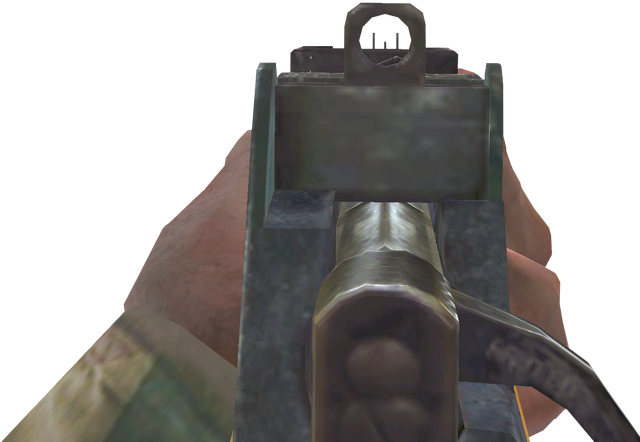
Call of Duty (2003)
Something has stunted the growth of first-person shooters. In the era of the Xbox 360 and PlayStation 3, FPS games released this generation have made baby steps to distance themselves from their predecessors. They still wet the bed. The Call of Duty and Halo franchises need to be thanked for the last three core gameplay enhancements in the FPS genre. They were:

  • Regenerating health
  • Aiming down the sight (iron sights)
  • Dedicated buttons for grenades, melee attacks, and shooting
These have become staples. The problem is these mechanics were introduced last generation. Gameplay-wise, nothing new has been implemented during the days of the PS3 and Xbox 360. With this generation in its twilight years, the FPS genre needs a new horse to step up and introduce an original core gameplay mechanic.  FPS veterans know even "new" innovations like perks and killstreak rewards were originally found in Counter-Strike server mods.

Halo: Combat Evolved (2001)
Gaining experience and unlockables are just measures to ensure players come back for more, which is what good gameplay should do. This generation has only made FPS games more addicting by borrowing elements from MMOs, and previous shooters like DICE's Battlefield series which made its debut in 2002, ten years ago. Addiction drives sales (ask a crack dealer), but it used to be addicting gameplay that kept bringing players back. The future FPS needs to be laced with original gameplay, not just unlockables and experience points.

"PICK UP THAT CAN!" Storytelling in Half-Life 2


The divorce between storytelling and gameplay has plagued video games since birth. Gameplay seems to get the games during the week, and maybe storytelling gets to see them on weekends. While never perfect, this upbringing seemed serviceable through games’ Reagan-era infancy. But games are finally reaching a twenty-first-century adolescence, and they’re developing an identity of their own. And now they ask for not just gameplay, or storytelling! They ask for both! They’ll have their cake and eat it too! They want to bring the parents back together into holy matrimony! But like any awkward teenager, this transformation is rife with missteps. There’s a hope, though, that one day games will inherit the best traits of both storytelling and gameplay to become something greater. Something that no other medium for art can create. Something that matters.
Valve’s Half-Life 2 is the final product of this drawn-out metaphor. I know it's been played to death in game academia circles, but there's a reason for that. It exorcises all of gaming’s storytelling vs. gameplay demons, and creates an art experience that could not be accomplished in any other medium—and isn’t that what all games should strive to do? Its storytelling and gameplay are married beautifully, without sacrifice on either end of the spectrum. First-person shooters have been done before, but none of them perfects this balance the way Half-Life 2 does. Valve’s storytelling immerses the player in the gameplay, and the gameplay immerses the player in the story. How does Half-Life 2 do it?
Raph Koster writes in his book A Theory of Fun for Game Design that all games, no matter how little storytelling is involved, require some sort of surrounding fiction. From chess to BioShock, “designers put artwork on [game systems] that is suggestive of some real-world context.” Even in chess, the gameplay is infinitely deep, yet it’s all underneath a fiction of medieval warfare, with queens, pawns, and knights. Early video games featured superficial fictions like this as well, whether it was staving off space invaders or a plumber saving a princess. But at the end of the day, people didn’t play Donkey Kong to get insight into a fat Italian man’s hopes and fears. They played Donkey Kong because the gameplay was fun.

Wednesday, October 24, 2012

Zone of the Enders: A Retrospective and Analysis at the End of the Universe

[Note from Jake: As I expand the stable of A Capital Wasteland writers, I introduce the affable, all-seeing Austin Lucas!]

In 2001, a demo for the highly anticipated Metal Gear Solid 2: Sons of Liberty was released. Oh, and a game came with the demo… Zone of the Enders, a self-described “mecha anime simulator featuring never-before-seen aerial gameplay.”  After the breakout success of Metal Gear Solid, creator Hideo Kojima’s status as one of gaming’s great icons was solidified. Not to diminish from his earlier  forays into the medium, but things were forever changed after MGS. So when Kojima was set to produce a new non-Metal Gear game, people took notice.  The inclusion of a demo for a new MGS really grabbed attention though and would drive sales for Zone of the Enders.  I was just a Kojima neophyte at the time, so clearly my purchase can be attributed to an infatuation with giant robots. 

High Speed Robot Action

Don't worry you'll get to play as Snake too
Gameplay-wise, Zone of the Enders was on the cutting edge as much as the titular Enders were at the end of inhabited space. Z.O.E. was fast, and it was fast before the party really started getting crazy later that year with Devil May Cry. Altitude control, another unique feature, might have seemed unnecessary when you could simply lock-on to enemies.  However, it is a key part of the aesthetic of the game and one that works in conjunction with Z.O.E.’s high speed to give a true sense of movement and a degree of energy to the combat, which stylistically fits in with the sleek mechanical designs of artist Yoji Shinkawa.

FOXHOUND
Instead of a game and a demo, those who purchased Zone of the Enders really just got two demo discs.  One for the previously mentioned MGS2 and one for the yet to be announced Zone of the Enders 2.  It doesn’t take a thorough examination, a moderately quick glance will suffice, to determine that Z.O.E. is essentially nothing more than a proof of concept for future iterations of the franchise.  That might be overly critical of Z.O.E. but anyone who has managed to make it through the final boss encounter can probably attest to this.  It is not that the game is incredibly unpolished or that there are glaring issues that need to addressed, but instead that Z.O.E. as a standalone game just seems to be a taste of things to come.  Despite playtime being padded by cutscenes, Z.O.E. still manages to be a rather short experience, even with a bit a backtracking.  The anticlimactic manner in which the final fight plays out doesn’t help Z.O.E.’s case either.

Wednesday, October 17, 2012

Approaching Camera Angles in Sports Games

I'm a big hockey fan. This year, EA Sports announced a big new addition to its hockey sim stalwart NHL 13: a new "true broadcast camera" angle! As realistic as the NHL series has become, the most glaring difference between real hockey on TV and virtual hockey is the camera orientation. While most hockey video games usually use a vertical angle to replicate the players' perspective, TV broadcasts use a horizontal view to create more of a balance between teams' camera space.


So does it work in NHL 13? Not really. The horizontal perspective makes local multiplayer easier since neither human-controlled team has to be going downwards, but for standard single-player and online gameplay, most players will stick to the vertical angle. NHL's analog stick controls were built around the vertical view, and the developers knew this: despite touting the true broadcast camera in marketing, the default settings for the game are still set to the classic vertical view.

It hasn't always been that way. Konami's 1987 Blades of Steel and Nintendo's Ice Hockey the following year (pictured here) were two of the most influential 8-bit sports video games, and they both featured the horizontal perspective.

But as soon as EA Sports got into the game with NHL Hockey in 1991, they introduced the vertical camera to hockey gamers. It's been the standard angle for hockey in video game form ever since.

What about other sports? On a basic level, soccer (football) has many similarities to hockey: two teams trying to score on each other's net, guarded by a goalie. But strangely enough, after going through a few changes (including an isometric view in 1993's FIFA International Soccer), the industry standard today for soccer video games is the horizontal perspective. Basketball games have settled on this angle as well.

Hockey isn't an anomaly, though. One of the best-selling game franchises in the United States, Madden NFL, uses the vertical angle. While the angle in NHL remains the same throughout the duration of play, the camera in Madden actually makes a 180º flip whenever the ball changes hands. This is easier to accomplish in (American) football because possession doesn't change nearly as frequently as it does in hockey.

Baseball is a league of its own, due to the sport's asymmetrical gameplay. While the standard camera angle for batting is behind the batter (instead of behind the pitcher, as it is in TV broadcasts), it matches television angles when the ball is in play and the game switches to a wider angle of the action.

So will hockey video games ever change full-time to the "true broadcast camera"? Even if you're not a sports fan, we can all learn something from studying sports games' approach to the camera. Capturing a game within a game--adapting an existing real-world game to video game form--presents a huge array of philosophical questions for game design. It boils down to balancing what's best for gameplay with how to best simulate the real world events players are already familiar with.

Tuesday, October 16, 2012

The Importance of the High Score

[Note by Jake: This is my first step towards expanding A Capital Wasteland to multiple writers. Introducing Jordan Parker!]

What is better than the high score?
The pursuit of the high score.

Good, but I can do better.

I applaud anyone who has run through a Call of Duty campaign on the Veteran difficulty.  For the non-initiated, the tag-line for this extreme difficulty reads: You will not survive. The tag-line is 100% accurate, and almost to a fault. Anyone who has done a Veteran run in any Call of Duty game will tell you that there are certain areas that you end up dying, reading a famous quote and respawning, over and over again. 

My personal favorite from Call of Duty: Modern Warfare 2:
“In war; truth is the first casualty”
-Aeschylus
This cycle of game overs and respawns continues as you push up through the hail of enemy gunfire to trigger the next checkpoint, only to be maimed again and again as you trudge through the endless corridor of combatants.  There is no style in a Veteran run in Call of Duty. There is no glory in a Veteran run of a COD game.  There is nothing about it that will make you replay that last level. The only thing you feel when “Checkpoint Reached.” appears is relief, and you are thankful that you will not have to do that again.

Finally...
If Call of Duty was a test, there would be no right answers, the teacher would merely ask you to fill in all the blanks and give you full credit for finishing. The only way to further your experience is to play through the game on a harder difficulty. A game like Call of Duty doesn't ask you to correct your wrong answers and get better at the game; it doesn't encourage you to discover strategies for getting past tricky parts  It just lets you respawn until you manage to trigger the next checkpoint. Here's the rub: after you've beaten the game on the hardest offering, what else can you do? 

Burger King and Serious Advergaming


In 2006, fast food chain Burger King began selling something new with its value meals: for an extra $3.99, they'd throw in a video game. British budget-title studio Blitz Games was hired to create a trio of advergames based on Burger King's creeptastic (in a good way) mascot, the King.

One was PocketBike Racer, a Mario Kart clone starring various characters from Burger King commercials... as well as D-list model Brooke Burke (who says her new website is "coming soon!").

One was Big Bumpin', a bumper car game. Simple enough.

The most iconic of these was the stealth-action title Sneak King. As the King, players were tasked with sneaking up on unsuspecting civilians and presenting them with a delicious Burger King product.

While the title was incredibly low-budget and shallow, its gameplay turned the conventions of Splinter Cell and Metal Gear on their head. Instead of slitting throats and stealing important documents, the King was simply spreading happiness throughout the world. The fact that the King has such stalkerish undertones only adds to the humor. To top it all off, the game features a first-person "behind the mask" mode.

So why wasn't it a smashing success that sparked a whole new generation of advergaming? We've got plenty of flash-based browser games sponsored by car companies and fast food restaurants, but we haven't seen anything like Sneak King. Predating the ubiquity of digital distribution, Sneak King and its companion games were sold on discs in standard Xbox 360 game cases. Being released so soon after the 360's launch, all three titles were also backwards compatible with the original Xbox.


While Sneak King would've been a ripoff for $30, it was a fantastic deal at four bucks, and the absurdity of buying a video game with a chicken sandwich only added to the charm. But it was a failed experiment. Perhaps the fact that it was sold in official Xbox game cases led consumers to compare it to big-budget "real" games, instead of taking it for what it was: a goofy, low-budget distraction.

Maybe Sneak King was ahead of its time. We're likely to see more and more advergaming in the coming years, but it's unlikely we'll ever see a full-disc release featuring a fast food mascot anytime soon. And that's a shame; I applaud Blitz Games' noble effort and the under-appreciated classic that is Sneak King.

By the way: you can still find it on eBay for fairly cheap. You owe it to yourself to buy it.

Saturday, October 13, 2012

The paradox of the open-world game vs. Alan Wake

With the skyrocketing popularity of open-world games, there's been a huge backlash from the games-as-art community. From Grand Theft Auto to Mass Effect to Skyrim, it seems every big-budget single-player release from a Western studio the past few years has been required to feature an open sandbox world in which players may frolic.


These games bear the "Jack of all trades, master of none" burden. With massive gameworlds to render, developers have a tough time weaving a tight narrative. When players can go wherever they want, it's hard to make them go where the game's creators want them to go. Are open worlds the death of the big-budget videogame storyline?

The remedy may lie in Remedy Entertainment's Alan Wake. The 2010 release by the Finnish studio was originally meant to be an open-world title. The game's writer Sam Lake illustrates:
"Early on we tried out sandbox elements. With them we were constantly running into situations where we had to [endure] big compromises in our thriller pacing and our thriller storytelling. At the end of they day we decided it wasn't worth it. We wanted to do a story-driven game--that's what we feel Remedy games are supposed to be. [Sandbox] was one thing we decided to abandon and go in a different direction. Some of these things look good on paper, and then when you try them out they don't work as well."
But Alan Wake didn't totally abandon its open-world roots. When exploring the game's Twin Peaks-inspired town of Bright Falls, the player is afforded much more freedom than in most story-driven titles.  Players can enter random buildings, listen to minor characters have trivial conversations for extended periods of time, and drive a surprisingly large assortment of vehicles. None of these things are make-or-break features in Alan Wake, but they add to its atmosphere.


Narrative-focused games often force players down linear corridors that don't quite ring true as real-life locations--I love Half-Life, but when most of the game's "doors" are simply impassable wall textures, it breaks my immersion in the game. Alan Wake, on the other hand, features a limited open world that makes Bright Falls and its citizens entirely believable. Players can't do anything they want like they could in true sandbox titles like Red Dead Redemption, but this slightly expanded linear world breathes extra life into the game without sacrificing the game's tight plot. It's a fine balance, but Remedy got it right with this one.

Perhaps games don't need to be polarized into being either completely linear or completely open-world. Alan Wake borrows the best of both and uses them to its advantage.

Wednesday, October 3, 2012

Looking back at Dear Esther


After emerging as a Source engine mod in 2008 and a full-blown title of its own on PC this past Valentine’s Day, British indie developer thechineseroom’s cult classic Dear Esther finally released on Mac in June. Being the arty-farty gamer I am, I was curious to see if it lived up to the hype.
The debate surrounding Dear Esther centers around the question of “Is this a game?” It’s a first-person adventure title where the player simply wanders around a mysterious Scottish island, listening to a narrator speak about a woman named Esther. Players don’t solve puzzles or fight enemies. They simply walk around and listen. Is this even a game?
To me, it is. No question about it. It involves player input. We as an industry are so hung up on scores and rules and action. To me, Dear Esther is the gaming equivalent of a Gus van Sant film. You simply take in your surroundings, think about the meaning of it all, and get what you want out of it. There’s no real payoff at the end or decisive goal to be achieved. And that’s the beauty of it. As the games industry grows more mature in the coming decades, I look forward to seeing more games that occupy these shades of gray in defining what “gameplay” means.
While video games are great at appealing to our carnal instincts and guttural emotions, we’re starting to see a few like Dear Esther that require a bit more thought to appreciate. It’s a solemn, lonely game. I’m torn on the narration–sometimes it comes off as corny and melodramatic, but sometimes the writing is brilliant. What sets Dear Esther apart from other recent art-game hits like Limbo and Journey is that Dear Esther isn’t stylized at all. Many of these cult hits forgo graphic realism for exaggerated looks that make it easy to create evocative art. Dear Esther, on the other hand, aims for complete realism in its visual design. That’s what makes the work so moving, and what makes it even more surreal in the game’s stranger segments.
Dear Esther has a very strong sense of place. It’s a British video game taking place in Britain, and it couldn’t have been made anywhere else. The location and mood are so unique to that part of the world, and it’s something I’d like to see more often as the games industry diversifies from American/Japanese dominance to a global art form with developers all around the globe.
The game’s developer, thechineseroom, is currently working in collaboration with Swedish indie studio Frictional Games on a sequel to their own atmospheric first-person cult classic, Amnesia. It looks gorgeous.
Dear Esther is $10 on Steam, and is available both on PC and Mac. It takes an hour or two to finish, but if you like it you’ll want to play it over again. If you love Call of Duty, you’ll hate Dear Esther.

Tuesday, October 2, 2012

Looking back at Civilization V: Gods & Kings

When Civilization V was released back in 2010, there were grumbles from the fanbase. While it was critically acclaimed and sold fairly well, hardcore Civ players complained that in terms of depth, it was a step down from its predecessor Civilization IV. Not only was religion removed from the game, but Civ V seemed to have an increased focus on combat. This clashes with the series’ selling point, that you can conquer the world however you want–through military power, scientific discovery, or diplomatic prowess.

The game’s first expansion, Gods & Kings, seeks to remedy that. It adds espionage and religion back into the mix as game mechanics, and further refines Civ V‘s existing ones. In addition, we get nine new civilizations to play as, and three new scenarios. It’s everything a Civilization addict could ask for!

In the age of downloadable content, modern expansion packs for computer games sit in an awkward position. Ten years ago, expansions were the only way to add more to a game. Today with digital distribution, microtransactions and lots of little downloadable content is the way to go. So it’s not often that we see a big, fully-priced $30 expansion pack anymore. Even Civ V itself has had its fair share of map packs released. Thirty bucks is a bit steep, but if you’re a fan of Sid Meier’s work, Gods & Kings is completely worth it.
On the surface, the three new scenarios to play are the most exciting addition. There’s “Into the Renaissance,” which emphasizes the game’s new religion mechanic. There’s “Fall of Rome,” which focuses on… the fall of Rome. And the most high-profile is “Into the Smoky Skies,” which re-imagines the game’s technology tree in a steampunk direction. These are all fun distractions, but long-term Civ players know this isn’t where the bulk of the gameplay is. They all warrant a couple play-throughs, but where Civilization thrives is its standard customizable matches.
Really, where Gods & Kings shines is the nuts and bolts. Religion and espionage are great additions to deepen the gameplay–religion can affect your influence on other civilizations, and espionage lets you gather intelligence on enemies (or friends). But to me, the greatest change is in the player’s relationship with city-states.
This isn’t going to make much sense to non-Civ players, which is very telling. If you’re not already a fan of Civilization, Gods & Kings is definitely not going to win you over. The expansion is aimed squarely at people who are already fans of the franchise, both current Civ V players and fans of Civ IV who were turned off by the relative simplicity of the new iteration.
Previously in Civilization V, your interactions with city-states (small NPC-controlled civilizations that never expand past one city) were limited. You could give them gifts, or they could give you a simple task to complete such as “discover a natural wonder” or “destroy a nearby barbarian encampment.” This would affect your influence on the city-state, which would determine who they would side with in your interactions with the bigger civilizations.
Gods & Kings totally overhauls the city-state system. Religion and espionage both impact your influence on a city-state, and their requests from you are now much more diverse and change more often. Now, they’ll seek investors for 30 turns, or they’ll ask you to bully another city-state. It keeps the city-state interactions fresh, and ensures you can pour another 200 hours into this game without getting bored.
When it comes to the game’s meat and potatoes, there’s a lot of new material to explore. In addition to all the existing civilizations, Gods & Kings introduces nine new playable civs: Austria, the Byzantine Empire, ancient Carthage, the Celts, Ethiopia, the Huns, the Mayans, the Netherlands, and Sweden, as well as Mongolia and Spain (which were included in previous Civ V DLC). I only wish the developers would’ve completed the job and included all the other civilizations from previous DLC: Babylon, Denmark, the Incas, Korea, and Polynesia are all absent from Gods & Kings. Fear not, though; if you’ve already purchased these other civs, they’ll integrate into Gods & Kings, too.
The expansion also a bunch of new units, buildings, and wonders for your cities to produce. This is in the interest of further balancing the game, as well as creating a more fleshed-out “modern” era; previously, players jumped from the industrial era to the modern era to the future era, and that was that. Now, there’s an atomic era and an information era, with units and buildings to reflect them such as bomb shelters and internet firewalls.
Overall, if you’re not already into Civilization, you won’t be converted by Gods & Kings. But if you like Sid Meier’s franchise at all–whether you’re already a Civ V player or your last outing was IV–it’s well worth $30 of content.

Monday, October 1, 2012

Looking back at Lollipop Chainsaw

I was skeptical about Lollipop Chainsaw. Suda 51 is one of my all-time favorite game designers; his avant-garde 2005 opus Killer7 is what made me realize video games could be art. But his past few games have been progressively more disappointing, perhaps as his studio Grasshopper Manufacture has become more successful. FromNo More Heroes to its sequel to last year’s Shadows of the Damned, Suda has become slightly more… mainstream.

While Grasshopper’s schtick has always been irreverent silliness, a punk-rock attitude, and over-the-top action, the gameplay has become more generic. Killer7 was silly, but it also had a very dark tone. Its “kinda-sorta on-rails shooter but not really” gameplay was hard to grasp, but once you got the hang of it, the strange controls only added to the experimental experience. He hasn’t quite recaptured that essence since.


When I saw the first trailer for Lollipop Chainsaw mere months after Shadows of the Damned was released, my eyes rolled. Zombies? Really? I’ve had enough of zombies. I once called myself a zombie enthusiast, even attending my local Washington, D.C. zombie lurch. But the last five years or so, we’ve seen more zombie movies, video games, and books to last me a lifetime. The undead are played out at this point. Let’s move on to something else!
So I was not excited for what looked like Suda 51 playing it safe–a hack-and-slash game featuring a high-school cheerleader hunting zombies with a chainsaw while wearing the dismembered still-alive head of her boyfriend as a keychain. It looked like the goofiness of No More Heroes and Shadows of the Damned without the mature undertones of Killer7. Much like its eponymous sugary treat, Lollipop Chainsaw looked like empty calories. Was my prediction correct?
Mostly. The game’s plotline is just as zany as one would expect from Grasshopper Manufacture. The gameplay consists of six linear levels (plus a prologue level) where protagonist Juliet Starling must essentially “kill all the zombies and get to the next stage.” It’s a short game, but I’ve always been an advocate for short games–I’d rather play seven hours of great gameplay than twenty hours of just-okay gameplay, and sometimes a concept only lends itself to short-form game design. Lollipop Chainsaw is one of those concepts, and that’s fine with me.
While the combat at first seems like shallow button-mashing, learning combos makes for a fairly deep game mechanic. Players earn coins by defeating enemies, and can use them to upgrade Juliet’s abilities as well as unlock goodies like alternate costumes and concept art. The game does fall victim to the Quick Time Event Craze, but in the context of this hack-and-slash game, it’s excusable. Each level ends in a boss fight, and anyone who’s played a Grasshopper game before knows this is one of their strengths–crazy, inventive boss battle design. Without committing the mortal sin of spoilers, I can say each boss in Lollipop Chainsaw is inspired by a genre of music. And they all live up to Suda 51′s standard–it’s definitely worth getting through even the most tedious level to see the ingenious boss at the end.
Where Lollipop Chainsaw shines is the presentation. It’s utterly fantastic. Cutscenes are beautiful, and the comic book-inspired interface makes navigating menus a joy. The dialogue was written by Hollywood director James Gunn, and it shows through constantly stupid-but-well-written quips, especially from Juliet’s beheaded boyfriend Nick.
The standout, though, is the jaw-droppingly epic soundtrack. Grasshopper’s games always have great music, and composer Akira Yamaoka (of Silent Hill fame) returns after penning the music for Shadows of the Damned. Collaborating with Mindless Self Indulgence singer Jimmy Urine, the game’s soundtrack spans everything from death metal to ’80s teen pop to… dubstep (ugh). And for the first time in a Grasshopper game there’s an extensive list of brilliant licensed music, as well. Never before did I think I’d play a video game featuring both the stupid early ’80s hit song “Pac-Man Fever” AND Finnish power metal band Children of Bodom. The most iconic song for Lollipop Chainsaw, of course, is the classic “Lollipop” by ’50s a cappella group the Chordettes.
Which brings me to the game’s level design. Huh? From the soundtrack to level design? See, Suda 51 always manages to fit one super drug-induced level into each game he makes. In Lollipop Chainsaw, Juliet is casually perusing a farm in one level when she accidentally does ‘shrooms… which leads to a trip-fueled level of killing giant chickens and running over zombies with a tractor while listening to “You Spin Me Round (Like a Record)”by ’80s new wave group Dead or Alive (you know, the song from that website… cough cough). This pairing of gameplay and music may be the greatest in the history of this video games.
Like many Japanese games, though, there are a few cultural issues. First and foremost, Juliet herself. As an adult with dignity and a significant other, I couldn’t help but feel a little awkward with the fetishized “sexy schoolgirl” look of the game’s protagonist. Juliet brings up the same dichotomy first seen in Tomb Raider‘s Lara Croft: on one hand, it’s this very objectified vision of what a woman looks like, but on the other hand, it’s an empowered female character kicking ass. The importance of this can’t be understated in a gaming industry where male protagonists are still the norm.
But still, it’s a bit creepy when one realizes most of these beautiful virtual women in games are likely created by male programmers. Lollipop Chainsaw makes a point of letting us know that the game’s story all takes place on Juliet’s 18th birthday–as if to tell us “she’s a sexy high school cheerleader, but she just turned 18 so you don’t have to feel like a pedophile!”
Then there’s one of the game’s bosses, Josey. Video games have traditionally been created by white and Asian development teams, and as a result, our industry has an embarrassing track record with black characters. Japanese developers in particular seem to be a bit more out of touch than Western studios. Lollipop Chainsaw features Josey, a boss meant to be some sort of auto-tuned funk mash-up of George Clinton, Rick James, and T-Pain.
Of course he plays ambiguous funk/hip-hop music, and rides around on a UFO with two white women in bikinis. But it doesn’t end there. On top of the flamboyant gear you’d expect from this type of character, he wears voodoo skull make-up and a necklace of shrunken heads. This is a special sort of cultural ignorance all too common in Japanese video games.
But I digress. Lollipop Chainsaw is a fairly standard hack-and-slash action game with fantastic presentation. It’s another step down for Suda 51 and Grasshopper Manufacture, but the mushroom trip level keeps my hope alive that they still have the spark to create truly experimental games in the future. I recommend Lollipop Chainsaw to fans of Grasshopper, zombie aficionados, and anyone who loves heavy metal and/or punk rock. The soundtrack alone is worth buying the game for.

Sunday, September 30, 2012

Where's Han? Star Wars' Reluctance to Embrace Its Most Iconic Era


I’ve been waiting for a Han Solo game my entire life. It makes sense: a fan-favorite character, a swashbuckling bounty hunter with plenty of adventures and hijinks all around the galaxy. It could essentially be Grand Theft Auto in space, and players could pimp out the Millennium Falcon to their liking!
Seems like a perfect fit. So why hasn’t there been a single video game with Han Solo as the primary character, other than 2003′s Star Wars: Flight of the Falcon on Game Boy Advance?
How did we get to this point? I blame it all on two titles: Star Wars Galaxies and Knights of the Old Republic. When both games came out in summer 2003, it changed everything. KotOR was one of the first hugely successful, big-budget Star Wars video games not based at all on the era of the original film trilogy. It took place long before that, when Jedi abounded. Along with this came Galaxies, an MMO taking place in the era of Episodes IV, V, and VI. It was a gargantuan commercial flop.
The success of KotOR and the failure of Galaxies has pushed LucasArts away from games based on the original movie trilogy. There have been a few exceptions, but by and large, it seems video games have unfortunately become the exclusive realm of Star Wars‘ Expanded Universe. Maybe this is great news for fans of the hundreds of Star Wars tie-in novels that have been written, but for the rest of us fans, it’s a shame. It may be a long time before Han Solo finally gets his own game.
The upcoming Star Wars 1313 shows some promise, though. While it’s not connected to any of the films, the developers maintain that players will NOT be able to use a lightsaber. In our lightsaber-obsessed Star Wars gaming community, that’s great news to me. The seedy Coruscant underworld setting looks much darker than previous SW games, and the developers claim it deals with “mature themes.” We’ll see what that means, though; it’s always a gamble when franchises seek to hard-boil themselves. In an effort to appear more grown-up, many franchises lose their heart and soul–just look at Prince of Persia: The Warrior Within or Max Payne 3. Hopefully Star Wars 1313 bucks the trend.

Friday, September 28, 2012

Mario Storytelling as Theater

Mario creators Shigeru Miyamoto and Takashi Tezuka sat down with Game Informer this week to answer a few questions about the long-running Nintendo franchise. A couple of Miyamoto's answers caught my eye.
GAME INFORMER: Time and again, Bowser kidnaps Peach. Why do Mario and Peach still race go-karts and play tennis with him?
SHIGERU MIYAMOTO: If you're familiar with things like Popeye and some of the old comic characters, you would oftentimes see this cast of characters that takes on different roles depending on the comic or cartoon. They might be businessman in one [cartoon] or a pirate in another. Depending on the story that was being told, they would change roles. So, to a certain degree, I look at our characters in a similar way and feel that they can take on different roles in different games. It's more like they're one big family, or maybe a troupe of actors.
Clever of Miyamoto to specifically reference Popeye here. His seminal 1981 arcade game that ushered in a new era for the industry, Donkey Kong, began life as a Popeye game. When Nintendo couldn't acquire the license to use the characters, Popeye became Jumpman (later renamed Mario) and Bluto became Donkey Kong.

When you think about Miyamoto's "troupe of actors" comment, it's really been there in the franchise all along. And not just in the figurative sense that gives arch-rivals excuse to play golf and throw parties together. The Mario series is literally a theatrical production.

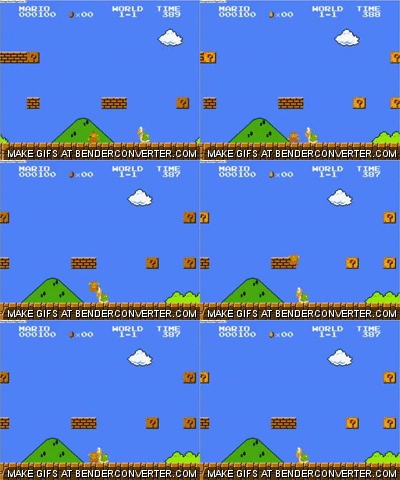
The first hint is death. Starting with Mario Bros. in 1983, Mario didn't actually die--instead, he simply fell off the stage. In an animation that has since become iconic, the Mario sprite actually came unglued from the environment of the game and fell outside the gameworld. Is this breaking the fourth wall? Perhaps it was a way to explain why one man could have multiple "lives": he wasn't actually dying. Like a long-running theatrical production, he was just doing another run-through of the same scene.

There have been blatant hints sprinkled throughout the series, getting less and less subtle with each subsequent title.

In Super Mario Bros. 2, Nintendo introduced a character selection screen that took place behind curtains:


With Super Mario Bros. 3, the entire title screen was a play:


In Paper Mario, the RPG interpretation of the Mario universe revolved around "battles" staged at a theater, complete with applauding audience members (fully realized here in the sequel, The Thousand-Year Door):


Not only are Mario, Luigi, and Bowser familiar to video game audiences, but most of the bit-role characters are as well. From Koopa Troopas to Shy Guys to Bullet Bills, the Mario franchise has built up a huge stable of otherwise inconsequential minions that fans know and love. No other series in gaming has accomplished this feat. Because of Miyamoto's "troupe of actors" approach in which characters recur in different roles, even casual gamers know what a Goomba is.

But are all Mario's roles created equal? There was another answer in the interview that perked my ears up:
GI: Mario has been a boxing referee, a doctor, an Olympian, and a carpenter. Are all these official careers in Mario lore? If he has a medical degree, why does he continue his plumbing business?
MIYAMOTO: There's really only one rule in terms of the things that Mario does. Generally, it's that he's more on the blue-collar side. He's hard-working, and certainly much more physical in nature. So, I think that a doctor is sort of an unexpected and perhaps unbelievable role for Mario. Perhaps the Dr. Mario you're thinking of was maybe, in some way, not necessarily legitimate.
I love this idea that Dr. Mario was a strange role even for the character's creator. This reminds me of films where you see actors cast against type in a role they don't quite fit--like Robin Williams in horror movies. The fact that Williams comes from a comedy background makes the horror that much more creepy. With Mario, the fact that he's normally a working-class guy means a role as a doctor doesn't quite ring true. Miyamoto himself gets the impression Dr. Mario isn't quite "legitimate." After all, all he seems to do is pop pills!

With the Mario franchise having an extensive canon of mostly self-contained stories, Miyamoto tells us there's no overarching plotline at all. In fact, perhaps the events of these games aren't happening at all--they're simply all part of stories told by a jolly troupe of performers. It's as if... Mario is a fictional character.

Is this breaking the fourth wall? Is Mario acknowledging he's in a game? This medium hasn't quite learned how to convey gripping plots, but designers like Miyamoto have forged the way for memorable characters. With the same ones in each game, the ensemble cast becomes familiar to us. It's like actors you see onstage or in film. You know Meryl Streep isn't really Julia Child or Margaret Thatcher, but you like the cut of her jib so you'll go see anything she's in anyway.

Mario is Meryl Streep.