Showing posts with label BioWare. Show all posts

Thursday, January 3, 2013

Three trends in gaming: 2012

Well, 2012 is finally over and done with, and quite a lot happened.  To be honest, I didn't play that many new video games in 2012 (you'll see that pop up later), so I figured a more important article I could actually write about would be a brief analysis of three trends in the larger "gaming community". Here they are, in no particular order:

Feminism in gaming finally gets some news, or "Why I don't want to identify as a gamer"


Gaming and gamer culture in the past have been particularly patriarchal, and despite a few important improvements remains strongly in thrall to the straight white male demographic.  Incidentally, I am a part of this demographic, and in addition haven't really done serious research into these topics, so MASSIVE DISCLAIMER, I can't really speak for any of this other than my perspective.  However, they were definitely big news in the gaming community this year, which should be a good sign.  Anita Sarkeesian and Tropes vs Women  caused a firestorm of controversy basically by existing, and showed everyone who had forgotten just how disgusting "gaming culture" truly is.  Ditto for some of the backlash towards Jennifer Hepler, a writer at BioWare, whose opinions on the state of gaming were for the most part attacked not for their validity, but because of her gender (yes, yes, there were several valid critiques, but they were exceptions to the rule).

The idea that lauched a thousand hateful comments

On the gaming side of things, the big problem seems to be trailers.  The truly skeevy new Tomb Raider trailer, and the information released by the developers.  Apparently, you make female characters more interesting by shrinking their chest size and putting all those extra pixels into making sexual assault (nice try, PR department, nobody bought it) an integral part of character development.  Lovely.  And of course, who could forget the Hitman: Absolution trailer with the infamous naughty nunsploitation?

So, after all that bad news, there are glimmers of hope on the horizon.  For one, the mainstream press has actually been on the ball in expressing condemnation of this blatant asshattery.  If nothing else, the fact that these things are recognized as problems by the establishment is a good thing, and hopefully the article in a years' time will be more positive.  We can all be better.

Wednesday, November 14, 2012

Global Gaming Spotlight: Mass Effect (Canada)

With each post in this mini-feature, I highlight a game from a different country around the world. Keep in mind these aren't necessarily the best or most popular games from each nation, but simply a fitting representative.


As I've touched on recently, Canada has been a colossus of game development over the past decade or so. Everything from EA Sports to Eternal Darkness to Sins of a Solar Empire. Both Vancouver and Montréal are hubs of North American game development. So who was I going to pick as my representative of the Canadian games industry? I was tempted to go with the Canadian stereotype and pick the Greatest Sports Game of All Time, EA's hockey classic NHL '94, but I knew I had to choose someone else.

Mass Effect - BioWare, 2007

A company in Edmonton, of course. Between Baldur's Gate, Neverwinter Nights, Knights of the Old Republic, Jade Empire, and Dragon Age, BioWare has essentially shaped the Western approach to role-playing games. And none of them is more important than their sci-fi action/RPG trilogy Mass Effect.

BioWare pioneered the idea of an open-ended moral compass in Western RPGs. Do good things, and people will realize you're a good person. Do bad things, and people will realize you're a bad person. It seems almost cliché and binary at this point, but before this system, gameworlds would often react to players the exact same way regardless of what players did. BioWare's games make the player feel like they're actually making a difference in the gameworld they inhabit.


The other big innovation of BioWare's games has been the conversations between characters. Games as a medium have struggled with learning how to make conversations interactive and interesting. While BioWare still features the traditional "conversation trees," they've taken these to the next level of emotional nuance.

BioWare is not infallible. The massively-multiplayer online adaptation of their Star Wars series, The Old Republic, was a huge commercial failure. And Mass Effect 3's controversial ending led to mass player complaints which led to the developer actually changing the ending of the game--setting a dangerous precedent for authorial control in gaming. But we can't question the importance of this bastion of Canadian game design.

Sunday, September 30, 2012

Where's Han? Star Wars' Reluctance to Embrace Its Most Iconic Era


I’ve been waiting for a Han Solo game my entire life. It makes sense: a fan-favorite character, a swashbuckling bounty hunter with plenty of adventures and hijinks all around the galaxy. It could essentially be Grand Theft Auto in space, and players could pimp out the Millennium Falcon to their liking!
Seems like a perfect fit. So why hasn’t there been a single video game with Han Solo as the primary character, other than 2003′s Star Wars: Flight of the Falcon on Game Boy Advance?
How did we get to this point? I blame it all on two titles: Star Wars Galaxies and Knights of the Old Republic. When both games came out in summer 2003, it changed everything. KotOR was one of the first hugely successful, big-budget Star Wars video games not based at all on the era of the original film trilogy. It took place long before that, when Jedi abounded. Along with this came Galaxies, an MMO taking place in the era of Episodes IV, V, and VI. It was a gargantuan commercial flop.
The success of KotOR and the failure of Galaxies has pushed LucasArts away from games based on the original movie trilogy. There have been a few exceptions, but by and large, it seems video games have unfortunately become the exclusive realm of Star Wars‘ Expanded Universe. Maybe this is great news for fans of the hundreds of Star Wars tie-in novels that have been written, but for the rest of us fans, it’s a shame. It may be a long time before Han Solo finally gets his own game.
The upcoming Star Wars 1313 shows some promise, though. While it’s not connected to any of the films, the developers maintain that players will NOT be able to use a lightsaber. In our lightsaber-obsessed Star Wars gaming community, that’s great news to me. The seedy Coruscant underworld setting looks much darker than previous SW games, and the developers claim it deals with “mature themes.” We’ll see what that means, though; it’s always a gamble when franchises seek to hard-boil themselves. In an effort to appear more grown-up, many franchises lose their heart and soul–just look at Prince of Persia: The Warrior Within or Max Payne 3. Hopefully Star Wars 1313 bucks the trend.

Friday, July 15, 2011

Top Ten: Canadian game developers

In the game industry, we often think of Japan and the United States as the only relevant nations. And yes, the vast majority of games today do come from these two countries. But like Neil Young and Jim Carrey, many people we assume are American are, in fact, Canadian. Our neighbors to the north have contributed to video games in a huge way--they're the #3 biggest game manufacturer in the world. So let's take a gander at the top ten Canadian video game developers. Looking at the games on this list, it seems Canadians have a passion for strategy games. What does that say about them as a gaming nation?

10. United Front Games

A new developer created from former employees of EA, Rockstar, Radical Entertainment, and Volition, Inc. Developed the user-creation-driven kart racing ModNation Racers in 2010.

9. Rockstar Vancouver

Began life as Barking Dog Studios making extra content for other games, but went on to become a part of British giant Rockstar Games and create the underrated open-world boarding school game Bully in 2006. Currently working on the upcoming sequel to Max Payne.

8. Ironclad Games

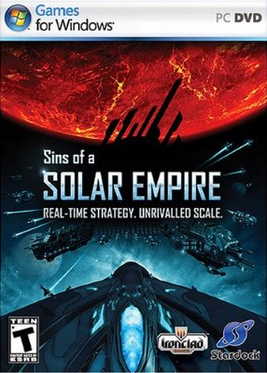
Consists of former Barking Dog Studios employees. Developed the landmark 2008 science fiction strategy title Sins of a Solar Empire.

7. Silicon Knights

On this list primarily because of their masterpiece psychological horror work, 2002's Eternal Darkness: Sanity's Requiem. Fittingly, afterwards they went crazy and created the titanic disappointment Too Human in 2008.

6. Relic Entertainment

All about strategy games, largely in the spacey vein. Created the 1999 Homeworld and Warhammer 40,000: Dawn of War in 2004. as well as the crown jewel of World War II strategy games in 2006, Company of Heroes.

5. EA Canada

The biggest developer for the biggest American third-party publisher is based in Burnaby, British Columbia. A major player in the sports game genre. Created perhaps the best sports game of all time, NHL '94, and continue to perfect the art of hockey with the NHL series. The industry standard for soccer, too, with FIFA. Invented the snowboarding genre with SSX. Dethroned Tony Hawk's skateboarding monopoly with Skate (as EA Black Box).

4. Ubisoft Montréal

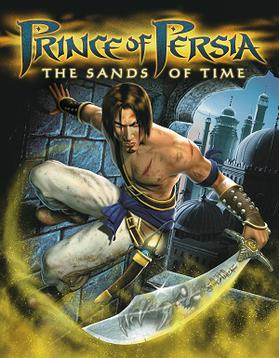
The most successful French-Canadian developer. Fittingly, a branch of French-French publishing giant Ubisoft. Brought stealth gaming to the masses with Tom Clancy's Splinter Cell. Reinvented the Prince of Persia franchise for the modern era, then created a spiritual 3D platforming successor with Assassin's Creed.

3. BioWare

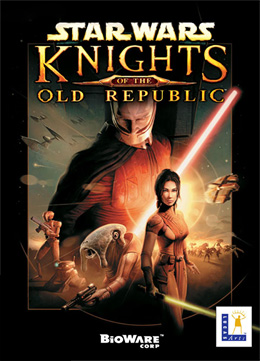
Name a major Western RPG with some sort of moral choice system, and there's a large chance BioWare developed it. Defined early 2000s RPGs with Baldur's Gate and the Neverwinter Nights reboot. Made what's widely considered the "greatest Star Wars game ever," Knights of the Old Republic. Developed the commercial smash hits Mass Effect and Dragon Age, as well as the vastly overlooked ancient China adventure Jade Empire.

2. Chris Taylor

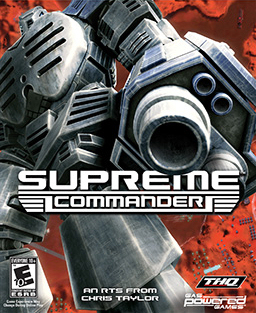
The biggest name in sci-fi strategy games, with a few dungeon crawlers to boot. Worked with Cavedog Entertainment and later his own company, Gas Powered Games; both headquartered in the United States. Conceived Total Annihilation in 1997, the first real-time strategy game with 3D graphics. Went on to make his mark on the dungeon crawling genre with 2002's Dungeon Siege, then went back to his native science fiction strategy with Supreme Commander in 2007.

1. Sid Meier

Really doesn't need an intro. One of gaming's first iconic auteurs. Worked with MicroProse and later his own company, Firaxis Games; both headquartered in the United States. Sense a trend in Canadian video game figures? Created landmark pirate sim creatively titled Pirates! in 1987. Revolutionized strategy gaming with Civilization in 1991, followed by futuristic opus Alpha Centauri in 1999.