Showing posts with label Global Gaming Spotlight. Show all posts

Thursday, February 21, 2013

Global gaming: The Snowfield (Singapore)

With each post in this mini-feature, I highlight a game from a different country around the world. Keep in mind these aren't necessarily the best or most popular games from each nation, but simply a fitting representative.

The Snowfield - Singapore-MIT GAMBIT Game Lab, 2011 (play it here)

Considering we're getting up to ten inches of snow today in Kansas City, I felt like writing about The Snowfield. But surprisngly, it comes from Singapore--not exactly a place known for its wintry weather.

The Snowfield was developed by the Singapore-MIT GAMBIT Game Lab. GAMBIT was a collaboration focused on encouraging young game designers in Singapore to explore the medium. Their 2011 work is a war game, but not quite a wargame. In The Snowfield, you play as a World War I soldier walking around a battlefield in the aftermath of the battle.


Considering the industry's fixation with wargames, this post-war image is a great commentary on the aftermath we don't get to see in other games. No shooting people, no action. Just suffering bodies in the cold.

Wednesday, February 13, 2013

Global gaming: Sine Mora (Hungary)

With each post in this mini-feature, I highlight a game from a different country around the world. Keep in mind these aren't necessarily the best or most popular games from each nation, but simply a fitting representative.

Sine Mora - Digital Reality, 2012

I've been on a Suda51 kick recently, and I love me some Eastern European game design. Grasshopper Manufacture's most recent collaboration is with Budapest-based studio Digital Reality for the shoot-em-up downloadable title Sine Mora. It may be the best modern shoot-em-up since Treasure's Ikaruga. Like Ikaruga, its twitch-gameplay difficulty harkens back to the genre's arcade roots. But while most games like this are vertical these days, Sine Mora is a horizontal game based around a time-slowing mechanic which helps the player get through the bullet-hell levels and epic bosses. Grasshopper did the artwork, but Digital Reality did all the actual game design.


And most importantly, while most foreign games in my global gaming series are still in English (for better and for worse), Sine Mora's characters actually speak in Hungarian. I love it. I don't know if it's Grasshopper who made the call to let Digital Reality keep the game in their native tongue, but publisher Microsoft deserves major props for letting it happen. This may be the first time a game has ever been released worldwide in Hungarian, a language spoken by only 15 million people.

The global gaming map so far (zoom out for full map):


View Global Gaming Spotlight in a larger map

Monday, February 11, 2013

Global gaming: Rock of Ages (Chile)

With each post in this mini-feature, I highlight a game from a different country around the world. Keep in mind these aren't necessarily the best or most popular games from each nation, but simply a fitting representative.

Rock of Ages - ACE Team, 2011

We don't get the chance to talk about Latin American videogames very often, even as Chile has one of the region's strongest economies and standards of living. But we'll hopefully see more and more Latin American games over the next couple decades. Extra Credits even thinks so, in their totally unique and original "Global Games" video series they just started...

Rock of Ages is a hilarious, bizzare tower defense/Marble Madness hybrid with a Monty Python-esque art style. You control a giant rock with a creepy (in a good way) face. In some ways, it reminds me of the other giant-ball misunderstood classic, Odama. It was released on Xbox Live Arcade in 2011, developed by three brothers in Santiago.


The game was published by Japanese distributor Atlus. as I get older and my taste in games gets more obscure, I gain more respect for Atlus--they do a great job of bringing a higher profile to smaller, lower-budget games. While the games industry splits into two distinct camps--AAA and indie--the "AA" games and publishers like this are beginning to disappear. Hopefully Atlus can continue to thrive into the next decade.

Monday, February 4, 2013

Global Gaming: The Path (Belgium)

With each post in this mini-feature, I highlight a game from a different country around the world. Keep in mind these aren't necessarily the best or most popular games from each nation, but simply a fitting representative.

The Path - Tale of Tales, 2009

Tale of Tales is one of the first developers brought up in conversations about "art games." Many of their titles are more like interactive stories than games, per se. But the pretentious arty person I am, I'd argue interactive stories are games.

Anyway, Tale of Tales is known for titles like The Endless Forest, a massively-multiplayer game where you don't really do anything except walk around a forest as a deer, and dance around with other deer. They also made The Graveyard, a short game about an old lady... walking through a graveyard. That's the whole game. Their newest title, Bientôt l'été, is an asymmetrical multiplayer game about playing chess and drinking wine with anonymous strangers.


But Tale of Tales' most influential work is The Path. It's a psychological horror game based on the more grim (or Grimm?) side of fairy tales, and Little Red Riding Hood in particular. The player walks through the woods to Grandmother's house, and experiences some pretty creepy stuff along the way.

Despite lacking any overt "scares", The Path is more creepy than almost any horror game on the market today. It's only $10, so you should download it.

Thursday, January 31, 2013

Global Gaming: Machinarium (Czech Republic)

With each post in this mini-feature, I highlight a game from a different country around the world. Keep in mind these aren't necessarily the best or most popular games from each nation, but simply a fitting representative.


Machinarium - Amanita Design, 2009

Speaking of games of Czech origin, nothing exemplifies the quiet Eastern European beauty of Czech design than the work of Brno-based studio Amanita Design. At the cutting edge of the point-and-click revival we've seen in recent years, Amanita is known for its free browser-based game Samorost and its sequel, but its most iconic title is their first full-length game, 2009's Machinarium.

Machinarium is a classic point-and-click puzzle adventure, the story of a robot named Josef (named after Josef Čapek, creator of the word "robot") who explores a mystery-filled city populated by robots. There's no language barrier here, as there are no words through the entire game. The plot is moved forward purely through visual cues.

Since it's a "classic" point-and-click game, Machinarium also features some "classic" point-and-click difficulty with a few obtuse puzzles as frustrating as anything from the '90s. The hint system is helpful, but I can't help but feel like that's cheating a bit. Regardless, Machinarium is a gorgeous hand-drawn game with a soundtrack I still listen to nightly when I'm in bed.

Thursday, January 24, 2013

Global gaming: DayZ (New Zealand)

With each post in this mini-feature, I highlight a game from a different country around the world. Keep in mind these aren't necessarily the best or most popular games from each nation, but simply a fitting representative.

DayZ - Dean Hall, 2012

DayZ isn't quite its own game. It's in fact a free mod for military shooter ArmA II, developed by Czech studio Bohemia Interactive. But DayZ has transcended its source game as an internet phenomenon, a persistent-world permanent-death zombie shooter MMO with a colossal following. You can download it here, although it requires a copy of the (not free) ArmA II to play.

Creator Dean "Rocket" Hall worked on the concept for DayZ while serving in the New Zealand army, "as a suggestion for training soldiers through exposure to situations provoking emotion and relevant thought processes." At first I wanted to overlook DayZ as another entry in the over-saturated zombie fad of recent years, but its focus on emergent gameplay and permadeath made me realize it's probably one of the most important videogames of this decade.


Hall announced in August that he would work together with ArmA's original developer Bohemia to work on a standalone DayZ game, slated for release sometime this year. If it's anything like Counter-Strike or Dear Esther's transitions from mods to full products, it should be revolutionary.

Sunday, January 20, 2013

Global Gaming: The Secret World (Norway)

With each post in this mini-feature, I highlight a game from a different country around the world. Keep in mind these aren't necessarily the best or most popular games from each nation, but simply a fitting representative.

The Secret World - Funcom, 2012

While Northern Europe has seen a huge boom in game production recently, Norway has struggled the past few years. Oslo-based Funcom remain the only major developer in the country. Their focus on massively-multiplayer games has produced some interesting results with unfortunate commercial reaction.

Funcom's single-player 1999 adventure title The Longest Journey was perhaps the swan song of a dying genre, an under-appreciated classic. Their first major MMORPG release, 2001's Anarchy Online, never become the sci-fi superhit they wanted it to be, but it retains a committed following twelve years later, making it one of the longest-lasting MMOs in existence.

Age of Conan was a flop in 2008, so when the studio prepared for their new MMO project The Secret World last year, they made sure it was as original as possible. While the vast majority of massively-multiplayer games fall into either the generic science fiction or Tolkien-derived "fantasy" settings, The Secret World is placed in a modern-day location with a story revolving around conspiracy theories and the Illuminati.


"Free-to-play" has been the hot new buzzword of online gaming, and Funcom took a huge risk when they decided The Secret World would retain the traditional (and perhaps outdated) monthly-subscription payment structure. Of course, no online gamers in 2012 wanted to pay for their games, so the game struggled commercially despite a warm critical reception. Now the game has given in and gone free-to-play, much like other historic MMO flops of recent years like The Old Republic.

Hopefully this doesn't keep Funcom from creating big games in the future. Maybe it'll even motivate them to return to their single-player roots.

Monday, January 14, 2013

Global Gaming: Super Hexagon (Ireland)

With each post in this mini-feature, I highlight a game from a different country around the world. Keep in mind these aren't necessarily the best or most popular games from each nation, but simply a fitting representative.

Super Hexagon - Distractionware, 2012

When it comes to Irish games, I knew I had to pick something by Terry Cavanagh, aka Distractionware. He's produced some of the most original 2D indie games of the past few years, whether it's Don't Look Back or VVVVVV, or even the world's first cat MMO, ChatChat.


But speaking of mobile gaming, Cavanagh's real breakthrough has been his first iPhone/iPad game, Super Hexagon. Based on his original (free) non-super Hexagon, Super Hexagon is a mind-bendingly simple game about techno music and hexagons. Its only controls are "left" and "right," and it's unbelievably hard. Just take a gander:


Beautiful, isn't it?

Wednesday, January 9, 2013

Global Gaming: September 12th (Uruguay)

With each post in this mini-feature, I highlight a game from a different country around the world. Keep in mind these aren't necessarily the best or most popular games from each nation, but simply a fitting representative.

September 12th: A Toy World - Newsgaming, 2003 (play it here)

I've been neglecting the non-European game industry for a while. It's simply easier to write about Europe because it's so many countries clustered together with a fair amount of income. Game development in South America, on the other hand, is hard to come by.

I've only covered one South American game in this series so far; there are plenty of aspiring Latin American game designers but many of them move elsewhere to pursue their careers, such as Vander Caballero's Montréal-based studio and their debut game Papo y Yo.


"Newsgaming" is both a developer and a concept, of making small, timely games that address current world issues. September 12th: A Toy World was made in 2003 in response to the U.S. military's "War on Terror." It's a simple, quick-to-play "simulation" of the war. We're slowly starting to see more indie games embrace this activist approach, but it'll be a while before mainstream publishers support it.

Monday, January 7, 2013

Global Gaming: Angry Birds (Finland)

With each post in this mini-feature, I highlight a game from a different country around the world. Keep in mind these aren't necessarily the best or most popular games from each nation, but simply a fitting representative.

Angry Birds - Rovio Entertainment, 2009

When thinking about Finnish game design, I really wanted to include Remedy Enertainment's pivotal 2001 third-person action title Max Payne, or their more recent thriller Alan Wake. But at the end of the day if I was going to pick one game to represent Finland, I knew it had to be Angry Birds. With the infamous animal-tossing game, Espoo-based developer Rovio Entertainment not only put Finland on the gaming map, but showed the industry that mobile gaming could be just as profitable as any AAA blockbuster.

At this point, Angry Birds is ubiquitous on smartphones and iPads. The eponymous grumpy poultry have grown into a merchandizing powerhouse with toys and clothing. There's even an Angry Birds-themed amusement park in its home country, with another one in China on the way.

Thursday, December 27, 2012

Global Gaming: Pyongyang Racer (North Korea)


With each post in this mini-feature, I highlight a game from a different country around the world. Keep in mind these aren't necessarily the best or most popular games from each nation, but simply a fitting representative.

Pyongyang Racer - Nosotek, 2012 (play it here)

I bet you weren't expecting a game from the Democratic People's Republic of Korea. Pyongyang Racer was developed by Nosotek, "the only company in Pyongyang offering western working conditions and Internet access" according to the studio's official website.

It's the first North Korean videogame playable in the West, although I've still had issues getting the browser-based game to load. I would describe it, but the game's website describes it better than I ever could:

"Finally, gamers have a chance to enjoy a driving game based in North Korea, in road rally format where drivers have to capture gasoline cans in order to continue their adventure. Pyongyang Racer, a video game developed in conjunction with a tour company, lets racers ride around the DPRK capital and see the sights, such as a bigger version of France's Arc De Triopmhe. There are also plenty of chances to obey the traffic wardens, which are a site unique to the streets of Pyongyang despite the overall lack of traffic and the rest of the world's fixation with automated traffic signals. In what may be a sign of new openness on behalf of the famed "Hermit Kingdom" which has been ruled by only 3 people in the last 60 years, the Pyongyang Racer video game opens up this piece of the world and gives a glimpse of a unique culture that is known to only a few. The simplicity of the gameplay, and the toned down graphics, serve as a welcome throwback to games of the past which focused far more on gameplay than visual effects. Those who are old enough to remember 8-bit consoles and the hours spent playing them will take note of the concept that flashy effects still take a back seat to the challenge of the game itself. In this setting, Pyongyang Racer offers great promise except for those who hope to find the legendary unicorn lair known to be sequestered in Pyongyang's past. 
Notes and Special Information 
Special note: In actual North Korea, you may have more difficulty with such driving, or driving around in general, since the capital city may have traffic wardens on every corner, but is not known for traffic congestion."
It's goofy enough to make you think it's a parody. But it's not. As to be expected, this is incredibly bizarre. Is this the first leak in the dam before the North Korean Revolution of Game Design? You be the judge.

The Global Gaming map so far (zoom out for full map):


View Global Gaming Spotlight in a larger map

Thursday, December 13, 2012

Global Gaming: The Witcher (Poland)

With each post in this mini-feature, I highlight a game from a different country around the world. Keep in mind these aren't necessarily the best or most popular games from each nation, but simply a fitting representative.

The Witcher - CD Projekt RED, 2007

It's not often we see games directly based on books--at least not without a film adaptation in between. But like its Eastern European brethren 4A Games and their Metro 2033, Warsaw-based CD Projekt RED decided to take literary inspiration for their debut title. The Witcher is based on the cult fantasy series of the same name by Polish author Andrzej Sapkowski.

Poland is so proud of its videogame creation that The Witcher's sequel, Assassins of Kings, was given to U.S. President Obama by Polish Prime Minister Donald Tusk as a gift when the two heads of state met last year.


The Witcher is a dark fantasy tale about, well, "witchers," or monster hunters. The series is given credit for taking a more mature approach to the genre than many other Western RPGs. This dark tone is indicative of Eastern European game design, and as the region gains prominence in the industry, hopefully we'll see a wider variety of melancholic tales drawing on Slavic imagery.

The global gaming map so far (zoom out for full map):


View Global Gaming Spotlight in a larger map

Sunday, December 9, 2012

Global Gaming: Lineage (South Korea)

With each post in this mini-feature, I highlight a game from a different country around the world. Keep in mind these aren't necessarily the best or most popular games from each nation, but simply a fitting representative.

Lineage - NCsoft, 1998

While we're on the topic of massively-multiplayer online games, I thought I'd take the global gaming spotlight to South Korea. We all know Korea has a passion for certain American-developed games, but what about their own domestic industry?

South Korea is the most internet-connected country in the world, so they love online PC games, and MMOs in particular. There's no bigger name in Korean MMOs than Seoul-based NCsoft. In the West they're most famous for Guild Wars, developed by NCsoft's U.S. subsidiary ArenaNet. But back home, NCsoft's biggest titles are perhaps their Lineage series. Influenced by Blizzard's hack-and-slash looter Diablo and seminal MMO Ultima Online, Lineage at one point sported three million subscribers--impressive for a Korean game in the '90s.


Today, NCsoft's biggest effort is its 2009 MMO Aion, most notable for its twisted artistic direction compared to other MMO stalwarts like World of Warcraft and even ArenaNet's Guild Wars. With the classic subscription model for massively-multiplayer games going down the drain, we'll see if NCsoft can adapt to a new MMO landscape in the next five years.

Thursday, November 29, 2012

Global Gaming: De Baron (Netherlands)

With each post in this mini-feature, I highlight a game from a different country around the world. Keep in mind these aren't necessarily the best or most popular games from each nation, but simply a fitting representative.

De Baron (The Baron) - Victor Gijsbers, 2006 (download it here)

In the gaming world, the Netherlands is best known as a hotbed of hacking and the birthplace of the demoscene. But for its global gaming spotlight, I wanted to highlight another recent trend in indie game design: the resurgence of interactive fiction.

Interactive fiction, or text-based adventure games, were around before games had any graphics. And even when rudimentary computer graphics emerged, text-based games were still able to provide much more complex, varied experiences--everything from Colossal Cave Adventure and Zork in the 1970s to an interactive fiction adaptation of The Hitchhiker's Guide the Galaxy in 1984 (co-created by the book's author Douglas Adams!).


While our internet-driven culture is infamously ADD and "kids don't read books anymore," we in fact read more than we ever did before. You're reading this, aren't you? Despite all our attention on YouTube videos and Netflix streaming, the bulk of our internet experience is spent reading. So it makes sense that the relatively easy-to-program medium of interactive fiction is seeming a resurgence.

Dutch designer Victor Gijsbers' De Baron is perhaps the most striking example of this. What seems like a standard high-fantasy story of a baron and a little girl turns into a much darker, philosophical and ethical quandary. I don't want to give anything else away. Just go ahead and play it. It's free. Warning: not for kids.

The Global Gaming Spotlight so far (zoom out for full map):


View Global Gaming Spotlight in a larger map

Tuesday, November 27, 2012

Global Gaming: Eve Online (Iceland)


With each post in this mini-feature, I highlight a game from a different country around the world. Keep in mind these aren't necessarily the best or most popular games from each nation, but simply a fitting representative.

Eve Online - CCP Games, 2003

While massively-multiplayer online giants like World of Warcraft continue to lose steam, Eve Online is the little engine that could. The science-fiction spacefaring title by Reykjavík studio CCP games has a fertile player base, nearly a decade after its release. MMOs face the colossal task of keeping their subscribers interested in their game after playing for a month or so. World of Warcraft, and others like Guild Wars and The Old Republic, try to do this by continually creating more content in the gameworld, releasing expansions fairly regularly.

CCP Games updates their game with tweaks and patches, but Eve Online's ecosystem thrives because of its reliance on emergent gameplay. Instead of play being dictated by the developers, it's dictated by the players--this is the perfect fit for a massively multiplayer title.Eve features perhaps the most highly-developed in-game economy of any MMO ever published, which contributes to the game's longevity. It's not the most accessible game for casual players, but for those who sink their teeth into it, Eve boasts a vibrant player community that's nine years old.


But CCP isn't done. They're currently working on Dust 514, a first-person shooter which ties in to gameplay in Eve Online. While Eve players control world events on the macro level, Dust 514 players execute events on the micro level. This merging of strategy games with first-person shooter games has been attempted numerous times over the years, but CCP is trying to finally get the concept right when Dust releases at the end of the year.

The Global Gaming map so far (zoom out for full map):


View Global Gaming Spotlight in a larger map

Friday, November 16, 2012

Global Gaming Spotlight - S.T.A.L.K.E.R.: Shadow of Chernobyl (Ukraine)


With each post in this mini-feature, I highlight a game from a different country around the world. Keep in mind these aren't necessarily the best or most popular games from each nation, but simply a fitting representative.

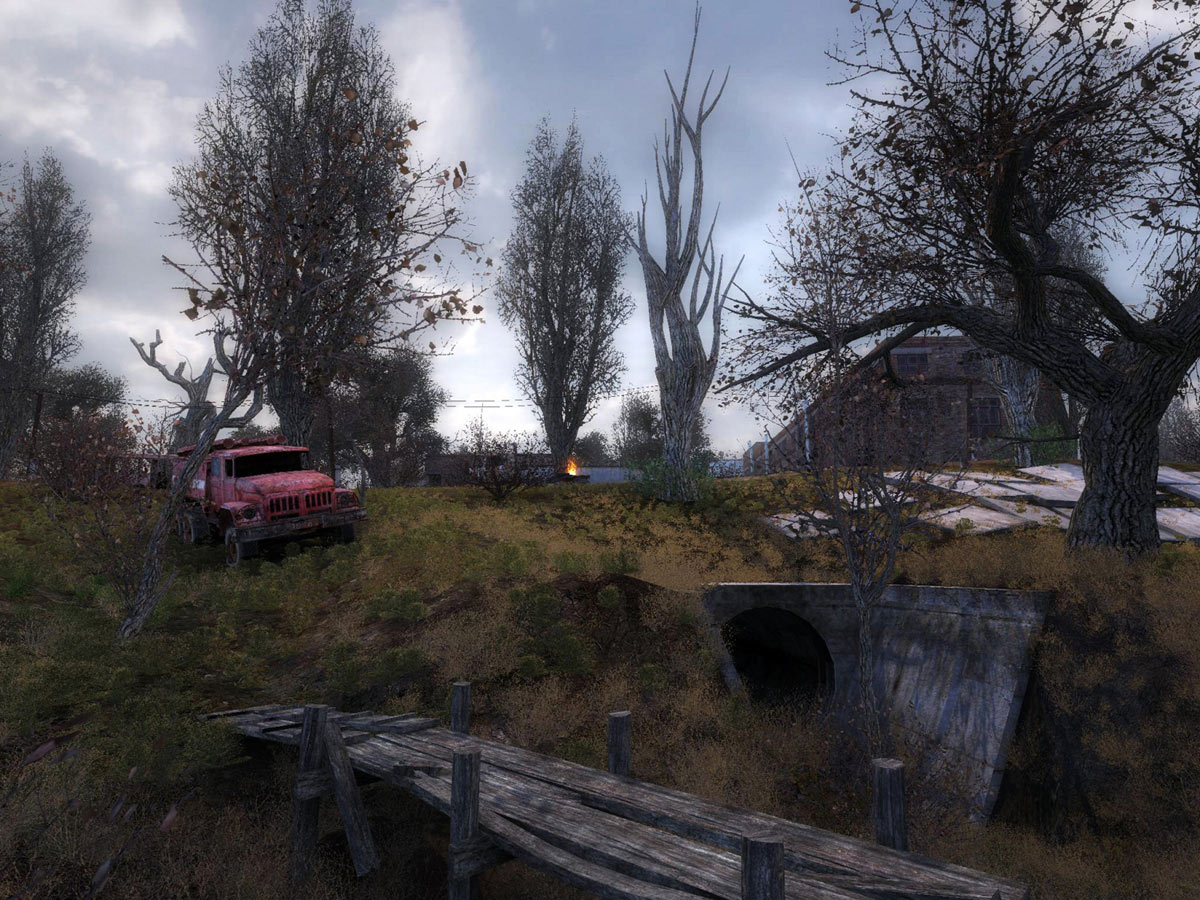
S.T.A.L.K.E.R.: Shadow of Chernobyl - GSC Game World, 2007

Ukraine is outpacing its former overlord in game production these days. And they seems to have the "post-apocalyptic survival-horror first-person shooter" genre on lock. I really wanted to feature one of my personal all-time favorites, 4A Games' Metro 2033, for the Ukraine global gaming spotlight. But Metro is based on a Russian novel, and takes place in the subway tunnels of Moscow. S.T.A.L.K.E.R.: Shadow of Chernobyl, on the other hand, takes place in... Chernobyl, one of the most globally significant places in Ukraine.

GSC Game World's title is an open-world affair, which is rare for horror. Usually, horror (whether it's in games or film or anything else) depends on a very linear storyline so the audience gets scared by exactly what the creators want them to get scared by, at the exact right time to maximize creepy pacing.


On top of that, open-world games are often "jacks of all trades, masters of none" because they have to render such a huge amount of content for players to experience. This doesn't seem like the ideal approach for scaring your audience. But Shadow of Chernobyl somehow makes it work.

Shadow of Chernobyl achieves its goals by relying on emergent gameplay. When the player isn't told what to do, they can often scare themselves--we see this in Slender, and even to a certain extent in the creepy procedurally-generated underworld of Minecraft. Because the player isn't always sure where they're meant to go, they often peek into the most horrifying of places they didn't even know existed.

I've recently fallen in love with Eastern European game design. It makes sense that the whole "former Soviet republic" thing, combined with the legacy of Chernobyl, make for some melancholy post-apocalyptic choices by Ukrainian studios.

The Global Gaming Spotlight so far (zoom out for full map):


View Global Gaming Spotlight in a larger map

Thursday, November 15, 2012

Global Gaming Spotlight: Limbo (Denmark)

With each post in this mini-feature, I highlight a game from a different country around the world. Keep in mind these aren't necessarily the best or most popular games from each nation, but simply a fitting representative.

Limbo - Playdead, 2010

I've written about the boom of Nordic game development, and Denmark is no exception. But their roots go deeper than the past ten years. Designers at the University of Copenhagen in 1991 created DikuMUD, one of the most important multi-user dungeons--text-based online games that pioneered internet gaming.

Today, the highest-profile studio in Danish gaming is IO Interactive, creators of the stealth-action Hitman series and the underrated revolutionary title Freedom Fighters. The composer for the music in many of IO's games, Jesper Kyd, has become perhaps the biggest name in game soundtrack writing. He recently penned the scores for big-budget works like the Borderlands and Assassin's Creed series.

But the most important Danish game design was done by a few people who split off from IO to create their own independent studio, Playdead. Their minimalist platformer Limbo is a masterwork in atmosphere and noir-inspired art direction.


Limbo is about a little boy looking for his sister. There is absolutely no heads-up display of information on the game screen, and nothing in the story is really explained. Players must figure it out on their own. While most mainstream gaming assumes the player is stupid and must be spoon-fed information, Playdead does what all good art accomplishes: respects the audience's intelligence and lets them come to conclusions on their own.

Playdead's game had the unfortunate luck of being released in the wake of another "arty" 2D platformer featuring a kid with a large head--Jonathan Blow's Braid. But while Braid hits the player over the head with exposition and walls of text, Limbo takes a very Scandinavian approach and goes with a more elegant, minimalist approach to its design. It will forever live in Braid's shadow, but Limbo is perhaps the most important platforming game of the last decade.

Wednesday, November 14, 2012

Global Gaming Spotlight: Mass Effect (Canada)

With each post in this mini-feature, I highlight a game from a different country around the world. Keep in mind these aren't necessarily the best or most popular games from each nation, but simply a fitting representative.


As I've touched on recently, Canada has been a colossus of game development over the past decade or so. Everything from EA Sports to Eternal Darkness to Sins of a Solar Empire. Both Vancouver and Montréal are hubs of North American game development. So who was I going to pick as my representative of the Canadian games industry? I was tempted to go with the Canadian stereotype and pick the Greatest Sports Game of All Time, EA's hockey classic NHL '94, but I knew I had to choose someone else.

Mass Effect - BioWare, 2007

A company in Edmonton, of course. Between Baldur's Gate, Neverwinter Nights, Knights of the Old Republic, Jade Empire, and Dragon Age, BioWare has essentially shaped the Western approach to role-playing games. And none of them is more important than their sci-fi action/RPG trilogy Mass Effect.

BioWare pioneered the idea of an open-ended moral compass in Western RPGs. Do good things, and people will realize you're a good person. Do bad things, and people will realize you're a bad person. It seems almost cliché and binary at this point, but before this system, gameworlds would often react to players the exact same way regardless of what players did. BioWare's games make the player feel like they're actually making a difference in the gameworld they inhabit.


The other big innovation of BioWare's games has been the conversations between characters. Games as a medium have struggled with learning how to make conversations interactive and interesting. While BioWare still features the traditional "conversation trees," they've taken these to the next level of emotional nuance.

BioWare is not infallible. The massively-multiplayer online adaptation of their Star Wars series, The Old Republic, was a huge commercial failure. And Mass Effect 3's controversial ending led to mass player complaints which led to the developer actually changing the ending of the game--setting a dangerous precedent for authorial control in gaming. But we can't question the importance of this bastion of Canadian game design.

Tuesday, November 13, 2012

Global Gaming Spotlight: La Abadía del Crimen (Spain)


With each post in this mini-feature, I highlight a game from a different country around the world. Keep in mind these aren't necessarily the best or most popular games from each nation, but simply a fitting representative.

La Abadía del Crimen - Opera Soft, 1987

Most of the games I've written about so far in this series have been either modern games or well-known classic games. La abadía del crimen (The Abbey of Crime) is a bit more obscure--it was never even officially translated to English or released outside its home country. While Spain isn't a major producer of video games today, the nation went through a golden era in the 1980s when it was second only to the UK in terms of European game production.

La abadía del crimen is perhaps the most important of these Spanish titles from the '80s. Originally meant to be a direct adaptation of Italian philosopher Umberto Eco's first novel The Name of the Rose, the game is about a Franciscan monk solving murders taking place in his abbey.


The game was notable for being one of the first to exist over a specific period of time--it's split into seven days further split into Canonical hours. In addition to solving the crimes, the player must still carry out their daily routine as a monk. If they're late for services or caught wandering around at night, the abbot kicks the monk out of the abbey and ends the game.

This fleshed-out gameworld, explored with a rudimentary 3D isometric map of the abbey, was decades ahead of its time. The game wasn't given the respect it deserved until the past few years. The game's creator, Paco Menéndez, committed suicide in 1999 at the age of 34.

Monday, November 12, 2012

Global Gaming Spotlight: Every Day the Same Dream (Italy)

With each post in this mini-feature, I highlight a game from a different country around the world. Keep in mind these aren't necessarily the best or most popular games from each nation, but simply a fitting representative.

Every Day the Same Dream - Molleindustria, 2009 (play it here)

I recently wrote a lengthy essay sparked by Molleindustria's newest game, Unmanned. Although the most famous videogame character of all time may be a fictional Italian, Italy hasn't had a huge history as a mainstay of the games industry. Recently, though, they've emerged with a number of high profiles in independent gaming, like Molleindustria and Fotonica creators Santa Ragione.

Every Day the Same Dream is about daily routine. It's about finding inspiration in the little things that break up this constant rhythm of adult life. While Molleindustria is known for its sociopolitical work--which is fantastic, by the way--this game is more about personal struggles. The developer also writes a fantastic blog on their site that's worth reading even if you don't play their games.


While the mainstream gaming industry doesn't want to touch politics with a ten-foot pole, Molleindustria embraces the concept of games as an activist medium. And their work is often not about the games' mechanics or "winning"--they're about sending a message or finding a feeling.