Showing posts with label Sid Meier. Show all posts

Monday, July 22, 2013

Reviewing Civilization V: Brave New World

There's not much to say about Brave New World, the second expansion pack for Sid Meier's turn-based strategy goliath Civilization V. If you already play Civ V, you'll love Brave New World. If you don't, it won't make any difference to you. It's roughly the same thing I wrote about the game's first expansion, Gods & Kings.

Managing trade routes

That's not to say Brave New World is unremarkable. If you play Civilization, it's a must-buy. Brave New World adds a ton of depth to an already-deep experience. Developer Firaxis Games has overhauled Civ's culture, diplomacy, and trade mechanics, which is great news for peaceful players like me who want to win matches without resorting to military might.

But the sexiest of the additions, as always, are the new playable civilizations. There are nine: Assyria, Brazil, Indonesia, Morocco, Poland, Portugal, the Shoshone, Venice, and the Zulus. A well-rounded representation of countries from around the world, this brings the total civilization count of Civilization V to an impressive 43.

Archeologists are new units who can excavate "antiquity sites" around the world to add to your culture

The new civs in Brave New World add vastly different play styles to the mix. Venice can't found new cities, and instead relies on buying out friendly city-states. The Shoshone focus on a small number of cities with huge swaths of territory. These civs totally change the dynamic of a match, and are a welcome addition to the tried-and-true Civ gameplay formula.

In a world of downloadable content, the idea of "expansion packs" is becoming outdated. Civilization V itself has had a number of bite-sized DLC packs since its initial release in 2010. In the rare occasion that games today have full-on expansions, it feels like a meaty dinner rather than the slim appetizer of DLC. Brave New World refines Civilization V so much, it's without a doubt the definitive way to play the Civilization series in 2013.

Tuesday, October 2, 2012

Looking back at Civilization V: Gods & Kings

When Civilization V was released back in 2010, there were grumbles from the fanbase. While it was critically acclaimed and sold fairly well, hardcore Civ players complained that in terms of depth, it was a step down from its predecessor Civilization IV. Not only was religion removed from the game, but Civ V seemed to have an increased focus on combat. This clashes with the series’ selling point, that you can conquer the world however you want–through military power, scientific discovery, or diplomatic prowess.

The game’s first expansion, Gods & Kings, seeks to remedy that. It adds espionage and religion back into the mix as game mechanics, and further refines Civ V‘s existing ones. In addition, we get nine new civilizations to play as, and three new scenarios. It’s everything a Civilization addict could ask for!

In the age of downloadable content, modern expansion packs for computer games sit in an awkward position. Ten years ago, expansions were the only way to add more to a game. Today with digital distribution, microtransactions and lots of little downloadable content is the way to go. So it’s not often that we see a big, fully-priced $30 expansion pack anymore. Even Civ V itself has had its fair share of map packs released. Thirty bucks is a bit steep, but if you’re a fan of Sid Meier’s work, Gods & Kings is completely worth it.
On the surface, the three new scenarios to play are the most exciting addition. There’s “Into the Renaissance,” which emphasizes the game’s new religion mechanic. There’s “Fall of Rome,” which focuses on… the fall of Rome. And the most high-profile is “Into the Smoky Skies,” which re-imagines the game’s technology tree in a steampunk direction. These are all fun distractions, but long-term Civ players know this isn’t where the bulk of the gameplay is. They all warrant a couple play-throughs, but where Civilization thrives is its standard customizable matches.
Really, where Gods & Kings shines is the nuts and bolts. Religion and espionage are great additions to deepen the gameplay–religion can affect your influence on other civilizations, and espionage lets you gather intelligence on enemies (or friends). But to me, the greatest change is in the player’s relationship with city-states.
This isn’t going to make much sense to non-Civ players, which is very telling. If you’re not already a fan of CivilizationGods & Kings is definitely not going to win you over. The expansion is aimed squarely at people who are already fans of the franchise, both current Civ V players and fans of Civ IV who were turned off by the relative simplicity of the new iteration.
Previously in Civilization V, your interactions with city-states (small NPC-controlled civilizations that never expand past one city) were limited. You could give them gifts, or they could give you a simple task to complete such as “discover a natural wonder” or “destroy a nearby barbarian encampment.” This would affect your influence on the city-state, which would determine who they would side with in your interactions with the bigger civilizations.
Gods & Kings totally overhauls the city-state system. Religion and espionage both impact your influence on a city-state, and their requests from you are now much more diverse and change more often. Now, they’ll seek investors for 30 turns, or they’ll ask you to bully another city-state. It keeps the city-state interactions fresh, and ensures you can pour another 200 hours into this game without getting bored.
When it comes to the game’s meat and potatoes, there’s a lot of new material to explore. In addition to all the existing civilizations, Gods & Kings introduces nine new playable civs: Austria, the Byzantine Empire, ancient Carthage, the Celts, Ethiopia, the Huns, the Mayans, the Netherlands, and Sweden, as well as Mongolia and Spain (which were included in previous Civ V DLC). I only wish the developers would’ve completed the job and included all the other civilizations from previous DLC: Babylon, Denmark, the Incas, Korea, and Polynesia are all absent from Gods & Kings. Fear not, though; if you’ve already purchased these other civs, they’ll integrate into Gods & Kings, too.
The expansion also a bunch of new units, buildings, and wonders for your cities to produce. This is in the interest of further balancing the game, as well as creating a more fleshed-out “modern” era; previously, players jumped from the industrial era to the modern era to the future era, and that was that. Now, there’s an atomic era and an information era, with units and buildings to reflect them such as bomb shelters and internet firewalls.
Overall, if you’re not already into Civilization, you won’t be converted by Gods & Kings. But if you like Sid Meier’s franchise at all–whether you’re already a Civ V player or your last outing was IV–it’s well worth $30 of content.

Friday, July 15, 2011

Top Ten: Canadian game developers

In the game industry, we often think of Japan and the United States as the only relevant nations. And yes, the vast majority of games today do come from these two countries. But like Neil Young and Jim Carrey, many people we assume are American are, in fact, Canadian. Our neighbors to the north have contributed to video games in a huge way--they're the #3 biggest game manufacturer in the world. So let's take a gander at the top ten Canadian video game developers. Looking at the games on this list, it seems Canadians have a passion for strategy games. What does that say about them as a gaming nation?

10. United Front Games

A new developer created from former employees of EA, Rockstar, Radical Entertainment, and Volition, Inc. Developed the user-creation-driven kart racing ModNation Racers in 2010.

9. Rockstar Vancouver

Began life as Barking Dog Studios making extra content for other games, but went on to become a part of British giant Rockstar Games and create the underrated open-world boarding school game Bully in 2006. Currently working on the upcoming sequel to Max Payne.

8. Ironclad Games

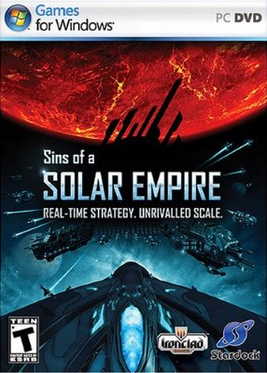
Consists of former Barking Dog Studios employees. Developed the landmark 2008 science fiction strategy title Sins of a Solar Empire.

7. Silicon Knights

On this list primarily because of their masterpiece psychological horror work, 2002's Eternal Darkness: Sanity's Requiem. Fittingly, afterwards they went crazy and created the titanic disappointment Too Human in 2008.

6. Relic Entertainment

All about strategy games, largely in the spacey vein. Created the 1999 Homeworld and Warhammer 40,000: Dawn of War in 2004. as well as the crown jewel of World War II strategy games in 2006, Company of Heroes.

5. EA Canada

The biggest developer for the biggest American third-party publisher is based in Burnaby, British Columbia. A major player in the sports game genre. Created perhaps the best sports game of all time, NHL '94, and continue to perfect the art of hockey with the NHL series. The industry standard for soccer, too, with FIFA. Invented the snowboarding genre with SSX. Dethroned Tony Hawk's skateboarding monopoly with Skate (as EA Black Box).

4. Ubisoft Montréal

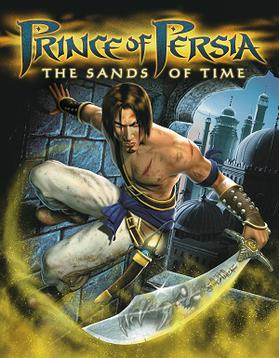
The most successful French-Canadian developer. Fittingly, a branch of French-French publishing giant Ubisoft. Brought stealth gaming to the masses with Tom Clancy's Splinter Cell. Reinvented the Prince of Persia franchise for the modern era, then created a spiritual 3D platforming successor with Assassin's Creed.

3. BioWare

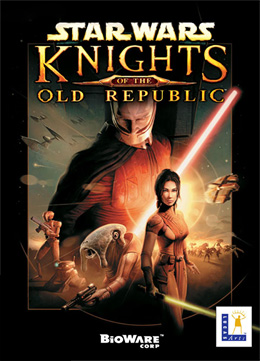
Name a major Western RPG with some sort of moral choice system, and there's a large chance BioWare developed it. Defined early 2000s RPGs with Baldur's Gate and the Neverwinter Nights reboot. Made what's widely considered the "greatest Star Wars game ever," Knights of the Old Republic. Developed the commercial smash hits Mass Effect and Dragon Age, as well as the vastly overlooked ancient China adventure Jade Empire.

2. Chris Taylor

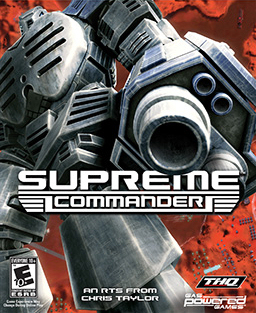
The biggest name in sci-fi strategy games, with a few dungeon crawlers to boot. Worked with Cavedog Entertainment and later his own company, Gas Powered Games; both headquartered in the United States. Conceived Total Annihilation in 1997, the first real-time strategy game with 3D graphics. Went on to make his mark on the dungeon crawling genre with 2002's Dungeon Siege, then went back to his native science fiction strategy with Supreme Commander in 2007.

1. Sid Meier

Really doesn't need an intro. One of gaming's first iconic auteurs. Worked with MicroProse and later his own company, Firaxis Games; both headquartered in the United States. Sense a trend in Canadian video game figures? Created landmark pirate sim creatively titled Pirates! in 1987. Revolutionized strategy gaming with Civilization in 1991, followed by futuristic opus Alpha Centauri in 1999.