Showing posts with label Metroid. Show all posts

Monday, February 10, 2014

Debating the definition of Metroidvania


"What is a Metroidvania? A miserable little pile of secrets."

JOHN: Hey, Jake, I was thinking for our next blog post that we should do a “Best of” for Metroidvania games where we give each other a list of games the other hasn’t played, do our best to play them, and then do an overall ranking. I’d be interested to see how different our lists end up being. I don't think Super Metroid would be in my top 5, but Castlevania: Symphony of the Night probably would be. What do you think?

JAKE: That would be a pretty limited list, wouldn't it? Aside from the Metroid and Castlevania games, there'd only be a handful of others. Guacamelee! and Shadow Complex. Maybe Cave Story. But none of those come anywhere close to making my personal top 5. Also: Super Metroid doesn't even crack a Metroidvania top 5 for you? The game that defined the entire genre?! Are you insane?

JOHN: Limited list? Are you nuts? I can think of three classic (one modern classic) series right now that fit into the Metroidvania mold. Mega Man Legends 1 and 2 (and incidentally Mega Man 64), Demon's Souls and Dark Souls, and Resident Evil (well, 1, anyway). Those are exactly Metroidvania-type games and are all much better than all of the rest of the proper Metroid or Castlevania games, except perhaps the aforementioned Super Metroid and Castlevania: Symphony of the Night. 

JAKE: The exploration elements of the games you mentioned are similar to the genre, but it's not enough for me to call Demon's Souls or Resident Evil a Metroidvania. The original Metroid was envisioned by Nintendo as a cross between the exploration of The Legend of Zelda and the platforming of Super Mario Bros. The games you mentioned have the exploration part, but platforming is just as integral to the Metroidvania formula. Every single mainline Metroid and Castlevania game emphasizes platforming. Without the platforming, Metroidvania is almost just Zelda. Demon's Souls has much more in common with Zelda than it does with Metroid.
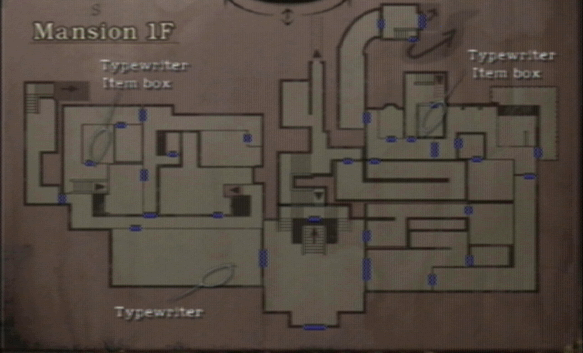
JOHN: But it's more than jumping that makes Metroidvania games what they are, though. In every "classic" Metroidvania, there is a fixed map to explore and items to collect that make new areas of said map newly accessible, and lots of enemies to fight. "Jumping" makes the 2D Metroidvania possible, but it doesn't change a 3D one into The Legend of Zelda if you remove it. It doesn't need literal platforming to be the same type of game. Dark Souls is exactly this: it's a fixed (though much larger) map that you explore and open up as you progress with lots of enemies to fight and weapons to collect and upgrade. But there's no jumping. There's a limited amount of dropping, though, I suppose.

Resident Evil is exactly the same. It's a fixed map (hell, it's even a haunted house, just like Dracula's castle or Zebes) that opens up with the more keys you collect, with lots of zombies to fight and upgradeable weapons (well, gun > shotgun > grenade launcher > magnum > rocket launcher, anyway). The exterior is different, but it comes from the same stock as any Metroidvania. Much more so than Zelda.

JAKE: So then what's the difference between Zelda and Metroidvania to you? Does that make Zelda a Metroidvania? That would be pretty strange, considering Zelda predates both Metroid and Castlevania. But Zelda also has a world you explore by yourself, acquiring new items to access new areas, full of creepy dungeons just like Metroid's creepy alien caverns. Zelda's lack of platforming is the biggest thing that sets it apart from Metroidvania.

JOHN: The biggest difference to me is the world, itself. In the 3D Zeldas, Hyrule is an entire (teeny) country with separate, distinct areas to explore, joined by a common area, i.e. the field or, in The Wind Waker, the sea. Just like Demon's Souls... Hmm. Okay, maybe I'll concede that one to you. It doesn't use a single map: it's several distinct areas joined together by the central Nexus. And it has levels! 1-1, 1-2, 1-3, and 1-4 in the first area, alone. In that sense, it's actually more like the classic Castlevania than Zelda. But not like Metroid.

But the "haunted house" aspect of Dark SoulsResident Evil, Super Metroid, and Symphony of the Night is the biggest difference. Are you really saying that, without jumping, Metroid is Zelda? I can't agree with that. Zelda's too light-hearted, too inconsequential. Opening up new doors (and, thus, new areas) in the big 4 are important events while in Zelda, outside of dungeons, it largely doesn't matter. Now, if an entire Zelda took place in a dungeon, say a massive Hyrule Castle, then I might agree with you.

And here's another thing about Zelda - the 3D ones, anyway - as soon as you get the hookshot, it effectively allows Link to platform. He's not "jumping," but he's ascending from level to level to kick ass and take names. Just like Samus. But I still wouldn't say that Zelda is Metroid, would you?

JAKE: "Enclosed gameworld" isn't a requirement of the genre. All the Metroid games span entire (small) planets, with Samus entering various caverns connected by many open areas--the original Metroid and Metroid II are the only ones to take place entirely underground. And many Castlevania titles, including all the more recent entries, feature areas to explore outside the castle.

The dark tone is an integral part of the individual Metroid and Castlevania series, but I don't think it's necessary to the Metroidvania formula. Guacamelee! has a lighthearted comedic tone, yet neither of us question its Metroidvania credentials. You know a big part of what keeps it true to the genre? PLATFORMING!

JOHN: You're talking "requirements" and I'm talking "aspects" of what makes a Metroidvania a Metroidvania. I'm essentially saying this: if it looks, feels, and sounds like a Metroidvania, then it's a duck. I think there's enough evidence to suggest that Mega Man Legends, Dark Souls, and Resident Evil, proper platforming present or not, offer experiences much closer to classic Metroidvanias than they do to Zelda. I can understand if you don't want to classify them as pure Metroidvanias, though, so maybe a new sub-category should be created for them, like "Bubblevania" or "Semi-troid," where they're maybe not quite Metroidvania, but not close enough to the Princess, either. But in terms of game-type, they should absolutely be considered alongside Metroidvanias in any list ranking them.

JAKE: I can get on board with Mega Man Legends being called Metroidvania since the Mega Man series is partially based on, ya know... platforming. Not so much the others. Maybe I'm a traditionalist, but we'll have to agree to disagree on the definition of the genre. If I were to make a top 10 list of Metroidvania games, it would pretty much all be Metroid and Castlevania games. With your slightly more liberal definition of the genre, what games would you put on the list?

JOHN: I'll be honest: I wanted to open up the definition in the first place because, outside of the few obvious classics, I wasn't sure I could come up with a top 10. I'm not the Metroid fanatic you are, but I do love Metroidvanias. After some consideration, here's my list, in no particular order:

  • Castlevania: Symphony of the Night (PS)
  • Castlevania: Dawn of Sorrow (DS)
  • Mega Man Legends (PS)
  • Mega Man Legends 2 (PS)
  • Dark Souls (PS3)
  • Shadow Complex (XBL)
  • Resident Evil (GC)
  • Super Metroid (SNES)
  • Guacamelee! (PSN/PC)
  • Metroid Prime (GC)
I just barely made it to 10, and I couldn't come up with any other titles that I'd played for more than 10 or 15 minutes (such as Metroid Prime 3: Corruption), for various reasons. Perhaps you can enlighten me to a treasure trove of hitherto unknown (to me) Metroidvania treasures. Or perhaps just one: if you had to recommend a single Metroidvania not already on my list, any platform, what would it be?

JAKE: I touched on this in my ranking of Metroid games last year, but Metroid Prime 2: Echoes is by far the most underrated Metroidvania. In that article, I described it as "a Metroid connoisseur's Metroid." People are turned off by Echoes' dark color palette and its extreme difficulty. The first Prime is more easily enjoyable, but Echoes builds on its predecessor's ideas and features even deeper and more cerebral puzzles and worlds to explore.

Devious Spider Ball puzzles in Sanctuary Fortress

While the first Prime stuck to a more traditional approach and standard videogame "fire world/ice world/forest area/etc" tropes, Echoes explores more unique places like the futuristic Sanctuary Fortress, perhaps my favorite location in any Metroid game. Echoes was so tough that when it was re-released as part of Metroid Prime Trilogy on Wii, they dialed back the difficulty. But it's the Crime and Punishment of Metroid: dense and hard to get through, but super meaty when you put in the effort.

Thursday, January 30, 2014

An analysis of title screens: Metroid, Mario, and... Spec Ops: The Line

Title screens are obsolete in today's gaming industry. They're a holdover from the days of arcades, when the screen had to show something even when no one was playing it. Today, games could easily cut straight to the main menu. But in reverence to their roots, virtually every modern video game still has the classic title screen, with the game logo in big letters and "PRESS START" beneath it, replacing the "INSERT COIN" of yore.

And it's kind of beautiful. Why do we need title screens in 2014? They serve no practical purpose. I guess they just look cool. They're gaming's equivalent of the title page at the beginning of a novel--unnecessary, but a time-honored tradition.

When you think of your favorite games, even ones you haven't played in years, you can likely conjure up the image of the title screen in your head. They usually play with iconic, mood-setting music in the background, and when they sit idle for a few seconds often go to "demo mode" or "attract mode," where they show video of gameplay or a cutscene introducing you to the storyline.

As games have progressed, they do new and wonderful things with their title screens. Let's take a gander at title screens over the years, beginning with my favorite series.

Metroid


The title screen for the original 1986 Metroid is most notable for its music. In an era when game soundtracks were all about upbeat, hummable melodies, Metroid was the first to go for dissonance. It sets a foreboding tone for the whole game, particularly interesting considering it was made by Nintendo, best known for family-friendly fun. If you wait long enough, though, the dissonant music evolves into a memorable tune. Metroid's title screen also gives you the only story information you ever get, aside from the game's instruction manual.


Super Metroid's title screen is a work of art. It begins with an intro. "1994" flashes across the screen, proudly displaying the year the game was made. Not many games do that. "NINTENDO"... "PRESENTS"... "METROID 3"... and then the main title screen with the huge SUPER METROID logo finally appears. The ominous music coalesces into a revised version of the creepy piano tune from the original Metroid title screen. How great is that! I enjoy that "METROID 3" appears before the title screen; Super Metroid is never referred to as "Metroid 3" apart from this little intro sequence. Something about it makes the intro more cinematic and epic to me.

And then there's the actual content of the title screen. We see what looks like a laboratory, with an infant Metroid encased in glass. It's the baby Metroid that Samus saved at the end of Metroid II! It's so tiny and harmless! But... there are dead bodies strewn across the lab floor. What happened here?! Like a great opening line in a novel, this title screen hooks you in to the story.

It gets even better. In the opening level of the game, you walk through the very room depicted in the title screen... but now the glass is shattered and the Metroid is nowhere to be seen. STORY SYNERGY!

Mario

Nintendo's sliiightly more popular franchise, Mario, also has an interesting history with title screens. From early on in the series, the title screens have presented the games as theatrical productions. Here's the opening of Super Mario Bros. 3:


This changes the dynamic of the entire franchise, implying that everything happening onscreen is actually a staged show for an audience. I guess that explains why Mario and Bowser are arch-nemises but then they go golfing and go-karting together the next day. The Paper Mario spinoff series would take the theater concept a step further and actually show the audience watching your gameplay.

When Nintendo finally took the leap to 3D with the Nintendo 64, it launched with the seminal Super Mario 64. The game didn't hesitate to introduce players to the third dimension immediately: the title screen consists of a giant three-dimensional Mario head that you could poke and prod to your heart's content, showcasing the new console's graphical capabilities.


This was mind-blowing in 1996.

Spec Ops: The Line

Fast forward to the twenty-first century. Modern games do all sorts of nifty things with their title screens. My favorite in recent memory is Yager Development's Spec Ops: The Line.


At first glance, Spec Ops is a generic dudebro military shooter like Call of Duty and Army of Two. But as I've written about here and people have talked about elsewhere, it's much, much more than that. The title screen captures it perfectly. On the surface it seems like a standard war-torn Middle Eastern background. But huh? The American flag is upside down! The title screen changes depending on how far into the story you are, and the music... is Jimi Hendrix's famous live performance of "The Star-Spangled Banner." In the late '60s it sparked huge controversy, seen as a twisted version of patriotism and a commentary on the Vietnam War. Spec Ops is in many ways a modern-day adaptation of the iconic Vietnam War film Apocalypse Now, so the song fits the game on multiple levels.

Do we need title screens in 2014? No. Do we want them? I couldn't live without their logo-filled goodness. What do you think is the role of the title screen in modern gaming? What title screens are particularly memorable to you?

Tuesday, January 28, 2014

Revisiting the legacy of Metroid II: Return of Samus

I've already written extensively about Metroid, Nintendo's black sheepMetroid II: Return of Samus, released in 1991 on the Game Boy, is the black sheep of the black sheep series. Even among Metroid fans it's often overlooked, as most Game Boy games are. But Metroid II is as pivotal in shaping the series as the original Metroid and the opus Super Metroid. This oft-forgotten sequel is fascinating to explore as a statement of design philosophy.


Let's begin with the title. Metroid II. Most handheld iterations of major series are marketed as spinoffs, rather than true sequels. The Mario games on the Game Boy were called Super Mario Land to differentiate them as inferior to the larger Super Mario WORLD on the big-boy Super Nintendo. The portable version of Assassin's Creed III was given the "Liberation" subtitle to make sure people knew it wasn't the REAL Assassin's Creed III, which could only be found on home consoles.

But Metroid on the Game Boy was simply called Metroid II. It's no coincidence Metroid creator Gunpei Yokoi was also the creator of the Game Boy. Metroid II was proof you could make "real" games on handheld systems, not just spinoffs and puzzle games.

It's not a masterpiece. Due to the limitations of the hardware, Metroid II features bland level design and recycled art assets. Many of the environments look almost identical to one another, which is all the more frustrating since there's no in-game map. And the music, while continuing the atmospheric dissonance pioneered in the original Metroid, is terribly subpar by the series' standards.

It's not a cartridge, it's a Game Pak!

There's so much to digest, though. Metroid II introduced tons of concepts and gameplay mechanics that would go on to become staples of the series, from save stations and Samus' spaceship to items like the Spider Ball and Plasma Beam. The game has an interesting structure, in that there are no conventional boss battles aside from the Queen Metroid at the end.

The series is known for its minimalist storytelling (well, until recently...). For an overlooked Game Boy game, it's strange that Metroid II includes perhaps the most important plot point in the entire series.

The set-up of Metroid II's storyline is questionable. Samus is on a mission to kill every single Metroid on planet SR388. They're not invading or terrorizing anyone else; SR388 is their home planet. Samus is the alien invader, out to commit genocide. There's even a counter at the bottom of the screen telling you at all times how many Metroids are left alive. But at the end of the game, after Samus has killed the last Metroid, she finds a Metroid egg that hatches in front of her. The newborn Metroid imprints onto her and believes Samus is its mother. So she spares the infant and takes it with her at the end of the game.

This has massive implications for the rest of the series. It immediately sets up the story of Super Metroid, where the Space Pirates steal the baby Metroid, and the dramatic ending where the baby Metroid sacrifices its own life to save Samus. It also evolves Samus' relationship with Metroids from a simple antagonistic one to a more ambiguous symbiotic connection, which would be further explored in Metroid Fusion.


The Mother Factor is particularly interesting. Not only was Samus the first major female protagonist in video games (Ms. Pac-Man doesn't really count--she's Pac-Man with a pink bow, not a human), but the main villains in Metroid and Metroid II are both female as well: Mother Brain and the Queen Metroid, respectively. Mother Brain would make a reappearance as the antagonist of Super Metroid.

How many other video games feature both a female protagonist and antagonist? And neither of them are objectified or sexualized for the Male Gaze, either? It's really just Metroid… and Portal.

Metroid II was originally planned to get a colorized remake for the Game Boy Color like The Legend of Zelda: Link's Awakening got with Link's Awakening DX. But Metroid is not the same cash cow for Nintendo that Zelda is, so it never happened. Metroid Prime developers Retro Studios talked about doing a remake of the game like the original Metroid got with Metroid: Zero Mission, but that never panned out either. Metroid II was not re-released in any form until 2011, when it was released on the 3DS Virtual Console.

It's a shame there hasn't been a handheld Metroid game in eight years, or a traditional Metroid sidescroller in ten years. I wouldn't recommend Metroid II to anyone in 2014 aside from diehard Metroid fans, but it's one of the most important, overlooked games Nintendo has ever made.

Saturday, January 4, 2014

The ten best games of the last console generation, according to Jake

10. Castlevania: Order of Ecclesia - Konami - Nintendo DS - 2008

I've been a sucker for Metroidvania-style gameplay since I was eleven years old. While Metroid has gone on to bigger and better 3D things, Castlevania remained true to its roots and produced a slew of great 2D Metroidvania games in recent years. The series has never quite been able to make the leap to 3D, but that's okay with me.

Order of Ecclesia was the third and final Castlevania game on the DS, the series' swan song on the handheld. It features a refined art style, a more nonlinear gameworld with a brilliant Dracula's castle as well as plenty of non-castle locales, a ramped up difficulty from previous DS entries in the franchise, and *gasp* a female protagonist. What is this, Metroid?! Strangely, there's been no word of a new traditional Metroidvania-style Castlevania game since Order of Ecclesia's release six years ago.

9. NHL 14 - EA Canada - Xbox 360, PlayStation 3 - 2013

This entry counts the 360/PS3 iterations of EA Sports' annual NHL series as a whole, and NHL 14 is the pinnacle. It's not arty or deep. It's just hockey. But it's damn good. The NHL series on the seventh generation of consoles spearheaded the sports game genre's move from arcadey face button-based gameplay to full analog stick control. Instead of pressing A to pass and B to shoot, you actually use the control stick as your hockey stick. Despite my pretentious exterior, NHL is a nuanced, stress-relieving love of mine.

8. Catherine - Atlus - PS3, 360 - 2011

I was skeptical of Catherine at first. I'm generally not a fan of the grind-heavy Japanese role-playing games Atlus is known for. But Catherine is... a puzzle game? About relationships? It's got some lengthy anime cutscenes, which normally I'd be averse to but they're so well-made that I don't mind. Catherine is one of the first major deconstructions of sex and the male mind in the videogame medium, but it's also a complex, difficult puzzle game. It's very Freudian, as you may infer from the screenshot above. One of the most daring games of the last generation, which I've written about before here.

7. Limbo - Playdead - 360, PS3, PC - 2010

Jonathan Blow's Braid gets all the "arty Xbox Live Arcade indie 2D platformer" attention, but Danish studio Playdead's somber black-and-white Limbo is what really got to me. While Braid relies on blocks of text and a heavy-handed message, Limbo simply exists. It's a sort of minimalist Where the Wild Things Are meets Lord of the Flies, but much more bleak. I've written on this blog about how much I love this game before. No dialogue, no HUD, just a boy and a spider.

6. Metroid Prime 3: Corruption - Retro Studios, Nintendo - Wii - 2007

Retro Studios' 2002 opus Metroid Prime on the GameCube is my Favorite Game Ever Made. Metroid Prime 2: Echoes was much darker, tougher, and divisive, and I still loved it. The trilogy comes to an end with Metroid Prime 3: Corruption. It's the Return of the Jedi of Metroid Prime: probably the weakest of the three, but still an epic end to the trilogy. Corruption features multiple planets for Samus to explore, with trippy alien designs abounding. The series' signature atmospheric nonlinear exploration gameplay fine-tuned to perfection. It's a bummer that Retro Studios hasn't returned to the Metroid series since Corruption's release seven years ago.

5. Sid Meier's Civilization V - Firaxis Games, 2K Games - PC - 2010

Together with its expansions Gods & Kings and Brave New World, I've put more hours into Civilization V than anything else on this list. A single game of Civ V could take upwards of five hours to get through. I love this style of "4X" strategy game, since you're not just waging war against other people. You can win through economic victory, diplomatic victory, or any other number of means. Plus you can get nuked by Gandhi. And since it's turn-based instead of real-time, you get to spend forever analyzing each move you make.

4. Deadly Premonition - Access Games - 360, PS3, PC - 2010

Deadly Premonition is not a well-made game. It hardly even qualifies as a seventh-generation console game. It's full of bugs, awkward controls, terrible graphics, and a limited soundtrack. But that's all part of why I love it. Deadly Premonition is a Twin Peaks-inspired comedy horror with tons of personality. The obtuseness of it all is what makes it so appealing. It's a diamond in the rough that's become a cult classic. I've written about it before here.

3. Fallout 3 - Bethesda Game Studios - PC, 360, PS3 - 2008

This entire blog is named after the location of Fallout 3, so I'd hope it would make this list. I've got mixed feelings on open-world games, since they've all got awful pacing and dramatic tension. Bethesda's other open-world RPG series The Elder Scrolls gets much more attention than Fallout, and it's such a self-serious Tolkien ripoff that I never got too into it. But Fallout 3 hits the perfect balance of post-apocalyptic harshness with a sense of gallows humor through it all. Plus I've got the sentimental attachment of it being by far the most detailed depiction of my hometown Washington, D.C. in videogame form.

2. Mirror's Edge - EA Digital Illusions CE - 360, PS3, PC - 2008

Crazy to think after making Mirror's Edge, Swedish studio EA DICE went on to become a generic FPS factory with the Battlefield series. Mirror's Edge is ahead of its time, a first-person parkour game that was a commercial failure but has since gained respect in the gaming community. Its parkour control scheme was a paradigm shift from standard first-person controls, which turned many players off but allowed for a new type of game we haven't really seen before or since. Combine that with a minimalist color palette, airy electronica soundtrack and strong female protagonist, and Mirror's Edge is a classic. 

1. Portal - Valve Corporation - PC, 360, PS3 - 2007

It has to be Portal. It can't be anything else. What else could I choose? Valve's unassuming first-person puzzler Portal is likely the most important game of the last decade. You probably already know about Portal. There are university curriculums based around it. The most fun part of it is the fact that Portal was released with virtually zero fanfare--a short little puzzle game extra thrown in with the already-stellar Orange Box. Valve is undoubtedly the best developer of the last generation of video games, and Portal is perfection in game design.

Friday, August 16, 2013

Ranking the Metroid series

Metroid has always been close to my heart. In my "100 greatest games of all time," it was the only series to be represented three times on the list. Choosing between Metroid games is like choosing between my children. So let's do it.

11. Metroid: Other M - Nintendo / Team Ninja / D-Rockets - Wii, 2010

The only Metroid game I actively dislike. It's an admirable risk to try to add dialogue and a wider cast to a series about isolation and solitude. But Nintendo gave the task to Team Ninja, best known for... boob physics. They turned one of gaming's only major strong, independent, non-objectified female protagonists into a woman who longs for nothing more than a man to tell her what to do.

10. Metroid Prime Hunters - Nintendo Software Technology - DS, 2006

Nintendo's attempt to make first-person shooters work on its handheld DS. It's admirable, but it's not the most comfortable control set-up for players. When it comes to gameplay, Hunters has more in common with Halo than with Metroid. None of the series' trademark exploration elements are there, and instead of a lonely, moody atmosphere, Hunters focuses on linear levels and multiplayer deathmatches. Some good remixes of classic Metroid Prime music, though.

Saturday, October 27, 2012

Rebooting Samus: The relationship between East and West in game design, through Metroid Prime


Metroid is Nintendo’s black sheep. While the series has seen just as much critical acclaim as the Japanese gaming giant’s other flagship franchises, Metroid has never been the commercial juggernaut Mario and Zelda are year after year. So when faced with the technological leap from two dimensions to three-dimensional graphics, why did Nintendo for the first time in their history hand over one of its own series to a Western developer? Metroid Prime is the culmination of the company’s marriage of East and West in game design. The unlikely bedfellows of Nintendo and U.S. developer Retro Studios managed to create one of the most successful video games of all time, both critically and commercially.

Gunpei Yokoi with his Game Boy
The series has had Western roots from the beginning. It was conceived by misunderstood designer Gunpei Yokoi—most famous as creator of Game Boy and for ruining his career later with the infamous Virtual Boy. Yokoi took heavy influence from Ridley Scott’s 1979 science-fiction horror opus Alien and the art of Swiss surrealist H.R. Giger. Even before Prime, Metroid was Nintendo’s only franchise directed at an older demographic with a more serious tone, and their only series with better sales numbers in the West than domestically in Japan.

When Metroid was finally handed to a Western developer for the jump to 3D, it wasn’t what you’d call a “smooth transition.” Austin, Texas-based Retro Studios was inexperienced and in shambles with an absent CEO when Nintendo came knocking. And their final product was a first-person game—perhaps the visual perspective most emblematic of Western design. How was this game not a total flop? And how did it consolidate the vast differences between Eastern and Western approaches to video games?

Thursday, February 2, 2012

What Metroid Prime says about Samus, and how it defines East-West relations in game design

Proposal for a 25-page research paper I plan on writing:

Metroid was already Nintendo’s black sheep. While the series has seen just as much critical acclaim as the Japanese gaming giant’s other flagship franchises, Metroid has never been the commercial colossus Mario and Zelda are year after year.

So when faced with the jump from 2D to 3D technology, why did Nintendo for the first time hand over one of its own series to a U.S. developer? 2002’s Metroid Prime is the culmination of Nintendo’s marriage of East and West.

The series was Western from the beginning; its biggest influence was Ridley Scott’s Alien. It’s Nintendo’s only franchise directed at an older demographic with a more serious tone, and their only franchise that sold better in North America than it did in Japan.

And unlike Mario and Zelda, Metroid wasn’t created by Video Game Jesus Shigeru Miyamoto. Samus was conceived by Gunpei Yokoi, most famous for creating the Game Boy and for ruining his career with the infamous Virtual Boy.

It wasn’t just handed over to a Western developer. Metroid was handed to Retro Studios, an inexperienced U.S. developer in shambles with an absent CEO. And they made a first-person game—perhaps the perspective most emblematic of Western design. Through all this, how did they create one of the most critically acclaimed video games of all time?

I’m splitting this paper into three sections: the context of Metroid Prime from Nintendo’s perspective, the development of the game from Retro Studios’ perspective, and an analysis of the game itself, looking at how it represents the marriage of East and West in game design.

Monday, November 14, 2011

Portal is Metroid

My last posts were about how similar the beginning of Portal is to Lilith's Brood.
As I got to the end of Portal, I realized how similar it is to another important work of sci-fi: Nintendo's 1986 Metroid.

Metroid is notable for being the first major video game with a female protagonist, although this is not a major selling point like it is for a game like Tomb Raider. Main character Samus' gender is not revealed until the very end of the game, when she takes off the helmet of her space suit to reveal that she's a woman.

Samus is a silent protagonist in an orange suit, dropped into an unfamiliar landscape with minimal exposition or context. She treks deeper and deeper into the underground tunnels of the Space Pirate base on planet Zebes. In the final boss battle, she encounters Mother Brain, hooked up to the core of the station and controlling it all. When the antagonist is vanquished, the entire station self-destructs and Samus barely escapes.

When playing Portal with developer commentary, the developers say an original prototype of antagonist GLaDOS was... a floating brain. And then it all clicked.

Chell is a silent protagonist in an orange suit, dropped into an unfamiliar landscape with minimal exposition or context. She treks deeper and deeper into the underground tunnels of the Aperture Science laboratories. In the final boss battle, she encounters GLaDOS, hooked up to the core of the station and controlling it all. When the antagonist is vanquished, the entire station self-destructs and Chell barely escapes.

In class, we talked about how notable it is that Portal is one of the first major games with both a female protagonist and a female antagonist.


Metroid famously has a female protagonist, too, and although brains are fairly genderless, Nintendo felt the need to name the game's antagonist... "Mother" Brain.

Metroid precedes Portal by over two decades.

Monday, August 8, 2011

Thoughts on Metroid's 25th birthday

Twenty-five years ago this past Saturday, the first Metroid title was released on the Famicom in Japan. Plenty has been written on how the game revolutionized non-linear gameplay, how it broke gender barriers, how its dark, melancholic mood redefined atmosphere in games, and how Team Ninja bastardized the franchise with Other M. You can find all those articles on other websites.

The story of Metroid is really the story of its creator, Gunpei Yokoi. He's by far the most tragic figure in the Nintendo game design pantheon--if Shigeru Miyamoto is gaming's Thomas Edison, Yokoi is Nikola Tesla.

Yokoi's life parallels the story of the Metroid franchise. Both are integral figures at Nintendo, still the most important game company in the world. Both had moments of sheer greatness followed by moments of neglect and disaster. Both are black sheep in the Nintendo family whose legacy is too often forgotten today.


Along with Metroid, Yokoi is the creator of some of Nintendo's most important works. Among them: the Game & Watch, Kid Icarus, the Game Boy, Dr. Mario, and Fire Emblem. While many of these were popular and influential, nothing reached the stardom Miyamoto's creations.

And there were the failures. In 1985, Yokoi created R.O.B., the Robotic Operating Buddy! It's a cult classic today, but when it was released, it flopped. The plastic robot add-on for the NES only got support from two games, and it was shortly discontinued.

He was also the father of Nintendo's first foray into 3D gaming, the infamous Virtual Boy. Released in 1995, it was such a failure that it led to Yokoi's departure from Nintendo in 1996, after three decades of service.

A year later, he was hit by a car and killed. And today, unless you're a huge gaming enthusiast, you have no idea who Gunpei Yokoi is.

(Side note: I wonder what Yokoi would think of the 3DS. It's the spiritual successor to the Game Boy and Virtual Boy combined!)

What about Metroid? It's often grouped in Nintendo's "holy trinity" with Mario and The Legend of Zelda. But is it really up there? Metroid has never enjoyed the commercial success of its Miyamoto-created brethren.

To me, it's personal. As a kid, Metroid was the first series that made me realize video games could be something deeper as an art form. It's the most important game franchise to me. If it weren't for Metroid, I'd be another 14-year-old boy on Xbox Live chugging Mountain Dew and calling people homophobic slurs in Halo.

So even if Nintendo refuses to acknowledge your existence in 2011: happy birthday, Metroid. And thank you, Gunpei Yokoi. I'll pour one out for ya.