Showing posts with label Castlevania. Show all posts

Monday, February 10, 2014

Debating the definition of Metroidvania


"What is a Metroidvania? A miserable little pile of secrets."

JOHN: Hey, Jake, I was thinking for our next blog post that we should do a “Best of” for Metroidvania games where we give each other a list of games the other hasn’t played, do our best to play them, and then do an overall ranking. I’d be interested to see how different our lists end up being. I don't think Super Metroid would be in my top 5, but Castlevania: Symphony of the Night probably would be. What do you think?

JAKE: That would be a pretty limited list, wouldn't it? Aside from the Metroid and Castlevania games, there'd only be a handful of others. Guacamelee! and Shadow Complex. Maybe Cave Story. But none of those come anywhere close to making my personal top 5. Also: Super Metroid doesn't even crack a Metroidvania top 5 for you? The game that defined the entire genre?! Are you insane?

JOHN: Limited list? Are you nuts? I can think of three classic (one modern classic) series right now that fit into the Metroidvania mold. Mega Man Legends 1 and 2 (and incidentally Mega Man 64), Demon's Souls and Dark Souls, and Resident Evil (well, 1, anyway). Those are exactly Metroidvania-type games and are all much better than all of the rest of the proper Metroid or Castlevania games, except perhaps the aforementioned Super Metroid and Castlevania: Symphony of the Night. 

JAKE: The exploration elements of the games you mentioned are similar to the genre, but it's not enough for me to call Demon's Souls or Resident Evil a Metroidvania. The original Metroid was envisioned by Nintendo as a cross between the exploration of The Legend of Zelda and the platforming of Super Mario Bros. The games you mentioned have the exploration part, but platforming is just as integral to the Metroidvania formula. Every single mainline Metroid and Castlevania game emphasizes platforming. Without the platforming, Metroidvania is almost just Zelda. Demon's Souls has much more in common with Zelda than it does with Metroid.
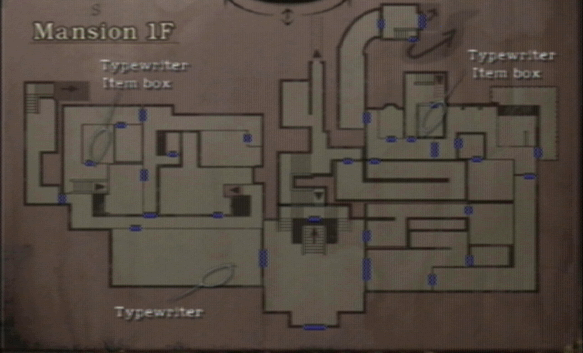
JOHN: But it's more than jumping that makes Metroidvania games what they are, though. In every "classic" Metroidvania, there is a fixed map to explore and items to collect that make new areas of said map newly accessible, and lots of enemies to fight. "Jumping" makes the 2D Metroidvania possible, but it doesn't change a 3D one into The Legend of Zelda if you remove it. It doesn't need literal platforming to be the same type of game. Dark Souls is exactly this: it's a fixed (though much larger) map that you explore and open up as you progress with lots of enemies to fight and weapons to collect and upgrade. But there's no jumping. There's a limited amount of dropping, though, I suppose.

Resident Evil is exactly the same. It's a fixed map (hell, it's even a haunted house, just like Dracula's castle or Zebes) that opens up with the more keys you collect, with lots of zombies to fight and upgradeable weapons (well, gun > shotgun > grenade launcher > magnum > rocket launcher, anyway). The exterior is different, but it comes from the same stock as any Metroidvania. Much more so than Zelda.

JAKE: So then what's the difference between Zelda and Metroidvania to you? Does that make Zelda a Metroidvania? That would be pretty strange, considering Zelda predates both Metroid and Castlevania. But Zelda also has a world you explore by yourself, acquiring new items to access new areas, full of creepy dungeons just like Metroid's creepy alien caverns. Zelda's lack of platforming is the biggest thing that sets it apart from Metroidvania.

JOHN: The biggest difference to me is the world, itself. In the 3D Zeldas, Hyrule is an entire (teeny) country with separate, distinct areas to explore, joined by a common area, i.e. the field or, in The Wind Waker, the sea. Just like Demon's Souls... Hmm. Okay, maybe I'll concede that one to you. It doesn't use a single map: it's several distinct areas joined together by the central Nexus. And it has levels! 1-1, 1-2, 1-3, and 1-4 in the first area, alone. In that sense, it's actually more like the classic Castlevania than Zelda. But not like Metroid.

But the "haunted house" aspect of Dark SoulsResident Evil, Super Metroid, and Symphony of the Night is the biggest difference. Are you really saying that, without jumping, Metroid is Zelda? I can't agree with that. Zelda's too light-hearted, too inconsequential. Opening up new doors (and, thus, new areas) in the big 4 are important events while in Zelda, outside of dungeons, it largely doesn't matter. Now, if an entire Zelda took place in a dungeon, say a massive Hyrule Castle, then I might agree with you.

And here's another thing about Zelda - the 3D ones, anyway - as soon as you get the hookshot, it effectively allows Link to platform. He's not "jumping," but he's ascending from level to level to kick ass and take names. Just like Samus. But I still wouldn't say that Zelda is Metroid, would you?

JAKE: "Enclosed gameworld" isn't a requirement of the genre. All the Metroid games span entire (small) planets, with Samus entering various caverns connected by many open areas--the original Metroid and Metroid II are the only ones to take place entirely underground. And many Castlevania titles, including all the more recent entries, feature areas to explore outside the castle.

The dark tone is an integral part of the individual Metroid and Castlevania series, but I don't think it's necessary to the Metroidvania formula. Guacamelee! has a lighthearted comedic tone, yet neither of us question its Metroidvania credentials. You know a big part of what keeps it true to the genre? PLATFORMING!

JOHN: You're talking "requirements" and I'm talking "aspects" of what makes a Metroidvania a Metroidvania. I'm essentially saying this: if it looks, feels, and sounds like a Metroidvania, then it's a duck. I think there's enough evidence to suggest that Mega Man Legends, Dark Souls, and Resident Evil, proper platforming present or not, offer experiences much closer to classic Metroidvanias than they do to Zelda. I can understand if you don't want to classify them as pure Metroidvanias, though, so maybe a new sub-category should be created for them, like "Bubblevania" or "Semi-troid," where they're maybe not quite Metroidvania, but not close enough to the Princess, either. But in terms of game-type, they should absolutely be considered alongside Metroidvanias in any list ranking them.

JAKE: I can get on board with Mega Man Legends being called Metroidvania since the Mega Man series is partially based on, ya know... platforming. Not so much the others. Maybe I'm a traditionalist, but we'll have to agree to disagree on the definition of the genre. If I were to make a top 10 list of Metroidvania games, it would pretty much all be Metroid and Castlevania games. With your slightly more liberal definition of the genre, what games would you put on the list?

JOHN: I'll be honest: I wanted to open up the definition in the first place because, outside of the few obvious classics, I wasn't sure I could come up with a top 10. I'm not the Metroid fanatic you are, but I do love Metroidvanias. After some consideration, here's my list, in no particular order:

  • Castlevania: Symphony of the Night (PS)
  • Castlevania: Dawn of Sorrow (DS)
  • Mega Man Legends (PS)
  • Mega Man Legends 2 (PS)
  • Dark Souls (PS3)
  • Shadow Complex (XBL)
  • Resident Evil (GC)
  • Super Metroid (SNES)
  • Guacamelee! (PSN/PC)
  • Metroid Prime (GC)
I just barely made it to 10, and I couldn't come up with any other titles that I'd played for more than 10 or 15 minutes (such as Metroid Prime 3: Corruption), for various reasons. Perhaps you can enlighten me to a treasure trove of hitherto unknown (to me) Metroidvania treasures. Or perhaps just one: if you had to recommend a single Metroidvania not already on my list, any platform, what would it be?

JAKE: I touched on this in my ranking of Metroid games last year, but Metroid Prime 2: Echoes is by far the most underrated Metroidvania. In that article, I described it as "a Metroid connoisseur's Metroid." People are turned off by Echoes' dark color palette and its extreme difficulty. The first Prime is more easily enjoyable, but Echoes builds on its predecessor's ideas and features even deeper and more cerebral puzzles and worlds to explore.

Devious Spider Ball puzzles in Sanctuary Fortress

While the first Prime stuck to a more traditional approach and standard videogame "fire world/ice world/forest area/etc" tropes, Echoes explores more unique places like the futuristic Sanctuary Fortress, perhaps my favorite location in any Metroid game. Echoes was so tough that when it was re-released as part of Metroid Prime Trilogy on Wii, they dialed back the difficulty. But it's the Crime and Punishment of Metroid: dense and hard to get through, but super meaty when you put in the effort.

Saturday, January 4, 2014

The ten best games of the last console generation, according to Jake

10. Castlevania: Order of Ecclesia - Konami - Nintendo DS - 2008

I've been a sucker for Metroidvania-style gameplay since I was eleven years old. While Metroid has gone on to bigger and better 3D things, Castlevania remained true to its roots and produced a slew of great 2D Metroidvania games in recent years. The series has never quite been able to make the leap to 3D, but that's okay with me.

Order of Ecclesia was the third and final Castlevania game on the DS, the series' swan song on the handheld. It features a refined art style, a more nonlinear gameworld with a brilliant Dracula's castle as well as plenty of non-castle locales, a ramped up difficulty from previous DS entries in the franchise, and *gasp* a female protagonist. What is this, Metroid?! Strangely, there's been no word of a new traditional Metroidvania-style Castlevania game since Order of Ecclesia's release six years ago.

9. NHL 14 - EA Canada - Xbox 360, PlayStation 3 - 2013

This entry counts the 360/PS3 iterations of EA Sports' annual NHL series as a whole, and NHL 14 is the pinnacle. It's not arty or deep. It's just hockey. But it's damn good. The NHL series on the seventh generation of consoles spearheaded the sports game genre's move from arcadey face button-based gameplay to full analog stick control. Instead of pressing A to pass and B to shoot, you actually use the control stick as your hockey stick. Despite my pretentious exterior, NHL is a nuanced, stress-relieving love of mine.

8. Catherine - Atlus - PS3, 360 - 2011

I was skeptical of Catherine at first. I'm generally not a fan of the grind-heavy Japanese role-playing games Atlus is known for. But Catherine is... a puzzle game? About relationships? It's got some lengthy anime cutscenes, which normally I'd be averse to but they're so well-made that I don't mind. Catherine is one of the first major deconstructions of sex and the male mind in the videogame medium, but it's also a complex, difficult puzzle game. It's very Freudian, as you may infer from the screenshot above. One of the most daring games of the last generation, which I've written about before here.

7. Limbo - Playdead - 360, PS3, PC - 2010

Jonathan Blow's Braid gets all the "arty Xbox Live Arcade indie 2D platformer" attention, but Danish studio Playdead's somber black-and-white Limbo is what really got to me. While Braid relies on blocks of text and a heavy-handed message, Limbo simply exists. It's a sort of minimalist Where the Wild Things Are meets Lord of the Flies, but much more bleak. I've written on this blog about how much I love this game before. No dialogue, no HUD, just a boy and a spider.

6. Metroid Prime 3: Corruption - Retro Studios, Nintendo - Wii - 2007

Retro Studios' 2002 opus Metroid Prime on the GameCube is my Favorite Game Ever Made. Metroid Prime 2: Echoes was much darker, tougher, and divisive, and I still loved it. The trilogy comes to an end with Metroid Prime 3: Corruption. It's the Return of the Jedi of Metroid Prime: probably the weakest of the three, but still an epic end to the trilogy. Corruption features multiple planets for Samus to explore, with trippy alien designs abounding. The series' signature atmospheric nonlinear exploration gameplay fine-tuned to perfection. It's a bummer that Retro Studios hasn't returned to the Metroid series since Corruption's release seven years ago.

5. Sid Meier's Civilization V - Firaxis Games, 2K Games - PC - 2010

Together with its expansions Gods & Kings and Brave New World, I've put more hours into Civilization V than anything else on this list. A single game of Civ V could take upwards of five hours to get through. I love this style of "4X" strategy game, since you're not just waging war against other people. You can win through economic victory, diplomatic victory, or any other number of means. Plus you can get nuked by Gandhi. And since it's turn-based instead of real-time, you get to spend forever analyzing each move you make.

4. Deadly Premonition - Access Games - 360, PS3, PC - 2010

Deadly Premonition is not a well-made game. It hardly even qualifies as a seventh-generation console game. It's full of bugs, awkward controls, terrible graphics, and a limited soundtrack. But that's all part of why I love it. Deadly Premonition is a Twin Peaks-inspired comedy horror with tons of personality. The obtuseness of it all is what makes it so appealing. It's a diamond in the rough that's become a cult classic. I've written about it before here.

3. Fallout 3 - Bethesda Game Studios - PC, 360, PS3 - 2008

This entire blog is named after the location of Fallout 3, so I'd hope it would make this list. I've got mixed feelings on open-world games, since they've all got awful pacing and dramatic tension. Bethesda's other open-world RPG series The Elder Scrolls gets much more attention than Fallout, and it's such a self-serious Tolkien ripoff that I never got too into it. But Fallout 3 hits the perfect balance of post-apocalyptic harshness with a sense of gallows humor through it all. Plus I've got the sentimental attachment of it being by far the most detailed depiction of my hometown Washington, D.C. in videogame form.

2. Mirror's Edge - EA Digital Illusions CE - 360, PS3, PC - 2008

Crazy to think after making Mirror's Edge, Swedish studio EA DICE went on to become a generic FPS factory with the Battlefield series. Mirror's Edge is ahead of its time, a first-person parkour game that was a commercial failure but has since gained respect in the gaming community. Its parkour control scheme was a paradigm shift from standard first-person controls, which turned many players off but allowed for a new type of game we haven't really seen before or since. Combine that with a minimalist color palette, airy electronica soundtrack and strong female protagonist, and Mirror's Edge is a classic. 

1. Portal - Valve Corporation - PC, 360, PS3 - 2007

It has to be Portal. It can't be anything else. What else could I choose? Valve's unassuming first-person puzzler Portal is likely the most important game of the last decade. You probably already know about Portal. There are university curriculums based around it. The most fun part of it is the fact that Portal was released with virtually zero fanfare--a short little puzzle game extra thrown in with the already-stellar Orange Box. Valve is undoubtedly the best developer of the last generation of video games, and Portal is perfection in game design.

Friday, January 3, 2014

Fun with review aggregators: saying goodbye to the seventh generation of video games

The release of the Xbox One and PlayStation 4 this year officially marks the end of the seventh generation of videogames. As Xbox 360 and PlayStation 3 ride into the sunset, let's use everyone's favorite review aggregator site GameRankings.com and see what the general populace thought were the ten games that best represent the consoles of the last generation. I'm only counting games with at least 20 reviews. We begin with Nintendo's DS, the console to kickstart the generation with its release on November 21, 2004.

Nintendo DS

10. Pokémon: SoulSilver Version

9. Elite Beat Agents

8. The Legend of Zelda: Phantom Hourglass

7. New Super Mario Bros.

6. Castlevania: Dawn of Sorrow

5. Advance Wars: Dual Strike

4. Mario & Luigi: Bowser's Inside Story

3. Mario Kart DS

2. Chrono Trigger

1. Grand Theft Auto: Chinatown Wars

Interesting that with all the Mario filling this list, the best-reviewed game on the Nintendo DS is a Grand Theft Auto game no one played. Seven of the ten games on this list were made by Nintendo. Elite Beat Agents is the only game on this list that's an entirely new intellectual property. Overall, though, this is a great ten games. Fitting for the DS.

Sony PlayStation Portable

10. Final Fantasy Tactics: The War of the Lions

9. Wipeout Pure

8. Tekken: Dark Resurrection

7. Tactics Ogre: Let Us Cling Together

6. Ridge Racer

5. Metal Gear Solid: Peace Walker

4. Lumines

3. Grand Theft Auto: Chinatown Wars

2. Shin Megami Tensei: Persona 3 Portable

1. God of War: Chains of Olympus

Probably the weakest library of any console on this list. But if you're into Japanese role-playing games, PSP has you covered. Lumines is the only new intellectual property on this list. Square Enix has two games on this list. Aside from that, there's actually a surprisingly large variety of (overwhelmingly Japanese) developers and publishers on this list.

Microsoft Xbox 360

10. Gears of War

9. Portal 2

8. Red Dead Redemption

7. Call of Duty 4: Modern Warfare

6. BioShock

5. The Elder Scrolls V: Skyrim

4. Mass Effect 2

3. Grand Theft Auto V

2. The Orange Box

1. Grand Theft Auto IV

A solid collection. Strange to see a top-ten Xbox list that doesn't include anything with Halo in the name! Overall, open-world games seem to be the defining style of this generation. Gears of War is the only game on this list that isn't available on PlayStation 3 as well, although it's worth noting many multiplatform games ran better on 360 than PS3. Rockstar Games is represented three times, and Valve is represented twice. Eight of the ten games on this list are sequels.

Sony PlayStation 3

10. BioShock

9. Street Fighter IV

8. Portal 2

7. Red Dead Redemption

6. LittleBigPlanet

5. The Last of Us

4. Batman: Arkham City

3. Uncharted 2: Among Thieves

2. Grand Theft Auto V

1. Grand Theft Auto IV

I guess we've reached the point where console exclusives are the exception, not the rule. Seven of these ten games also appear on Xbox 360. Once again Rockstar Games has three games on this list, and Naughty Dog has two. Seven of the ten games on this list are sequels.

Nintendo Wii

10. Ōkami

9. Resident Evil 4: Wii Edition

8. Xenoblade Chronicles

7. Metroid Prime Trilogy

6. Super Smash Bros. Brawl

5. The Legend of Zelda: Skyward Sword

4. World of Goo

3. The Legend of Zelda: Twilight Princess

2. Super Mario Galaxy 2

1. Super Mario Galaxy

Note: Metroid Prime 3: Corruption would make this list, but it's already included in Metroid Prime Trilogy.

For as much flak as the Wii gets, it has a respectable library here. Seven of the ten are published by Nintendo. Two of the games are remakes of older-generation games. But we all know it's worth it just for Metroid Prime Trilogy, which includes perhaps the finest trilogy of games ever made.

For comparison's sake, let's look at PC games released during the same period of time as these consoles:

PC

10. StarCraft II: Wings of Liberty

9. BioShock Infinite

8. Minecraft

7. Sid Meier's Civilization IV

6. The Elder Scrolls IV: Oblivion

5. Company of Heroes

4. Mass Effect 2

3. BioShock

2. Portal 2

1. The Orange Box

Note: World of Warcraft: Wrath of the Lich King would make this list, but it's an expansion pack, not a standalone game.

Naturally, the only three PC exclusives on this list are all strategy games, a genre consoles can't seem to figure out. The rest of the games on this list are multiplatform, but it's worth noting that every single multiplatform game on this list has its origins on PC, not on consoles. Valve is represented twice, as are Irrational Games. Seven of the ten games are sequels.