Showing posts with label Super Mario Bros.. Show all posts

Thursday, January 30, 2014

An analysis of title screens: Metroid, Mario, and... Spec Ops: The Line

Title screens are obsolete in today's gaming industry. They're a holdover from the days of arcades, when the screen had to show something even when no one was playing it. Today, games could easily cut straight to the main menu. But in reverence to their roots, virtually every modern video game still has the classic title screen, with the game logo in big letters and "PRESS START" beneath it, replacing the "INSERT COIN" of yore.

And it's kind of beautiful. Why do we need title screens in 2014? They serve no practical purpose. I guess they just look cool. They're gaming's equivalent of the title page at the beginning of a novel--unnecessary, but a time-honored tradition.

When you think of your favorite games, even ones you haven't played in years, you can likely conjure up the image of the title screen in your head. They usually play with iconic, mood-setting music in the background, and when they sit idle for a few seconds often go to "demo mode" or "attract mode," where they show video of gameplay or a cutscene introducing you to the storyline.

As games have progressed, they do new and wonderful things with their title screens. Let's take a gander at title screens over the years, beginning with my favorite series.

Metroid


The title screen for the original 1986 Metroid is most notable for its music. In an era when game soundtracks were all about upbeat, hummable melodies, Metroid was the first to go for dissonance. It sets a foreboding tone for the whole game, particularly interesting considering it was made by Nintendo, best known for family-friendly fun. If you wait long enough, though, the dissonant music evolves into a memorable tune. Metroid's title screen also gives you the only story information you ever get, aside from the game's instruction manual.


Super Metroid's title screen is a work of art. It begins with an intro. "1994" flashes across the screen, proudly displaying the year the game was made. Not many games do that. "NINTENDO"... "PRESENTS"... "METROID 3"... and then the main title screen with the huge SUPER METROID logo finally appears. The ominous music coalesces into a revised version of the creepy piano tune from the original Metroid title screen. How great is that! I enjoy that "METROID 3" appears before the title screen; Super Metroid is never referred to as "Metroid 3" apart from this little intro sequence. Something about it makes the intro more cinematic and epic to me.

And then there's the actual content of the title screen. We see what looks like a laboratory, with an infant Metroid encased in glass. It's the baby Metroid that Samus saved at the end of Metroid II! It's so tiny and harmless! But... there are dead bodies strewn across the lab floor. What happened here?! Like a great opening line in a novel, this title screen hooks you in to the story.

It gets even better. In the opening level of the game, you walk through the very room depicted in the title screen... but now the glass is shattered and the Metroid is nowhere to be seen. STORY SYNERGY!

Mario

Nintendo's sliiightly more popular franchise, Mario, also has an interesting history with title screens. From early on in the series, the title screens have presented the games as theatrical productions. Here's the opening of Super Mario Bros. 3:


This changes the dynamic of the entire franchise, implying that everything happening onscreen is actually a staged show for an audience. I guess that explains why Mario and Bowser are arch-nemises but then they go golfing and go-karting together the next day. The Paper Mario spinoff series would take the theater concept a step further and actually show the audience watching your gameplay.

When Nintendo finally took the leap to 3D with the Nintendo 64, it launched with the seminal Super Mario 64. The game didn't hesitate to introduce players to the third dimension immediately: the title screen consists of a giant three-dimensional Mario head that you could poke and prod to your heart's content, showcasing the new console's graphical capabilities.


This was mind-blowing in 1996.

Spec Ops: The Line

Fast forward to the twenty-first century. Modern games do all sorts of nifty things with their title screens. My favorite in recent memory is Yager Development's Spec Ops: The Line.


At first glance, Spec Ops is a generic dudebro military shooter like Call of Duty and Army of Two. But as I've written about here and people have talked about elsewhere, it's much, much more than that. The title screen captures it perfectly. On the surface it seems like a standard war-torn Middle Eastern background. But huh? The American flag is upside down! The title screen changes depending on how far into the story you are, and the music... is Jimi Hendrix's famous live performance of "The Star-Spangled Banner." In the late '60s it sparked huge controversy, seen as a twisted version of patriotism and a commentary on the Vietnam War. Spec Ops is in many ways a modern-day adaptation of the iconic Vietnam War film Apocalypse Now, so the song fits the game on multiple levels.

Do we need title screens in 2014? No. Do we want them? I couldn't live without their logo-filled goodness. What do you think is the role of the title screen in modern gaming? What title screens are particularly memorable to you?

Wednesday, August 14, 2013

100 Greatest Games of All Time

Entertainment Weekly recently published lists of the 100 greatest everythings. Greatest movies, greatest books, greatest TV shows, greatest albums, greatest plays. Of course it's impossible to write a 100 greatest anything list without making people angry. But they left out their 100 games list. So here's mine, in chronological order. It'll make you angry. "Greatest" is a pretty ambiguous term. My criteria lean towards games that push the medium forward as an art form.

Pong - Atari, 1972 - It's Pong. If you're reading a website like this one, you already know what Pong is.

Colossal Cave Adventure - William Crowther, 1976 - One of the most important early text-based adventure games. Crowther based it on the real-life Mammoth Cave system in Kentucky, as a way to connect with his daughters. Sometimes referred to simply as Adventure or Colossal Cave. You can play it for free here.

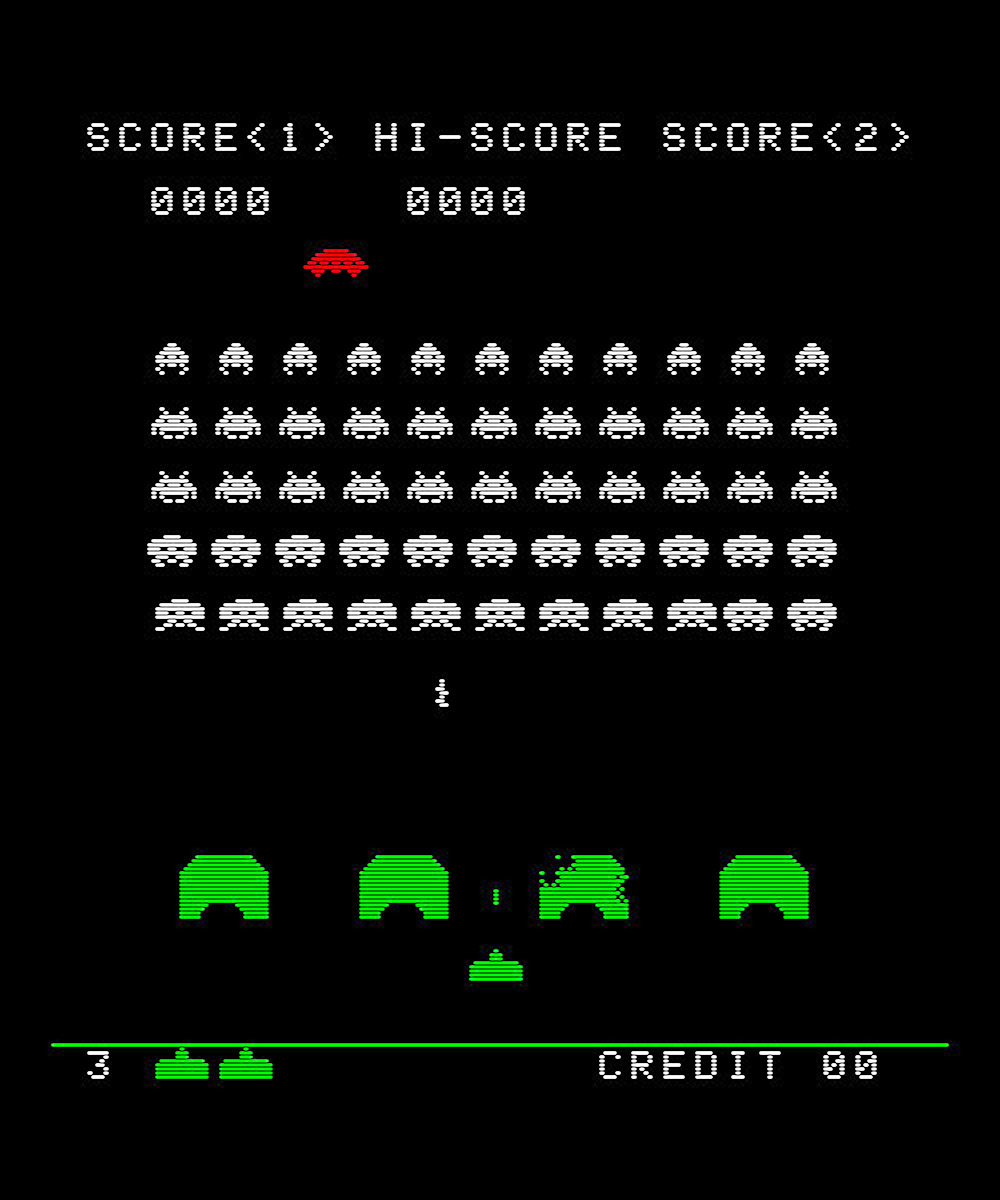
Space Invaders - Taito Corporation, 1978 - The first international blockbuster in gaming history. Expanded the medium from a novelty to an industry. Designer Tomohiro Nishikado was allegedly inspired by a dream about schoolchildren waiting for Santa Claus who are attacked by invading aliens. He also took influence from The War of the Worlds.

Friday, September 28, 2012

Mario Storytelling as Theater

Mario creators Shigeru Miyamoto and Takashi Tezuka sat down with Game Informer this week to answer a few questions about the long-running Nintendo franchise. A couple of Miyamoto's answers caught my eye.
GAME INFORMER: Time and again, Bowser kidnaps Peach. Why do Mario and Peach still race go-karts and play tennis with him?
SHIGERU MIYAMOTO: If you're familiar with things like Popeye and some of the old comic characters, you would oftentimes see this cast of characters that takes on different roles depending on the comic or cartoon. They might be businessman in one [cartoon] or a pirate in another. Depending on the story that was being told, they would change roles. So, to a certain degree, I look at our characters in a similar way and feel that they can take on different roles in different games. It's more like they're one big family, or maybe a troupe of actors.
Clever of Miyamoto to specifically reference Popeye here. His seminal 1981 arcade game that ushered in a new era for the industry, Donkey Kong, began life as a Popeye game. When Nintendo couldn't acquire the license to use the characters, Popeye became Jumpman (later renamed Mario) and Bluto became Donkey Kong.

When you think about Miyamoto's "troupe of actors" comment, it's really been there in the franchise all along. And not just in the figurative sense that gives arch-rivals excuse to play golf and throw parties together. The Mario series is literally a theatrical production.

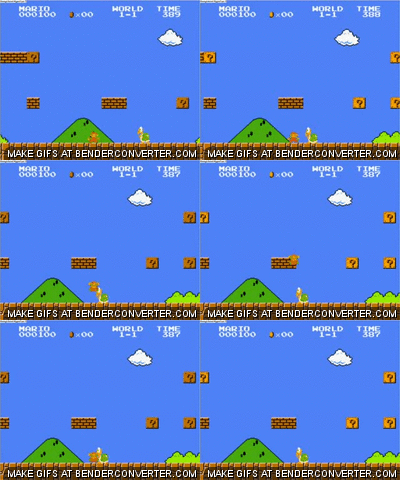
The first hint is death. Starting with Mario Bros. in 1983, Mario didn't actually die--instead, he simply fell off the stage. In an animation that has since become iconic, the Mario sprite actually came unglued from the environment of the game and fell outside the gameworld. Is this breaking the fourth wall? Perhaps it was a way to explain why one man could have multiple "lives": he wasn't actually dying. Like a long-running theatrical production, he was just doing another run-through of the same scene.

There have been blatant hints sprinkled throughout the series, getting less and less subtle with each subsequent title.

In Super Mario Bros. 2, Nintendo introduced a character selection screen that took place behind curtains:


With Super Mario Bros. 3, the entire title screen was a play:


In Paper Mario, the RPG interpretation of the Mario universe revolved around "battles" staged at a theater, complete with applauding audience members (fully realized here in the sequel, The Thousand-Year Door):


Not only are Mario, Luigi, and Bowser familiar to video game audiences, but most of the bit-role characters are as well. From Koopa Troopas to Shy Guys to Bullet Bills, the Mario franchise has built up a huge stable of otherwise inconsequential minions that fans know and love. No other series in gaming has accomplished this feat. Because of Miyamoto's "troupe of actors" approach in which characters recur in different roles, even casual gamers know what a Goomba is.

But are all Mario's roles created equal? There was another answer in the interview that perked my ears up:
GI: Mario has been a boxing referee, a doctor, an Olympian, and a carpenter. Are all these official careers in Mario lore? If he has a medical degree, why does he continue his plumbing business?
MIYAMOTO: There's really only one rule in terms of the things that Mario does. Generally, it's that he's more on the blue-collar side. He's hard-working, and certainly much more physical in nature. So, I think that a doctor is sort of an unexpected and perhaps unbelievable role for Mario. Perhaps the Dr. Mario you're thinking of was maybe, in some way, not necessarily legitimate.
I love this idea that Dr. Mario was a strange role even for the character's creator. This reminds me of films where you see actors cast against type in a role they don't quite fit--like Robin Williams in horror movies. The fact that Williams comes from a comedy background makes the horror that much more creepy. With Mario, the fact that he's normally a working-class guy means a role as a doctor doesn't quite ring true. Miyamoto himself gets the impression Dr. Mario isn't quite "legitimate." After all, all he seems to do is pop pills!

With the Mario franchise having an extensive canon of mostly self-contained stories, Miyamoto tells us there's no overarching plotline at all. In fact, perhaps the events of these games aren't happening at all--they're simply all part of stories told by a jolly troupe of performers. It's as if... Mario is a fictional character.

Is this breaking the fourth wall? Is Mario acknowledging he's in a game? This medium hasn't quite learned how to convey gripping plots, but designers like Miyamoto have forged the way for memorable characters. With the same ones in each game, the ensemble cast becomes familiar to us. It's like actors you see onstage or in film. You know Meryl Streep isn't really Julia Child or Margaret Thatcher, but you like the cut of her jib so you'll go see anything she's in anyway.

Mario is Meryl Streep.