Showing posts with label Dear Esther. Show all posts

Saturday, January 5, 2013

Jake's five favorite videogames of 2012

I've done "best of 2012" lists for music, Lego, sports, and film, but at the end of the day this is really a gaming blog. So without further ado, my final Five Favorite list for 2012:


5. I Am Alive (game site)
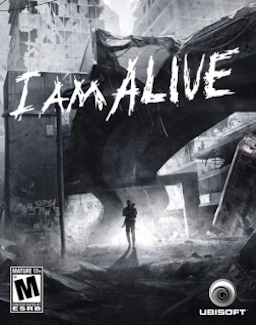
All the other games on this list have gained some sort of cult following and are widely respected by the independent gaming community. I Am Alive, though, is underrappreciated by just about everyone. The game was in development at Ubisoft for nearly nine years, and although it gained attention with the glimpses shown during production, by the time it finally released on Xbox Live Arcade in March, it was completely overlooked. Although it's a downloadable title, you can tell I Am Alive had ambitions beyond what it could ever actually achieve.

It's a survival game in the truest sense of the word--you play as a man searching for his family in post-apocalyptic American city. He's not a typical superhuman game protagonist; he can climb abandoned buildings, but can only hold his weight for a certain amount of time before he wears out. He finds a gun, but he typically never has more than one bullet. As a result, the player is forced to bluff their way through hostile situations, threatening enemies with a gun that they know is empty. While most games today are about empowerment, I Am Alive is about weakness. I wish we could see more small games from major publishers like this in the future.

Wednesday, November 7, 2012

On the advent of "slow games"

My former professor at George Mason University, the venerable Mark Sample, gave a talk at the University of Kansas yesterday entitled "Playing without Power in Videogames." He focused on the pervasive trope of games as power fantasies, making the player-character more powerful as a game progresses. Professor Sample showcased a few games that reverse this paradigm by stripping power away or least twisting it in some way--JFK: Reloaded, Calabouço Tétrico, and Italian studio Molleindustria's new title, Unmanned.

Unmanned

Unmanned is about a U.S. military drone operator working at a remote base in the (American) desert. Instead of blowing up terrorists, the player spends most of their time controlling the man's daily routine. Waking up, shaving, driving to work, flirting with the coworker, playing videogames with the son at home, trying to fall asleep. It's a commentary on the United States' drone strikes as well as on games as a medium. You can play it here.

It reminded me of another game by Molleindustria I played in Prof. Sample's "Videogames in Critical Contexts" class a few years ago: Every Day the Same Dream. Another quiet, pensive game about playing the routine of a middle-aged man's daily schedule to and from work. You can play it here.

Why this focus on slow-paced routines? Along with the stripping of power comes with the stripping of speed and action. We bemoan today's ADHD game culture; big-budget titles are about quick sensory overloads of gratuitous violence, and successful casual games are about playing in two-minute Angry Birds intervals. But beneath the surface, game design has seen a huge shift in the other direction. Maybe it's a reaction to the chaotic post-9/11 world or simply a product of better technology, but the past few years have been a boon for slow games. There have always been hints of slowness in games, from Cyan's Myst to Nintendo's The Legend of Zelda. But we're starting to see works where the slowness is the entire conceit of the game.

Shenmue

One of the first prominent examples of slow gaming was Sega's Shenmue, ahead of its time in 1999. Alexander Galloway calls this "pure process" in the first chapter of his book Gaming: Essays on Algorithmic Culture.

Wednesday, October 3, 2012

Looking back at Dear Esther


After emerging as a Source engine mod in 2008 and a full-blown title of its own on PC this past Valentine’s Day, British indie developer thechineseroom’s cult classic Dear Esther finally released on Mac in June. Being the arty-farty gamer I am, I was curious to see if it lived up to the hype.
The debate surrounding Dear Esther centers around the question of “Is this a game?” It’s a first-person adventure title where the player simply wanders around a mysterious Scottish island, listening to a narrator speak about a woman named Esther. Players don’t solve puzzles or fight enemies. They simply walk around and listen. Is this even a game?
To me, it is. No question about it. It involves player input. We as an industry are so hung up on scores and rules and action. To me, Dear Esther is the gaming equivalent of a Gus van Sant film. You simply take in your surroundings, think about the meaning of it all, and get what you want out of it. There’s no real payoff at the end or decisive goal to be achieved. And that’s the beauty of it. As the games industry grows more mature in the coming decades, I look forward to seeing more games that occupy these shades of gray in defining what “gameplay” means.
While video games are great at appealing to our carnal instincts and guttural emotions, we’re starting to see a few like Dear Esther that require a bit more thought to appreciate. It’s a solemn, lonely game. I’m torn on the narration–sometimes it comes off as corny and melodramatic, but sometimes the writing is brilliant. What sets Dear Esther apart from other recent art-game hits like Limbo and Journey is that Dear Esther isn’t stylized at all. Many of these cult hits forgo graphic realism for exaggerated looks that make it easy to create evocative art. Dear Esther, on the other hand, aims for complete realism in its visual design. That’s what makes the work so moving, and what makes it even more surreal in the game’s stranger segments.
Dear Esther has a very strong sense of place. It’s a British video game taking place in Britain, and it couldn’t have been made anywhere else. The location and mood are so unique to that part of the world, and it’s something I’d like to see more often as the games industry diversifies from American/Japanese dominance to a global art form with developers all around the globe.
The game’s developer, thechineseroom, is currently working in collaboration with Swedish indie studio Frictional Games on a sequel to their own atmospheric first-person cult classic, Amnesia. It looks gorgeous.
Dear Esther is $10 on Steam, and is available both on PC and Mac. It takes an hour or two to finish, but if you like it you’ll want to play it over again. If you love Call of Duty, you’ll hate Dear Esther.