Showing posts with label Shenmue. Show all posts

Friday, February 7, 2014

Top 10 classic games that have never been re-released on modern platforms

If you want to read a centuries-old classic novel, you can find a recent edition of Beowulf or Canterbury Tales on Amazon. If you want to watch a classic movie from the '20s or '30s, you can easily get them on DVD or even Blu-ray. Why is it, then, that so many classic videogames have still never been re-released on modern platforms?

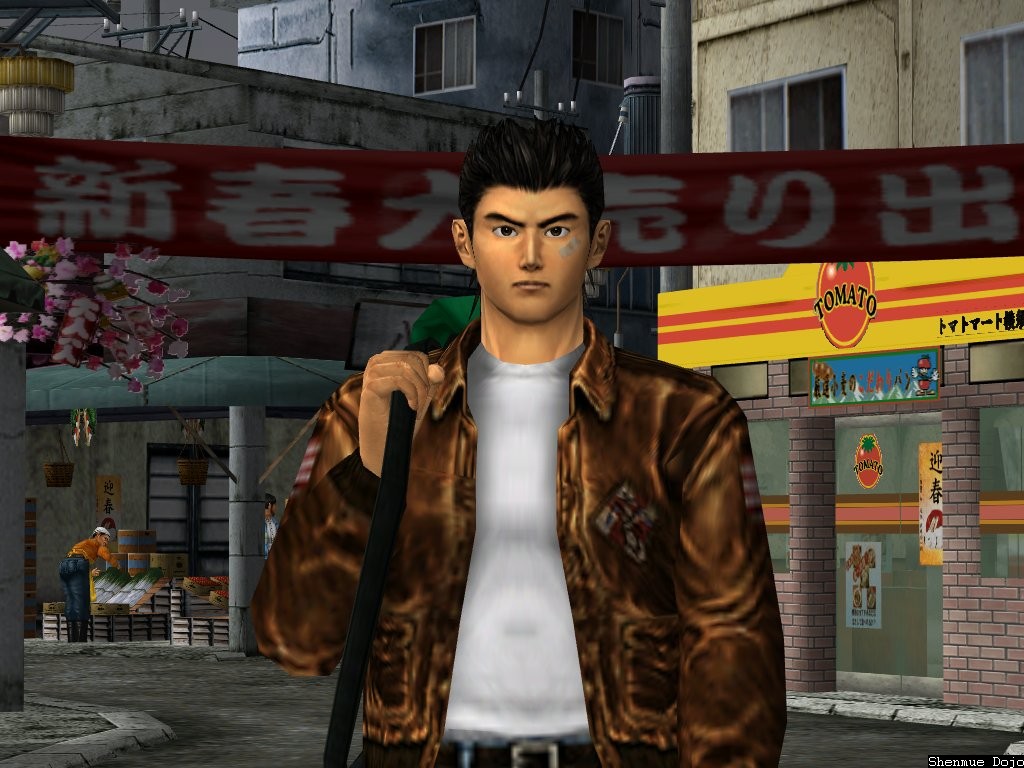
If you want to play the seminal adventure game Shenmue, for example, you'll have to track down a used copy and an old Sega Dreamcast on eBay. In our tech-savvy modern world, why isn't there an easier way for newcomers to play Shenmue? Many classic games risk becoming lost to the annals of time except among hardcore collectors. To the general public, Shenmue may as well not exist in 2014.

Here's my personal list of ten iconic games that have never been released on a modern platform. What's yours?

Star Fox

Release details: Developed & published by Nintendo, 1993

Available platform: Super Nintendo

Why it's relevant: The first Nintendo game ever to use 3D polygon graphics.

Why hasn't it been re-released? Now that EarthBound is finally available on the Wii U Virtual Console, Star Fox is perhaps the highest-profile Nintendo game never to be re-released. It's not quite as famous as Star Fox 64, but it's still a landmark in the company's history. Apparently the lack of a Virtual Console presence has something to do with the Super FX coprocessor chip used in Star Fox that would be difficult to emulate on modern hardware.

NHL '94

Release details: Developed & published by Electronic Arts, 1993

Available platforms: Sega Genesis, Super Nintendo, Sega CD, DOS

Why it's relevant: Arguably the best sports video game ever made

Why hasn't it been re-released? This is likely a licensing issue. Sports video games get the rights to use athletes' names by striking a deal with the Players' Association, but since virtually every player who appeared in NHL '94 is now retired, EA would probably have to go out and ask each player individually for the rights to their name if they wanted to re-release the game.

NHL '94 was included in the PlayStation 2 version of NHL 06, but without the player names. The names are important to NHL '94's legacy, but if namelessness is the only way to get the game re-released in 2014, I'll take it.

Pokémon Red Version & Blue Version

Release details: Developed & published by Nintendo, 1996 (Japan) / 1998 (worldwide)

Available platform: Nintendo Game Boy

Why it's relevant: It's the first Pokémon game. It started a revolution. Duh.

Why hasn't it been re-released? There were a couple remakes in 2004 on the Game Boy Advance, FireRed and LeafGreen, but it's not the same as playing the original game. I have no idea why Nintendo has been holding Pokémon back (any version, not just the originals!) from the 3DS Virtual Console.

Mega Man Legends

Release details: Developed & published by Capcom, 1997 (Japan) / 1998 (worldwide)

Available platforms: Sony PlayStation, Nintendo 64, Windows

Why it's relevant: The first major change to the Mega Man formula, a cult favorite lingering in obscurity while the mainline Mega Man and Mega Man X series continue to get sequels.

Why hasn't it been re-released? It was re-released on the original PSP in 2005... but only in Japan. Capcom can't re-release Mega Man Legends because somehow they don't have the rights to the voiceover work. The only way they could re-release the game is if they re-recorded all the dialogue in the game, which doesn't look to be happening any time soon.

Panzer Dragoon Saga

Release details: Developed & published by Sega, 1998

Available platform: Sega Saturn

Why it's relevant: Unquestionably the best game on the Saturn. One of the only relevant games on the system.

Why hasn't it been re-released? If you want to play Panzer Dragoon Saga in 2014, you'll have to track down a used Saturn copy which goes for almost $400 on eBay. The best game on the Saturn is also one of the rarest. Why Sega couldn't release it as a digital download on a modern platform is beyond me. The Saturn's architecture is apparently hard to emulate, but come on, it's 2014! We live in the Future! Why can't we figure this out?

Grim Fandango

Release details: Developed & published by LucasArts, 1998

Available platform: Windows

Why it's relevant: The pinnacle of Tim Schafer's career, and the swan song of LucasArts graphic adventure games

Why hasn't it been re-released? LucasArts stopped making non-Star Wars games a long time ago, and now they don't even exist anymore. They released updated versions of a few of their games like The Secret of Monkey Island back in 2009, but who knows what'll happen now that Disney owns the rights to Grim Fandango?

Hopefully they'll realize what a treasure trove of classic '90s adventure games they've got, and eventually release them for modern operating systems. It's sad that Steam and GOG don't have Grim Fandango in any form.

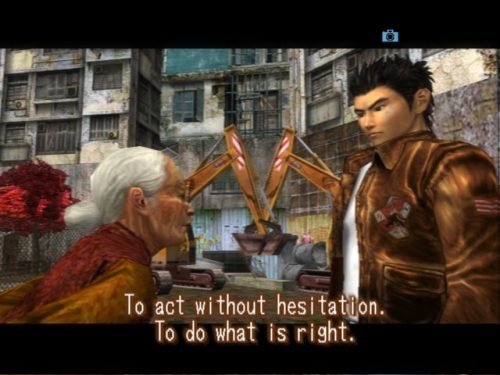
Shenmue

Release details: Developed & published by Sega, 1999 (Japan) / 2000 (worldwide)

Available platform: Sega Dreamcast

Why it's relevant: The grandfather of open-world 3D adventure games

Why hasn't it been re-released? If Sega hadn't stopped making consoles after the Dreamcast, we'd probably see it released somewhere today. Its sequel, Shenmue II, was released on both the Dreamcast and the original Xbox, but the original never left the Sega console. This could be released as a digital download for any of the three current home consoles.

Eternal Darkness: Sanity's Requiem

Release details: Developed by Silicon Knights, published by Nintendo, 2002

Available platform: Nintendo GameCube

Why it's relevant: One of the few Mature-rated games ever published by Nintendo. A psychological horror game that redefined the genre with fourth-wall-shattering scares.

Why hasn't it been re-released? I always assumed the chances of this one getting a re-release were slim, since developer Silicon Knights fell apart, and founder Denis Dyack is a polarizing figure to say the least. But apparently the game's creators and Nintendo still get along with each other well enough that a Virtual Console release of Eternal Darkness is a very real possibility... if Nintendo ever gets around to releasing GameCube games on the Virtual Console.

Metroid Fusion

Release details: Developed & published by Nintendo, 2002

Available platform: Game Boy Advance

Why it's relevant: Do you ever get the impression I enjoy Metroid? Because I do.

Why hasn't it been re-released? This was re-released, in a way. It was released as a downloadable title on the 3DS Virtual Console in 2011, but only for "3DS Ambassadors," meaning people who bought a 3DS before a certain date. So for all of us trying to buy Metroid Fusion (or any Game Boy Advance game) on the Virtual Console today, we're out of luck. Obviously Nintendo has the capability to do it, since they did it before. So why aren't they opening the Game Boy Advance gates to the rest of us?

Killer7

Release details: Developed by Grasshopper Manufacture, published by Capcom, 2005

Available platforms: GameCube, PlayStation 2

Why it's relevant: I've made no secret of my love for Killer7. It's the seminal work of auteur Goichi Suda.

Why hasn't it been re-released? This one is complicated by the fact that the developer and publisher haven't worked with each other since the release of the game nine years ago. But can't they put aside their differences in the name of Killer7? This cult classic, with its stylized cel-shaded look, is just begging for an HD remaster on the Wii U or PlayStation 4. It would be gorgeous.

Wednesday, February 5, 2014

Playing Shenmue the Wrong Way

My name is Shenmue. No, wait, Ryo. Ryo.
Over the past week, in a fit of madness, excessive boredom, or perhaps simple fandom, I decided to hunker down in my free time and watch YouTube video longplays of Shenmue and Shenmue II. Long have these two been favorites of mine and, given that I am still not yet fluent in Japanese (though I’m improving), I have not been able to play either of these games in years due to my physical distance away from the American versions. I enjoyed my time watching and definitely re-ignited my passion and desire for the third game to, if not get made, perhaps get novelized so that I can finish the story.

It is going to take for-goddamn-ever to find the cat food.
And that’s where I made a slightly unsettling discovery: I actually had more fun watching these games get played by someone else than I would have actually replaying them. That’s weird, isn’t it? After thinking about it a while, I chalked it up to Shenmue itself, actually. The game is utterly pedantic. You have to search every drawer in every room in every house. You have to scour the shelves at the convenience stores. You have to talk to literally everyone to get the least important bit of data. Of course, the game goes quickly if you know where to look and to whom to speak, but that first time through is long and daunting. I really enjoyed playing these games when I was younger (barely pre-college), but I had the time to sink into them, then. I was able to learn the ins and outs of the city and everyone’s names.

Originally when I had the urge to play through them again, I conceived a scheme to somehow get my Dreamcast (with all of its appropriate peripherals and games) sent to me, but the cost and difficulty of doing so was disproportionate to my desire to play Shenmue.

So what would I do?

Also recently, entirely by coincidence, I happened across a few longplays of Final Fantasy VII where someone had applied HD mods to the PC version of the game, and figured that someone somewhere must have done longplays with Shenmue. And I was right.

But while watching, a few questions came to mind:

1) Why are all of the people in the game so generally useless?
2) Would I actually have continued to want to play this game if a longplay video hadn’t been available?

Sh-should I really be listening to you?
The first question can be explained away as a typical video game convention to get you to explore as much of the available world as possible, as unbelievable as it is that one of the premier martial artists in town would only know one of the four Wu-du necessary for you to learn, and then, after that, to not have any idea who else in town could possibly know kung-fu to help you with the next one. It’s ridiculous, but whatever.

The second question, though, seems more far-reaching in its implications. Would I have pursued playing it? Would I have bought a Japanese copy, or gone the distance to get my Dreamcast shipped to me? I’m not so sure. And I’m not sure if it’s because of the inconvenience of obtaining a usable copy of Shenmue (which is the reason people usually pirate games in the first place – look at Mother 3), or if it’s because of the convenience of not playing the game. As I said earlier, the game is kind of a chore to play if you’re not an expert at it, and as I also said earlier, I think I actually had more fun watching the game than I would have had playing it. Of course, I didn’t pirate the game (and own it – own both of them, actually) - hell, I didn't really even play the game - so I don’t feel bad about it, but I do wonder if that means there's a problem with me as a gamer. Have I actually, or am I now starting to outgrow games?

Oh, right.

Never mind.

Sunday, January 19, 2014

Nintendo's Future, Re-opinioned

One of the things I kept coming back to in Jake’s and my argument about the future of videogames is that I just don’t see the future being too terribly different from the present. In other words, I don’t think that the technological singularity is going to happen as quickly as Jake is afraid it’s going to. I do think it will happen, but not soon.

In our “discussion,” I referenced the incomparable Mr. Stephen Fry and his BBC radio show “Fry’s English Delight,” specifically the episode about the future of the English language as compared to today. I brought up one particular point made by one of the guests on the show about how, obviously, it is impossible to predict the future (hell, the singularity could happen tomorrow, or next month, or next year), but you can make predictions based upon precedent, specifically, how things have happened in the past. In the show, Fry posited the question about whether in, say, 200 years, the English language would be, to contemporary speakers and readers, completely indecipherable or not. The answer was a definitive “no.”

What the f...?
And here’s why: the only thing we have to go on is history, and, looking back at the history of the English language, we can go back much farther than only 200 years, in fact. We can go all the way to Shakespeare or Chaucer and still understand their English, albeit with some difficulty, especially with archaic words and word spellings and meanings. If we can understand them, it’s likely that we will be able to understand our future language, albeit with difficulty. There’s more to it, but that’s the relevant idea. We should be able to understand and get along. And I think that is directly applicable to the future of video game consoles.

Again, it’s my opinion that the technological black hole will happen, I’d be shocked if it didn’t, but I don’t think it will be as quick as it’s feared. And the reason why is both the past, and people.

People don’t change much, all considered. Look at the older generation: how many of them play video games? Very few, I’d wager. Is it because they just don’t understand all these new-fangled gadgets, or is it because they don’t understand why kids these days can’t just go outside and play, or is it because they’d rather just read a book, or keep a garden, or any other number of excuses they give? Well, yes, exactly. It’s not because they think games are inherently stupid (well, they might, but they’re wrong), it’s because it’s not what they grew up doing. It’s not what they're used to.

"I've been googling 'Jenna' all day, but only
 one of them was my granddaughter."
And we’re all like that. I remember looking at the original Wii, thinking, “man, I just don’t want to be forced to wave my arms to play a game.” And, to a degree, I still feel that way. And, apparently, so does everyone else. Of course, the action games like Wii Sports or Wii Fit that make you flail like a 5 year old still exist, but the casual game that anybody can pick up and play is, more or less, a gimmick. Most gamers, the so-called hardcore crowd, are used to using old-school control schemes, and are thus more comfortable with that kind of setup. The Wii U is a response to that (even if a slightly cumbersome one), and the overall de-focus on wand-waving is evidence as well. Wand-waving is around, but it will never replace classic controls… Until the kids today grow up and become video game company leaders who only want to play games where flailing is a necessity.

But, I’d say, where this is really important, the whole “used-to” factor I mean, is with the Game Boy.

Portable gaming has come a long way. A long, long way. Portable gaming is everywhere from Apple and Android devices to popular Nintendo and Sony handhelds to little 3rd party screens that play Pong and other older games, usually sidescrollers like Contra­ or 1942. Jake thinks – fears – that portable gaming will be taken over completely by the iDevices and that the Game Boy (and DS, and 3DS) as we know it will cease to exist. This is where we completely disagree.

It doesn't look 30.
Did you know that the Game Boy has been around nearly 30 years? Good god, that’s a long time for a gadget to live. Granted, they’re not all the same, we’re talking Game Boys, GB Colors, GB Advances, DSes, and now 3DSes, but the fact remains that, despite the upgrades, it’s the same device that serves the same purpose: portable video games. The demand for which has not only not decreased, but has remained so outstandingly popular that every kid everywhere ever wants or has at one point wanted one, especially in 2013 (supported by factual basis). Kids, known for being fickle bastards, have remained loyal to Nintendo for all these years, and Nintendo kids like Jake grew up and continue to be loyal even as adults. Regardless of how amazing and powerful new cell phones and tablets will continue to become (and what emulators they employ), they simply don’t replace holding a proper Game Boy and booting up Tetris or Pokémon in the car on a family trip or on the train going to work.

But here’s where it gets tricky: languages are living, breathing entities that change as people change; technology is dictated by the speed of progress, and isn’t dependent on rate of spread. There could very well be a new tech in the next few years that will entirely replace the need for a Game Boy in any sense (a perfect, and I mean perfect cell phone virtual control pad, for instance). But that’s impossible to predict. It might happen, it might not. You could argue cell phones and iPods already have replaced Game Boys, and there’s valid argument, but, as Jake argued and with which I agree, Nintendo’s catalog of games is not to be trifled with, and I don’t see Nintendo giving up its exclusive publishing rights to Mario, Pokémon, Metroid, Donkey Kong, Zelda, etc. If for some reason they ever decide to give up in the proper console war, they’ll be able to focus solely on building their own proprietary Game Boy hardware (and software) and still succeed.

But if they want to win this console war (which they don’t appear too troubled about, honestly), they’ve got to utilize the Virtual Console intelligently. Why is the Wii U cupboard so bare? Why did it take years and years for EarthBound to come to any VC, and then only to one VC? Why in the world are they treating each specific system’s VC as separate and individual? If Nintendo is smart, they’ll take a page out of the PSN manual and merge the VCs together, actually get their shit together in regard to back catalog game releases, and use every single resource at their disposal, namely the Gamecube, N64, and Dreamcast licenses they no doubt have access to. Jake’s mention of getting Shenmue on the VC? That came from me, yo. I would gladly pay for the ability to play Shenmue on a console I still currently own and use (my Dreamcast in my fluent language is across the sea), but I don’t appear to have anywhere to throw my money to make that happen. Why the fuck not, Nintendo?!

Oh, oh, oh, oh, oh. Oh.
Or Sony. Or Microsoft. I’m not pressed.


Wednesday, November 7, 2012

On the advent of "slow games"

My former professor at George Mason University, the venerable Mark Sample, gave a talk at the University of Kansas yesterday entitled "Playing without Power in Videogames." He focused on the pervasive trope of games as power fantasies, making the player-character more powerful as a game progresses. Professor Sample showcased a few games that reverse this paradigm by stripping power away or least twisting it in some way--JFK: Reloaded, Calabouço Tétrico, and Italian studio Molleindustria's new title, Unmanned.

Unmanned

Unmanned is about a U.S. military drone operator working at a remote base in the (American) desert. Instead of blowing up terrorists, the player spends most of their time controlling the man's daily routine. Waking up, shaving, driving to work, flirting with the coworker, playing videogames with the son at home, trying to fall asleep. It's a commentary on the United States' drone strikes as well as on games as a medium. You can play it here.

It reminded me of another game by Molleindustria I played in Prof. Sample's "Videogames in Critical Contexts" class a few years ago: Every Day the Same Dream. Another quiet, pensive game about playing the routine of a middle-aged man's daily schedule to and from work. You can play it here.

Why this focus on slow-paced routines? Along with the stripping of power comes with the stripping of speed and action. We bemoan today's ADHD game culture; big-budget titles are about quick sensory overloads of gratuitous violence, and successful casual games are about playing in two-minute Angry Birds intervals. But beneath the surface, game design has seen a huge shift in the other direction. Maybe it's a reaction to the chaotic post-9/11 world or simply a product of better technology, but the past few years have been a boon for slow games. There have always been hints of slowness in games, from Cyan's Myst to Nintendo's The Legend of Zelda. But we're starting to see works where the slowness is the entire conceit of the game.

Shenmue

One of the first prominent examples of slow gaming was Sega's Shenmue, ahead of its time in 1999. Alexander Galloway calls this "pure process" in the first chapter of his book Gaming: Essays on Algorithmic Culture.