William Gibson's 1984 Neuromancer is pretty dense. It begins right in the middle of things, and never explains the science fiction world's background. We the readers must piece it together on our own. Initially, main character Case seems like a sort of deadbeat alcoholic American living in future Japan. Well, we assume he's American. North America is referred to only as the Sprawl.
We figure out that some sort of apocalyptic event happened to North America (I specify "North America" instead of "United States" because Gibson is American-Canadian), and there's a wave of shady immigrants from this Sprawl now living in Japan. The story takes place in Chiba, a real-life suburb of Tokyo. This is important. I don't think the world of Neuromancer would seem as gritty or real if it took place on some distant planet; the fact that it's a place that exists in the real world, even if it's across the Pacific, makes it a bit more identifiable.
The iconic first line of the novel--"The sky above the port was the color of television, turned to a dead channel"--gives way to an opening scene in a bar, with a one-armed futuristic bartender. It's all very evocative, but incredibly foreign as well. We've seen plenty of stories about pubs with troubled inhabitants, but the bartender Ratz with his prosthetic limb makes the scene alien to us.
I've got a point of reference, though: Ridley Scott's Blade Runner, in theaters only two years prior to Neuromancer's release. Both works take place in a dystopian future where Americans bump elbows with the Japanese, and as a result, through my reading of the book I imagine Case as Harrison Ford.
But there's really no exposition. Gibson assumes the reader has a certain level of intelligence, and we have to put the puzzle together ourselves.
The story of a smart man and his gigantic, burly, innocently-stupid companion who unwittingly kills people. It ends in tragedy.
Is this Frankenstein or John Steinbeck's Of Mice and Men?
On the surface, these two novels have a number of similarities, but once you get farther into the novel, these likenesses run even deeper.
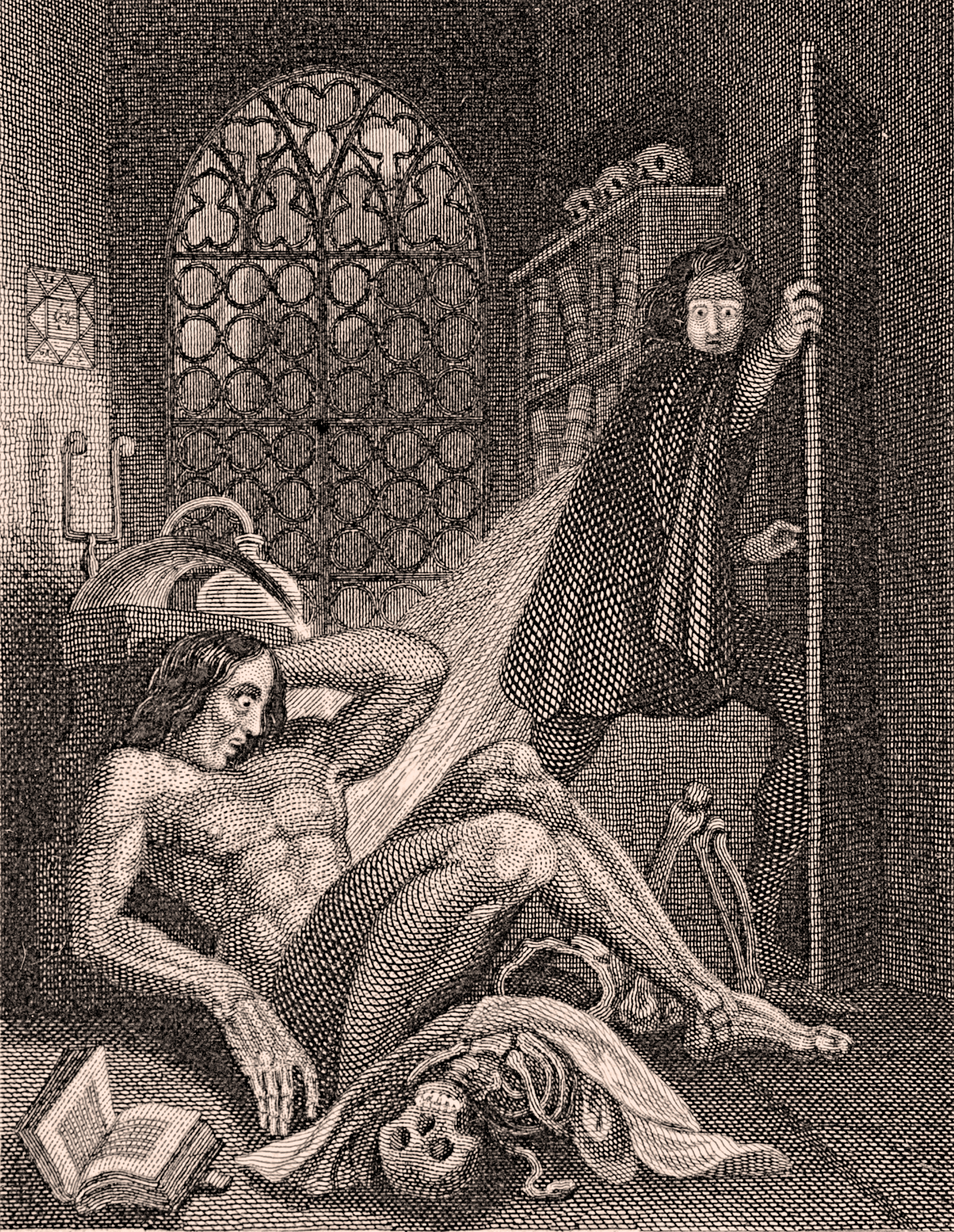
From the time I started reading Frankenstein, I saw parallels between the monster and Of Mice and Men's Lennie Small. But as the story shifts to the perspective of Frankenstein's creature, I realized just how tragically alike they actually were. George is the only difference.
Victor Frankenstein and George Milton are polar opposites in many ways. While Frankenstein is melancholy and reserved, George is outgoing and cynical. Both are greedy, but in different ways. Frankenstein creates his monster for selfish reasons, to fulfill an inner curiosity and play god. George, on the other hand, is a schemer; he wants to work his way up the social ladder and own his own land. George is in and out of work, and doesn't really have any larger dreams other than to make more money.
Ironically, George is much more personable than Frankenstein. The former adopts Lennie and acts as his protector, while Victor is distant towards his friends and family (even his "lover" Elizabeth), and immediately disowns his creation.
Frankenstein's creature uses violence in an unwitting, childlike way. Lennie is the same way. While Lennie only wants to "stroke" things and ends up accidentally killing them, the monster's violence comes about slightly differently. The monster actually tries to assimilate to human culture, and his murderous tendencies come out because humans don't accept his hideous body, and he's filled with anger over this neglect.
But maybe the monster wouldn't have killed anyone if Frankenstein had been a bit more like George. Frankenstein cannot deal with his creation in any capacity, and virtually all the interactions between the two in the book are hostile. This is mainly Frankenstein's fault. The creature tries to reach out to him, and Frankenstein can't accept him. At one point, Frankenstein agrees to create a female companion for the monster, but that doesn't exactly go as planned.
George is a bit more complex. He stands by Lennie until the very end of the book, where he must "put down" his partner like a pet at the animal hospital. Here's another place where Frankenstein and Of Mice and Men coincide--both novels end with the death of the monsters. Lennie is unknowing and violent until the end; Frankenstein's monster commits (implied) suicide because of remorse over his murder of his creator.
This a strange role reversal. George kills Lennie at the end of his story, and deals with the guilt of this euthanasia but survives. Frankenstein's monster, on the other hand, kills Frankenstein, and then deals with the guilt through his own death. At the end of the day in both novels, everyone's bummed out. But through compassion, George survives his story. Frankenstein... does not.
Mary Shelley's 1818 Frankenstein is arguably the world's first true science-fiction novel, the predecessor to modern-day robot stories. One would think Frankenstein's monster is more closely connected to today's zombie flicks (it's risen from the dead, after all), but its connection to artificial intelligence is much more important.
One of the central themes of sci-fi is the idea of "man vs. machine," where computers have advanced so far that they become self-aware and rebel against their human creators. Frankenstein swaps lasers and hard drives for rotting limbs and yellow eyes, but it's the exact same concept.
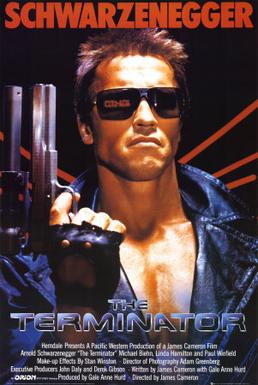
The most iconic Man vs. Machine story in pop culture is without a doubt James Cameron's 1984 blockbuster The Terminator. Set in the near future of 2029 (everyone loves the "near future"), the plot is fairly contrived, but the parallels between it and Frankenstein are astounding. How do they compare?
Both Frankenstein's creature and the Terminator were created by humans at the cutting edge of science. Both had noble intentions that went horribly wrong. Or did they?
Victor Frankenstein is a lonely, melancholy man who seeks mainly to satisfy his own curiosity. The Terminator, however, was created by a United States military super-soldier robot program. Perhaps the mission of "national security" is noble, but as we know from real life, "national security" has been used as an excuse by the U.S. military to do some sinister things.
Neither Frankenstein's monster nor the Terminator are evil by nature. Both are tragic characters, forced into violence by their circumstances. They're small children who break things in their parents' house--not necessarily always by accident, but not for evil reasons, either. It's curiosity mixed with a heavy dose of "not knowing one's own strength."
The audience doesn't immediately empathize with the Terminator nearly as easily as we do with Frankenstein's creature. The tragic side of Arnold Schwarzenegger is not really explained until later in the Terminator franchise.
Why is the Terminator so much more evil? Because it sells more tickets at the movie theater. The Terminator was made to make money. Coincidentally, film adaptations of Frankenstein seem to share much more in common with The Terminator's shallow action than with Mary Shelley's original novel.
When money is thrown at art, we end up with the lowest common denominator of complex expression. This is something else Frankenstein and The Terminator have in common.
So what do you think a Frankenstein film adaptation in 2011 would look like? What should it look like? And why do the "would" and "should" conflict with each other?
It's got naughty pix abounding, and on the surface seems like your average sleazy Japanese game. But the developers insisted it was a deep exploration of sexuality and adulthood, so I remained interested.
Since Catherine was released in North America last month, plenty has been written about its elegant handling of sexual identities and mature themes. Something fewer people have touched on is the context of all this arty stuff.
It's not an RPG. It's a puzzle game.
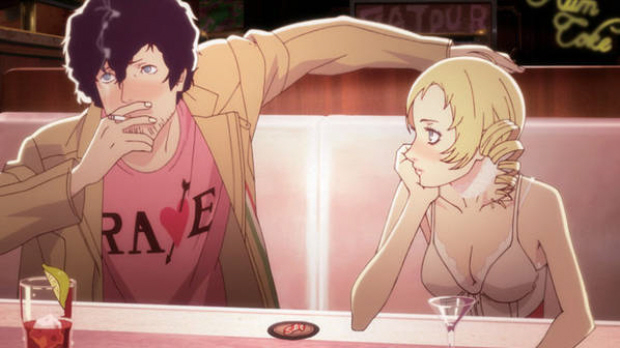
You read that correctly. Catherine's gameplay is split into three parts: lengthy anime cutscenes, RPG-style nights hanging out at the local pub, and the core of the game--Q*bert-style block-climbing puzzles.
But how can a puzzle game have a deep storyline?
We're stuck in the idea that puzzle games have to be simple. All the most iconic puzzle titles are incredibly minimalist: Tetris, Bejeweled, and Lumines don't really have anything at all resembling a story. In fact, they don't even really have a "fiction"; they're just abstract images used to convey gameplay.
There are a few popular puzzle games with slightly deeper fictions. Puzzle Quest features some fantasy RPG elements, and the Professor Layton games feature Studio Ghibli-style art. But in both of these games, the stories are only superficial packaging for the core gameplay, which is still simple puzzle fare at heart.
So does Catherine do anything different than Professor Layton? At the end of the day, the protagonistVincent could be replaced with a generic stick figure, and the gameplay would still succeed. But the puzzles themselves serve a purpose in the story: they're allegory for Vincent dealing with the emotional consequences of his infidelity towards his girlfriend, and his anxiety towards maturation and adulthood.
Yes, this is still superficial. The puzzles would work without the story. But through their connection to the fiction, they made me feel more invested in Vincent as a character during the non-puzzle sections. We understand the puzzles as explorations of Vincent's psyche, and that immerses us more in the story. As great as Puzzle Quest and Professor Layton are, neither are able to accomplish this, and as a result their stories come off as much more unnecessary. With Catherine, I loved the puzzles, but I can honestly say I wouldn't have enjoyed them nearly as much if it weren't for their deeply-bedded connection to the storyline.
Twenty-five years ago this past Saturday, the first Metroid title was released on the Famicom in Japan. Plenty has been written on how the game revolutionized non-linear gameplay, how it broke gender barriers, how its dark, melancholic mood redefined atmosphere in games, and how Team Ninja bastardized the franchise with Other M. You can find all those articles on other websites.
Yokoi's life parallels the story of the Metroid franchise. Both are integral figures at Nintendo, still the most important game company in the world. Both had moments of sheer greatness followed by moments of neglect and disaster. Both are black sheep in the Nintendo family whose legacy is too often forgotten today.
Along with Metroid, Yokoi is the creator of some of Nintendo's most important works. Among them: the Game & Watch, Kid Icarus, the Game Boy, Dr. Mario, and Fire Emblem. While many of these were popular and influential, nothing reached the stardom Miyamoto's creations.
And there were the failures. In 1985, Yokoi created R.O.B., the Robotic Operating Buddy! It's a cult classic today, but when it was released, it flopped. The plastic robot add-on for the NES only got support from two games, and it was shortly discontinued.
He was also the father of Nintendo's first foray into 3D gaming, the infamous Virtual Boy. Released in 1995, it was such a failure that it led to Yokoi's departure from Nintendo in 1996, after three decades of service.
A year later, he was hit by a car and killed. And today, unless you're a huge gaming enthusiast, you have no idea who Gunpei Yokoi is.
(Side note: I wonder what Yokoi would think of the 3DS. It's the spiritual successor to the Game Boy and Virtual Boy combined!)
What about Metroid? It's often grouped in Nintendo's "holy trinity" with Mario and The Legend of Zelda. But is it really up there? Metroid has never enjoyed the commercial success of its Miyamoto-created brethren.
To me, it's personal. As a kid, Metroid was the first series that made me realize video games could be something deeper as an art form. It's the most important game franchise to me. If it weren't for Metroid, I'd be another 14-year-old boy on Xbox Live chugging Mountain Dew and calling people homophobic slurs in Halo.
So even if Nintendo refuses to acknowledge your existence in 2011: happy birthday, Metroid. And thank you, Gunpei Yokoi. I'll pour one out for ya.
Last week, I listed Limbo creators Playdead as one of the best developers in Scandinavia. Today I'll go more in-depth with their game, and explain why the Danish designers deserve such praise despite Limbo being their very first title.
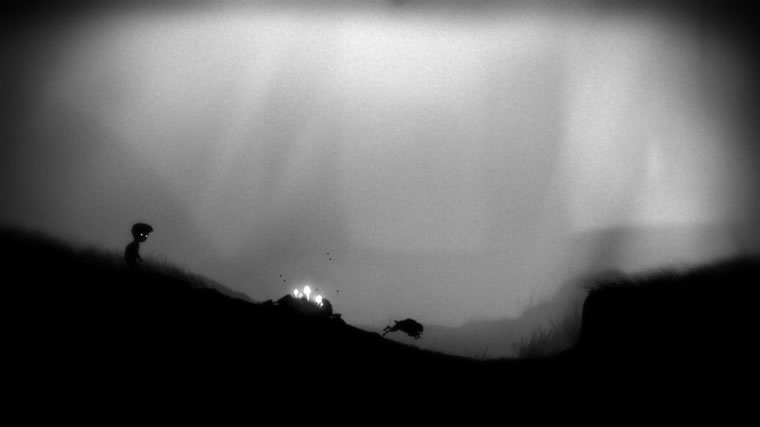
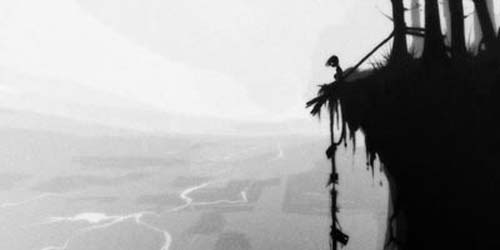
Limbo is minimalist game design in its purest form. Aside from the main menu, there are absolutely no words through the entire story. No spoken dialogue, no text, nothing. There is no tutorial. You are thrown straight into the plot.
You're a small boy unconscious in a forest. The visual style of Limbo is immediately striking--it's entirely in grayscale, with characters all in silhouette. And the music is minimal. No score, no sweeping theme song. Ambient sounds are the only tunes accompanying the boy, supplemented by single orchestral notes at particularly poignant moments.
The boy, who is never given a name, doesn't wake up until the player presses A. But the game doesn't tell the player to do this; they must figure this out on their own. Once he's awake, control is simple. The control stick moves the boy, the A button makes him jump, and the B button lets him push and pull objects in the environment. That's it. Even the boy's jump ability is fairly modest compared to most other 2D platformers.
This isn't an empowered protagonist like we're used to seeing in this medium. It's just a boy. We're left to come to our own conclusions about anything more than that, because there is absolutely no exposition or backstory. SLIGHT SPOILER ALERT We learn about halfway through the game that he's searching for a girl. Perhaps it's his sister, but this is never expanded upon. Again, we're left to come to our own conclusions. END SLIGHT SPOILERS
Limbo is essentially a puzzle-platformer. The boy must manipulate the environment to get through to the next area. But why he's doing this is anyone's guess. And I like it that way.
As the boy travels through this forest, it seems everything wants to kill him. A tribe of slightly older boys sets traps for him, and a Shelob-like giant spider wants to consume him. We see the bodies of other children hanging from gallows in the background. There's a very Lord of the Flies feel to it all.
Death is all around the boy. In a particularly disturbing sequence, the boy must conquer the spider chasing him by amputating its legs himself. Once the spider has been fully de-legged, the boy must roll its torso into a spike pit and use it as footing to jump off.
Another factor in all this violence is the realization that this boy cannot swim. Any time he goes underwater, he drowns to death. In one sequence, the boy must use the floating corpses of other children to get across a pond. Death follows the boy everywhere--rotting carcasses of animals are pervasive throughout the forest, and insects follow him everywhere. This grisly subject matter might be too much to handle, but the silhouette art style makes it palatable.
Considering how two-tone the visuals are, his deaths are jarringly graphic. The deaths get increasingly gruesome as the game goes on. Being a puzzle-platformer, the player will die dozens of times in one playthrough. But the boy always reappears quickly next to the trap that killed him, so players can try again. Through the sheer volume of deaths, players get almost desensitized to the violence incurred on this small child.
SPOILER ALERT
There is no "final boss," and I commend Playdead for eschewing this game industry trope. Instead, near the end of a puzzle, the boy shatters through glass and dies. For real. He doesn't respawn to where he can try again. He actually dies.
But then he wakes up again, much like in the beginning of the game. He's in a forest, and he finds the girl he's been searching for. She's near a ladder, sitting down. She looks up. And then the credits roll.
After the credits, we come back to the game's main menu screen. We make the realization that the ending of the game has been staring us in the face ever since we began: the main menu screen shows the ending of Limbo. It's the same forest as the ending scene, with the same wooden ladder. But it's rotting. And instead of the boy and girl, we see two lumps on the ground with insects buzzing around them.
This abrupt ending was very polarizing for players. But to me, it fits. In an experience where he has died countless times in various super-violent manners, this is closure for the boy. He can finally rest. And perhaps "true death" was the only way for him to find this girl. He's finally out of limbo, and can have his eternal sleep.
Or is he? Since the main menu screen is actually the ending, it could mean the boy is forever in limbo. He's back where he started, and now when a new player starts the game, they can take him through the same purgatorial trip again, again, and again until the end of time.
END SPOILERS
But that's just my interpretation of the ending. It's up to you to decide what you think. And that's the beauty of ambiguous endings, something far too scarce in the gaming medium. But it's not the only game like this...
As far as "arty 2D platformers" go, Limbo is often mentioned in the same breath as Jonathan Blow's Braid. But though Braid also features no tutorial and an ambiguous story, Limbo's minimalism puts it firmly on top for me. Braid uses a beautiful orchestral soundtrack and hand-drawn, exquisite visuals. But it reeks of pretension, exacerbated by the endless walls of text between levels presented to give the story meaning. In addition, Jonathan Blow has publicly spoken at length on numerous occasions about the themes behind his game. Playdead, on the other hand, has intentionally left the meaning of their game up to the players, and hasn't said anything about the themes of Limbo since it was released.
Braid is a fantastic game, but it relies on overuse of another medium (literature) to deepen the experience. Limbo is something that could really only be accomplished in gaming.
We live in a video gaming world dominated by the U.S. and Japan. But it's always intrigued me to look at games developed by the rest of the planet. Last week I took a gander at Canadian developers. This week, let's look at the newest hotspot for the industry: Scandinavia.
Having lived in Denmark, I know Scandinavians argue over what the definition of "Scandinavia" is, so I'll try to simply say "the Nordic countries," even if it doesn't roll off the tongue as easily.
In a part of Europe known for minimalism and bleak landscapes, their games reflect a more pensive, thoughtful nature than their American and Japanese counterparts.
10. CCP Games (Iceland)
CCP is Iceland's only developer on this list, but with a nation of only 318,000 people (half the size of Washington, D.C.), it's understandable. They're best known for creating the massively-multiplayer science fiction game EVE Online in 2003--one of the only MMOs that's been able to sustain a consistent userbase in a market virtually monopolized by Blizzard's World of Warcraft. CCP is currently working on Dust 514, a massively multiplayer first-person shooter set in the EVE Online universe; players in the two games will be able to interact with one another.
9. Rovio Mobile (Finland)
I couldn't do a list of Nordic game developers without mentioning Rovio, the team behind the 2009 casual gaming colossus Angry Birds. They've created their fair share of mediocre iPhone games, and Angry Birds itself has inspired dozens of rip-offs by other companies, but its place cannot be denied in the Nordic gaming pantheon. Perhaps it's the intriguing name, perhaps it's the story of "fat birds launched at pigs," but Angry Birds is one of Finland's most important exports.
8. IO Interactive (Denmark)
IO Interactive is most widely known for its Hitman franchise, started in 2000: one of the most creative takes on the stealth genre, where the player has the titular job and must disguise himself and stay below the radar to accomplish missions. IO is also famous for the controversial Kane & Lynch in 2007, but their best title is perhaps their most overlooked: 2003's Freedom Fighters, a game about a Soviet invasion of America. Side note: famed Danish game music composer Jesper Kyd had his mainstream breakthrough writing the soundtracks for IO's work.
7. Nifflas (Sweden)
Nicklas Nygren, better known as "Nifflas," is different from the rest of the developers on this list. He's never released a commercial game. He's never had mainstream success. But he's created some of the most important independent games available on the internet. His series Knytt is about a character from a famous 1960 Swedish-Finnish novel, Vem ska trösta knyttet? (Who Will Comfort Knytt?). Nifflas also created Within a Deep Forest, a minimalist platformer set in a post-apocalyptic world.
6. Playdead (Denmark)
Playdead was started in 2006 by former IO Interactive employees so they could have a bit more artistic freedom to create their first game, last year's dark puzzle-platformer Limbo. The game was a stark, minimalist departure from the action-packed norm at IO, and a premium example for the classic "games as art" argument. The protagonist has no name, and players must piece together the narrative on their own. Playdead is currently working on their second title.
5. Funcom (Norway)
Norway lags behind its Nordic brethren when it comes to game design, but Funcom continues to carry the torch. They were put on the map with The Longest Journey (Norwegian: Den lengste reisen) in 1999. It was a swan song for the PC adventure genre, with an enigmatic, cerebral storyline and complex characters. Funcom then turned its focus to MMOs with Anarchy Online in 2001 and Age of Conan: Hyborian Adventures in 2008. They're currently working on a post-modern MMO called The Secret World, which could be a breath of fresh air in today's online RPG landscape.
4. Frictional Games (Sweden)
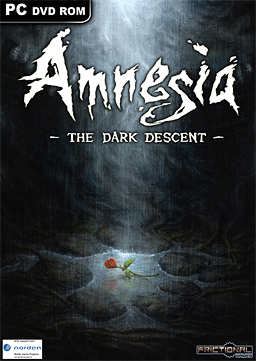
Frictional Games specializes in thought-provoking psychological horror games. After creating the moderately successful Penumbra series in 2007, Frictional finally had a cult hit phenomenon last year with Amnesia: The Dark Descent. It's a survival horror game in the truest sense of the term--the player has no weapons. They must simply navigate a dark castle without going insane. The monsters you can see are not nearly as scary as the ones you can't see. Amnesia's popularity has led to hundreds of YouTube videos of people playing the game and freaking out.
3. EA DICE (Sweden)
EA DICE is best known for two completely different experiences. The first is 2002's Battlefield 1942, considered by many to be a milestone for the online first-person shooter genre. It launched the whole Battlefield franchise, which is planning to go head-to-head against Infinity Ward's immensely popular Call of Duty series for online FPS domination this year with Battlefield 3. EA DICE's most ambitious title is the parkour masterpiece Mirror's Edge in 2008, with minimalist visuals and a revolutionary free-running control scheme. And the new Spider-Man trailer seems to have ripped Mirror's Edge off completely.
2. Remedy Entertainment (Finland)
The Matrix may have created the "bullet time" action movie effect, but Remedy's 2001 crime classic Max Payne was the first video game to fully realize bullet time as a game mechanic. An homage to the films of John Woo with a film noir art style, Max Payne opened with a bang: you come home and get to see your wife and daughter murdered. Instead of traditional cutscenes, Max Payne used graphic novel-style panels with voice-overs for exposition.
Remedy then went on to create Alan Wake last year, a Twin Peaks-inspired adventure about a novelist stuck in a town where the shit hits the psychological fan.
1. Mojang (Sweden)
Mojang has only created one game as a company, but it's perhaps the most influential and groundbreaking on this list: Minecraft. With a beta released in 2009, it's gone from cult hit to mainstream success story before the "finalized" version even becomes available this November.
Minecraft approaches the "games as art" argument in a similar way to The Sims: what is a game? Does a game need to have a goal or a way to "win" to be a game? In Minecraft, players must figure this all out for themselves. It's a cornucopia of user-generated content.
In my quest to validate games as an art form, I'm constantly hit with the fact that most video games are combat-based. Shooter games, strategy games... even Super Mario Bros. involves violence. There are plenty of debates as to why this is. Regardless, it makes non-combat games always stand out to me.
But we've perfected this first-person shooter format to a science! There must be something we can do with it that doesn't involve shooting people. So it hit me: we need to see a classic firefighter video game. It's a simple concept. Use the first-person perspective of an FPS, but instead of killing people, you're putting out fires and saving people! Sounds exciting!
So I took a quick Google gander at the handful of firefighting games ever released on any platform. Firefighting, along with deer hunting and bass fishing, seems to be represented in video games solely by bargain-bin casual titles. But I found a couple of "real" ones.
The first is Burning Rangers, a strange firefighting game for the dying Sega Saturn in 1998, developed by Sonic Team (who made, you know... Sonic). The game is set in a futuristic world where fires are the only real hazard left to humanity, so the government has set up an elite team of super firefighters. It's not exactly a realistic simulation--you wear a rocket-powered space suit and shoot water out of a laser gun. Although this game is actually highly regarded by Saturn enthusiasts, it's not exactly what I'm looking for in a firefighting game.
The next is Firefighter F.D. 18, developed by Konami and released in 2004 for the PlayStation 2. It's a third-person action game that tries to recreate realistic firefighting situations a bit more closely than Burning Rangers. It's a classic Konami formula of the era, even including "boss" fires at the end of levels. An interesting issue this game ignores: the player is not restricted in movement at all, so the fire hose he's holding seems to go on and on forever. The longest fire hose of all time. How could a game more accurately portray fire hose lengths, without constricting the player too much?
The last game I looked at is, in fact, a bargain bin casual game published by Conspiracy Entertainment, famous for such masterpieces as Ninjabread Man and Action Girlz Racing. This one is entitled Real Heroes: Firefighter and was released for the Wii in 2009. It takes the first person perspective I had been thinking about for my own theoretical game, with mediocre results. One of the main issues inherent with the firefighting genre is that your main enemy through the whole game is just one thing: fire. How do you keep fire interesting? This game consists of linear levels and a few civilians to rescue.
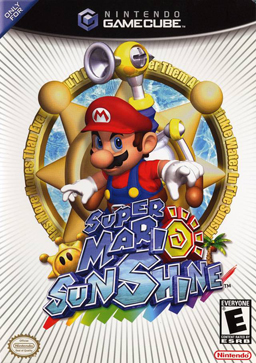
An honorable mention goes to the most successful implementation of a water-shooting device in video games: Nintendo's own Super Mario Sunshine, released for the GameCube in 2002. It's the most-maligned title in the Mario franchise, but the eponymous hero's Flash Liquidizer Ultra Dousing Device (FLUDD) works brilliantly in the game to clean up graffiti and muddy messes. Clearly, this game mechanic can be achieved. It simply needs to be used on fire.
So how can we learn from these mistakes?
First and foremost, fire is boring. Both gameplay-wise and art-wise, it gets repetitive. It's hard to program "creative" AI for something without a brain, but a game about firefighting has to keep the fires themselves interesting and fun to put out, other than just "walk up to fire, put it out, move on." As for the art, it seems every single firefighting game I looked at had the same color palette: orange, orange, orange, and black. It makes sense since it's fire, but good games have a diverse color range, so you don't feel like you're playing the same level over and over. Plus, modern game technology seems better suited to tackle the complex graphics of fire and water than the spate of PlayStation 2 firefighting games.
There's a lot of gameplay we can derive from firefighting other than just fighting fires. Saving people in different situations and trying to use your tools to get to trapped civilians adds a whole new element to the gameplay. Something none of these games touched on is the fire engine itself. Fire engines are so much a part of little kids' dreams, and they're ripe for gamification. You could customize and upgrade the fire engine, and drive through traffic and red lights to get to the fire itself. And the fire station could be a nifty "home base" for it all.
But the question remains--how do you keep it interesting for an extended period of time? There needs to be some sort of emotional hook without making it cheesy or melodramatic.
Then it came to me: the final level of the game. It should be September 11.
Imagine the impact. You're playing through this game, having gritty firefighting adventures, and suddenly you're hit with something a bit more heavy. If handled well, it could be incredibly poignant. I would want to avoid any sort of over-patriotism or jingoism in the game. If it's simply about firefighters doing their jobs and then dealing with the events of 9/11, I believe that's something real-life firefighters could identify with.
There would be the same controversy that surrounds Six Days in Fallujah, with many people saying it hits too close to home. Publisher cowardice aside, Six Days in Fallujah is able to handle its subject matter gracefully because the developer, Atomic Games, actually spoke extensively with the Marines involved in the Second Battle of Fallujah; they got the Marines' approval to make the title. This firefighting game would have to do the same, with the New York City Fire Department.
And then we can cross the line from "fun games" to "games as art."
In the game industry, we often think of Japan and the United States as the only relevant nations. And yes, the vast majority of games today do come from these two countries. But like Neil Young and Jim Carrey, many people we assume are American are, in fact, Canadian. Our neighbors to the north have contributed to video games in a huge way--they're the #3 biggest game manufacturer in the world. So let's take a gander at the top ten Canadian video game developers. Looking at the games on this list, it seems Canadians have a passion for strategy games. What does that say about them as a gaming nation?
10. United Front Games
A new developer created from former employees of EA, Rockstar, Radical Entertainment, and Volition, Inc. Developed the user-creation-driven kart racing ModNation Racersin 2010.
9. Rockstar Vancouver
Began life as Barking Dog Studios making extra content for other games, but went on to become a part of British giant Rockstar Games and create the underrated open-world boarding school game Bully in 2006. Currently working on the upcoming sequel to Max Payne.
8. Ironclad Games
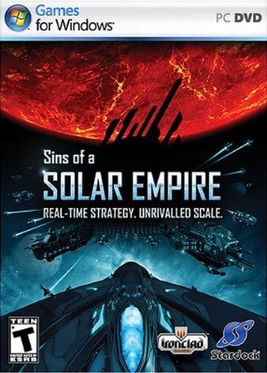
Consists of former Barking Dog Studios employees. Developed the landmark 2008 science fiction strategy title Sins of a Solar Empire.
7. Silicon Knights
On this list primarily because of their masterpiece psychological horror work, 2002's Eternal Darkness: Sanity's Requiem. Fittingly, afterwards they went crazy and created the titanic disappointment Too Human in 2008.
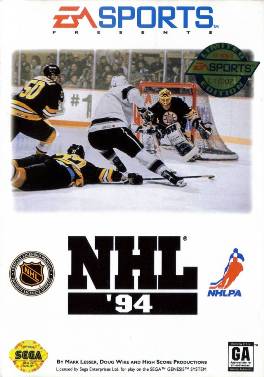
The biggest developer for the biggest American third-party publisher is based in Burnaby, British Columbia. A major player in the sports game genre. Created perhaps the best sports game of all time, NHL '94, and continue to perfect the art of hockey with the NHL series. The industry standard for soccer, too, with FIFA. Invented the snowboarding genre with SSX. Dethroned Tony Hawk's skateboarding monopoly with Skate (as EA Black Box).
4. Ubisoft Montréal
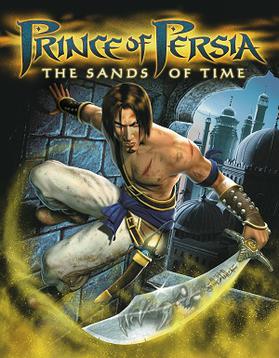
The most successful French-Canadian developer. Fittingly, a branch of French-French publishing giant Ubisoft. Brought stealth gaming to the masses with Tom Clancy's Splinter Cell. Reinvented the Prince of Persia franchise for the modern era, then created a spiritual 3D platforming successor with Assassin's Creed.
3. BioWare
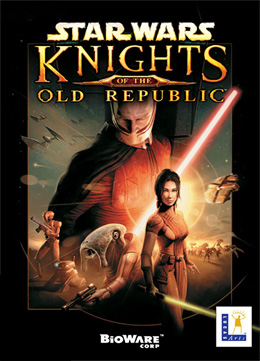
Name a major Western RPG with some sort of moral choice system, and there's a large chance BioWare developed it. Defined early 2000s RPGs with Baldur's Gate and the Neverwinter Nights reboot. Made what's widely considered the "greatest Star Wars game ever," Knights of the Old Republic. Developed the commercial smash hits Mass Effect and Dragon Age, as well as the vastly overlooked ancient China adventure Jade Empire.
2. Chris Taylor
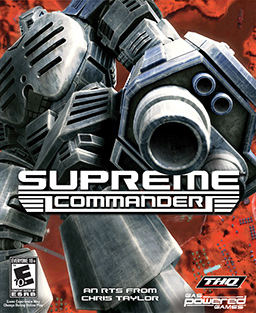
The biggest name in sci-fi strategy games, with a few dungeon crawlers to boot. Worked with Cavedog Entertainment and later his own company, Gas Powered Games; both headquartered in the United States. Conceived Total Annihilation in 1997, the first real-time strategy game with 3D graphics. Went on to make his mark on the dungeon crawling genre with 2002's Dungeon Siege, then went back to his native science fiction strategy with Supreme Commander in 2007.
1. Sid Meier
Really doesn't need an intro. One of gaming's first iconic auteurs. Worked with MicroProse and later his own company, Firaxis Games; both headquartered in the United States. Sense a trend in Canadian video game figures? Created landmark pirate sim creatively titled Pirates! in 1987. Revolutionized strategy gaming with Civilizationin 1991, followed by futuristic opus Alpha Centauriin 1999.
The point-and-click adventure genre occupies a strange place in game history, living and dying with LucasArts' non-Star Wars endeavors in the 1990s. The complete non-action nature of these graphic adventures seems counterintuitive in today's game development mentality, where combat is thrown into every title whether it benefits the experience or not--I'm looking at you, Tomb Raider.
I've recently been playing through Tim Schafer's body of work. His games during this period are sort of a microcosm of the point-and-click genre as a whole, bookended by 1990's The Secret of Monkey Island and 1998's Grim Fandango. Both are widely considered classics: there were certainly graphic adventures before, but The Secret of Monkey Island kick-started the genre's mainstream success. And Grim Fandango is perhaps the genre's apex, met with a landslide of critical praise but an utter commercial failure, contributing to the end of the graphic adventure era.
I just finished The Secret of Monkey Island. With limited technology and some monotonous mazes, it'd be easy to overlook in the modern day. But what shines through today is what always stands out in Schafer's games: the writing. Monkey Island's dialogue satirizes both video game convention and clichés of pirate mythology; the game takes inspiration from Disneyland's "Pirates of the Caribbean" ride, thirteen years before Johnny Depp's flick.
One of the most intriguing aspects of the writing is combat. "But what does writing have to do with pirate swordfights?" you may ask. Well, being a point-and-click game, Monkey Island doesn't feature swordplay in the traditional sense. Instead, protagonist Guybrush Threepwood must engage in verbal battles with his swashbuckling opponents, trading insults until one of them is overwhelmed. The rapport is hilarious and completely matches the mood of the rest of the game.
I mentioned too many modern games shoehorn combat into the gameplay even when it doesn't fit. Monkey Island pulls it off because it works in the context of the genre. Instead of stabbing, Guybrush declares "You fight like a dairy farmer!" Swoosh, swipe! To which his opponent retorts, "How appropriate. You fight like a cow." Parry! Whiff!
Tomb Raider is a fantastic puzzle game with horrendous gunplay thrown in to make it more commercially viable. "You control a hot woman solving puzzles!" doesn't appeal nearly as much to the average American as "you control a hot woman gripping long, hard shafts and causing massive explosions! ...oh and there are puzzles."
But perhaps if Lara Croft could learn a lesson from Guybrush Threepwood, her games would benefit exponentially, and her tomb raiding adventures could get a step closer to the "games as art" realm we all dream of.
And Tomb Raider is one example in a list of thousands. Point-and-clicking is dead in 2011, but maybe today's game developers could take a few pages from their books and we'd all be a little happier.
The film industry revolves around stars. When you see a movie poster, it likely has the names of star actors prominently displayed to lure you into the theater. Actors are sexy. Actors sell tickets. But there are a number of directors who are big enough names on their own that they're able to get their names on posters, too. It's a way of validating film as an art form, that the name of the "artist" behind it is able to sell something like the names of authors or painters.
There are a handful of auteurs in the video game world who are considered big enough to get their names on the boxes of their titles, but despite Japan's massive worldwide industry presence, virtually no Japanese designers receive this honor outside their home country. In fact, the only name that comes to mind is Metal Gear creator Hideo Kojima. Even Shigeru Miyamoto, the most important game designer on Earth, doesn't get his name on the cover of the newest Mario game. So it's a pretty big deal when punk rock designer Goichi Suda, better known by his pseudonym Suda 51, gets the phrase "A Suda 51 Trip" emblazoned across the front of the North American and European release of his newest title, Shadows of the Damned.
Gaining a cult following in 2005 with his opus Killer7, Suda finally had a commercial breakthrough with 2007's No More Heroes. This led to his company, Grasshopper Manufacture, doubling in size and adding offices both in Japan and in the United States. It was all a lead-up to Shadows of the Damned, released last month as a collaboration with famed Resident Evil creator (and auteur in his own right) Shinji Mikami, and a soundtrack by Silent Hill composer Akira Yamaoka.
Mikami's influence is clear from the get-go, as the gameplay and controls of Shadows of the Damned are drawn straight from his own personal masterpiece, Resident Evil 4. And oddly, both games feature a "merchant" who first appears hostile to frighten the player, but is revealed to be a friendly character who sells the protagonist goods throughout the storyline. In Shadows of the Damned, his name is Christopher, and in Resident Evil 4, he's simply known as the Merchant; both characters emanate a blue glow from their stores to let the player know they're near. But that's where the obvious Resident Evil connections end, as this game is firmly placed in Suda 51's realm.
The premise is simple: your girlfriend commits suicide and gets dragged to hell by demons, and you must travel to the Underworld to get her back. Sounds like a standard video game trope, but Suda adds his signature crude humor and crazy art style with creeps galore. Since this post is all about auteurs, though, let's take a gander at the motifs running through Suda's games, and the sexual themes explored in Shadows of the Damned.
Right off the bat, protagonist Garcia Hotspur comes off as strikingly similar to Travis Touchdown, the main character in No More Heroes. Both are leather jacket-wearing cool dudes in their 20s or early 30s with giant motorcycles and a penchant for penis jokes stemming largely from their phallic weapons of choice (see photo above for Garcia's). Both embody a hyperbolic version of modern male American (in Garcia's case, Mexican-American) culture, and are going through the violent events of the game in pursuit of a hot blonde woman (see below for Garcia's).
The enemies of the game bring Killer7 to mind. Coincidentally, it was the last game on which Suda collaborated with Shinji Mikami. Both games take place in a strange afterlife world--Shadows of the Damned in Hell, and Killer7 in an alternate version of Earth where protagonist Harman Smith interacts largely with characters who are dead. The lowest form of enemy is similar in both games: the demons in Shadows of the Damned resemble Killer7's ghostly Heaven Smiles.
Suda's tradition of featuring a game-within-a-game is even more widespread. Killer7, Contact, and No More Heroes all feature games-within-games, and it's most developed in Shadows of the Damned's "Great Demon World", a 2D R-Type-style shooter with a distinct construction paper-esque art style. Even a major boss battle against one of the main game's prominent antagonists takes place in this 2D minigame.
Another motif in Suda 51's games is his obvious love for Mexican imagery. One of the playable characters in Killer7, Mask de Smith, is a lucha libre wrestler. Travis Touchdown lives just north of the Mexican border, collects dozens of lucha libre masks and learns Mexican wrestling moves in No More Heroes. And in Shadows of the Damned, we've finally got a Mexican-American main character. Garcia uses plenty of Spanglish throughout the story, and his background is a big part of his characterization in the game. It's strange, then, that Suda didn't capitalize on all the great Mexican Day of the Dead imagery he could've used for the Underworld.
Shadows of the Damned is a tonal halfway point between the deathly subject matter of Killer7 and the juvenile shenanigans of No More Heroes. While Shadows of the Damned is a solid game, Suda's distinct style works better if he stays in either extreme; this median means the game is not quite as compelling as the two that precede it.
A more serious theme the game deals with is Garcia's sexuality. As he travels through Hell to find his girlfriend Paula, hellish apparitions of her appear to him constantly. Sometimes he thinks he's finally found her and they share a loving embrace, only for her skin to peel off and reveal a demon inside. Sometimes her severed head appears to him in Underworld markets or ghoulish bowling alleys. Sometimes she simply chases after him in a zombie-like state and tries to kill him with the Kiss of Death.
But while the "real" Paula appears to Garcia in an elegant dress, the hallucinations of Paula always appear to him in seductive lingerie. In a sequence about halfway through the game, Garcia most run across gargantuan building-sized Paulas, who are naked and moaning while he is forced to run between her breasts and down her stomach.
It's all a reflection of his sexual tension. This suddenly puts all the dick jokes and fun phallic insinuations throughout the game in context. Now it doesn't seem so trivial. Shadows of the Damned is a trip through Garcia's fragile psyche, his greatest fears and instincts visualized.
 We figure out that some sort of apocalyptic event happened to North America (I specify "North America" instead of "United States" because Gibson is American-Canadian), and there's a wave of shady immigrants from this Sprawl now living in Japan. The story takes place in Chiba, a real-life suburb of Tokyo. This is important. I don't think the world of Neuromancer would seem as gritty or real if it took place on some distant planet; the fact that it's a place that exists in the real world, even if it's across the Pacific, makes it a bit more identifiable.