.png) But we've perfected this first-person shooter format to a science! There must be something we can do with it that doesn't involve shooting people. So it hit me: we need to see a classic firefighter video game. It's a simple concept. Use the first-person perspective of an FPS, but instead of killing people, you're putting out fires and saving people! Sounds exciting!
But we've perfected this first-person shooter format to a science! There must be something we can do with it that doesn't involve shooting people. So it hit me: we need to see a classic firefighter video game. It's a simple concept. Use the first-person perspective of an FPS, but instead of killing people, you're putting out fires and saving people! Sounds exciting!So I took a quick Google gander at the handful of firefighting games ever released on any platform. Firefighting, along with deer hunting and bass fishing, seems to be represented in video games solely by bargain-bin casual titles. But I found a couple of "real" ones.

 The next is Firefighter F.D. 18, developed by Konami and released in 2004 for the PlayStation 2. It's a third-person action game that tries to recreate realistic firefighting situations a bit more closely than Burning Rangers. It's a classic Konami formula of the era, even including "boss" fires at the end of levels. An interesting issue this game ignores: the player is not restricted in movement at all, so the fire hose he's holding seems to go on and on forever. The longest fire hose of all time. How could a game more accurately portray fire hose lengths, without constricting the player too much?
 The last game I looked at is, in fact, a bargain bin casual game published by Conspiracy Entertainment, famous for such masterpieces as Ninjabread Man and Action Girlz Racing. This one is entitled Real Heroes: Firefighter and was released for the Wii in 2009. It takes the first person perspective I had been thinking about for my own theoretical game, with mediocre results. One of the main issues inherent with the firefighting genre is that your main enemy through the whole game is just one thing: fire. How do you keep fire interesting? This game consists of linear levels and a few civilians to rescue.
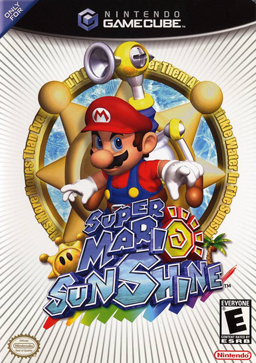 An honorable mention goes to the most successful implementation of a water-shooting device in video games: Nintendo's own Super Mario Sunshine, released for the GameCube in 2002. It's the most-maligned title in the Mario franchise, but the eponymous hero's Flash Liquidizer Ultra Dousing Device (FLUDD) works brilliantly in the game to clean up graffiti and muddy messes. Clearly, this game mechanic can be achieved. It simply needs to be used on fire.
So how can we learn from these mistakes?
First and foremost, fire is boring. Both gameplay-wise and art-wise, it gets repetitive. It's hard to program "creative" AI for something without a brain, but a game about firefighting has to keep the fires themselves interesting and fun to put out, other than just "walk up to fire, put it out, move on." As for the art, it seems every single firefighting game I looked at had the same color palette: orange, orange, orange, and black. It makes sense since it's fire, but good games have a diverse color range, so you don't feel like you're playing the same level over and over. Plus, modern game technology seems better suited to tackle the complex graphics of fire and water than the spate of PlayStation 2 firefighting games.
 There's a lot of gameplay we can derive from firefighting other than just fighting fires. Saving people in different situations and trying to use your tools to get to trapped civilians adds a whole new element to the gameplay. Something none of these games touched on is the fire engine itself. Fire engines are so much a part of little kids' dreams, and they're ripe for gamification. You could customize and upgrade the fire engine, and drive through traffic and red lights to get to the fire itself. And the fire station could be a nifty "home base" for it all.
But the question remains--how do you keep it interesting for an extended period of time? There needs to be some sort of emotional hook without making it cheesy or melodramatic.
Then it came to me: the final level of the game. It should be September 11.

There would be the same controversy that surrounds Six Days in Fallujah, with many people saying it hits too close to home. Publisher cowardice aside, Six Days in Fallujah is able to handle its subject matter gracefully because the developer, Atomic Games, actually spoke extensively with the Marines involved in the Second Battle of Fallujah; they got the Marines' approval to make the title. This firefighting game would have to do the same, with the New York City Fire Department.
And then we can cross the line from "fun games" to "games as art."


