Showing posts with label Limbo. Show all posts

Saturday, January 4, 2014

The ten best games of the last console generation, according to Jake

10. Castlevania: Order of Ecclesia - Konami - Nintendo DS - 2008

I've been a sucker for Metroidvania-style gameplay since I was eleven years old. While Metroid has gone on to bigger and better 3D things, Castlevania remained true to its roots and produced a slew of great 2D Metroidvania games in recent years. The series has never quite been able to make the leap to 3D, but that's okay with me.

Order of Ecclesia was the third and final Castlevania game on the DS, the series' swan song on the handheld. It features a refined art style, a more nonlinear gameworld with a brilliant Dracula's castle as well as plenty of non-castle locales, a ramped up difficulty from previous DS entries in the franchise, and *gasp* a female protagonist. What is this, Metroid?! Strangely, there's been no word of a new traditional Metroidvania-style Castlevania game since Order of Ecclesia's release six years ago.

9. NHL 14 - EA Canada - Xbox 360, PlayStation 3 - 2013

This entry counts the 360/PS3 iterations of EA Sports' annual NHL series as a whole, and NHL 14 is the pinnacle. It's not arty or deep. It's just hockey. But it's damn good. The NHL series on the seventh generation of consoles spearheaded the sports game genre's move from arcadey face button-based gameplay to full analog stick control. Instead of pressing A to pass and B to shoot, you actually use the control stick as your hockey stick. Despite my pretentious exterior, NHL is a nuanced, stress-relieving love of mine.

8. Catherine - Atlus - PS3, 360 - 2011

I was skeptical of Catherine at first. I'm generally not a fan of the grind-heavy Japanese role-playing games Atlus is known for. But Catherine is... a puzzle game? About relationships? It's got some lengthy anime cutscenes, which normally I'd be averse to but they're so well-made that I don't mind. Catherine is one of the first major deconstructions of sex and the male mind in the videogame medium, but it's also a complex, difficult puzzle game. It's very Freudian, as you may infer from the screenshot above. One of the most daring games of the last generation, which I've written about before here.

7. Limbo - Playdead - 360, PS3, PC - 2010

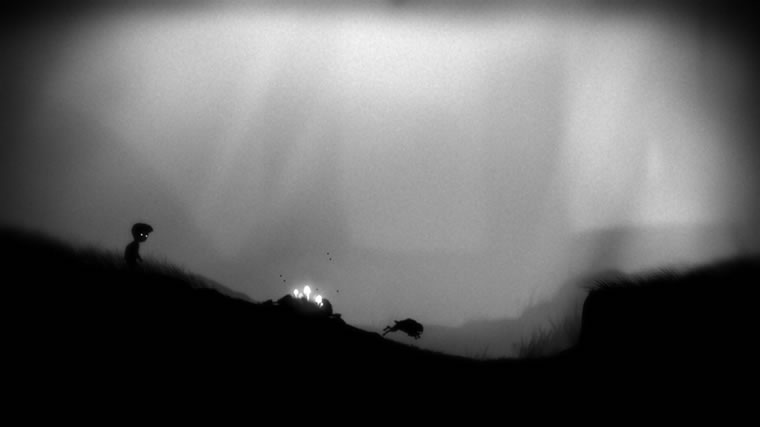
Jonathan Blow's Braid gets all the "arty Xbox Live Arcade indie 2D platformer" attention, but Danish studio Playdead's somber black-and-white Limbo is what really got to me. While Braid relies on blocks of text and a heavy-handed message, Limbo simply exists. It's a sort of minimalist Where the Wild Things Are meets Lord of the Flies, but much more bleak. I've written on this blog about how much I love this game before. No dialogue, no HUD, just a boy and a spider.

6. Metroid Prime 3: Corruption - Retro Studios, Nintendo - Wii - 2007

Retro Studios' 2002 opus Metroid Prime on the GameCube is my Favorite Game Ever Made. Metroid Prime 2: Echoes was much darker, tougher, and divisive, and I still loved it. The trilogy comes to an end with Metroid Prime 3: Corruption. It's the Return of the Jedi of Metroid Prime: probably the weakest of the three, but still an epic end to the trilogy. Corruption features multiple planets for Samus to explore, with trippy alien designs abounding. The series' signature atmospheric nonlinear exploration gameplay fine-tuned to perfection. It's a bummer that Retro Studios hasn't returned to the Metroid series since Corruption's release seven years ago.

5. Sid Meier's Civilization V - Firaxis Games, 2K Games - PC - 2010

Together with its expansions Gods & Kings and Brave New World, I've put more hours into Civilization V than anything else on this list. A single game of Civ V could take upwards of five hours to get through. I love this style of "4X" strategy game, since you're not just waging war against other people. You can win through economic victory, diplomatic victory, or any other number of means. Plus you can get nuked by Gandhi. And since it's turn-based instead of real-time, you get to spend forever analyzing each move you make.

4. Deadly Premonition - Access Games - 360, PS3, PC - 2010

Deadly Premonition is not a well-made game. It hardly even qualifies as a seventh-generation console game. It's full of bugs, awkward controls, terrible graphics, and a limited soundtrack. But that's all part of why I love it. Deadly Premonition is a Twin Peaks-inspired comedy horror with tons of personality. The obtuseness of it all is what makes it so appealing. It's a diamond in the rough that's become a cult classic. I've written about it before here.

3. Fallout 3 - Bethesda Game Studios - PC, 360, PS3 - 2008

This entire blog is named after the location of Fallout 3, so I'd hope it would make this list. I've got mixed feelings on open-world games, since they've all got awful pacing and dramatic tension. Bethesda's other open-world RPG series The Elder Scrolls gets much more attention than Fallout, and it's such a self-serious Tolkien ripoff that I never got too into it. But Fallout 3 hits the perfect balance of post-apocalyptic harshness with a sense of gallows humor through it all. Plus I've got the sentimental attachment of it being by far the most detailed depiction of my hometown Washington, D.C. in videogame form.

2. Mirror's Edge - EA Digital Illusions CE - 360, PS3, PC - 2008

Crazy to think after making Mirror's Edge, Swedish studio EA DICE went on to become a generic FPS factory with the Battlefield series. Mirror's Edge is ahead of its time, a first-person parkour game that was a commercial failure but has since gained respect in the gaming community. Its parkour control scheme was a paradigm shift from standard first-person controls, which turned many players off but allowed for a new type of game we haven't really seen before or since. Combine that with a minimalist color palette, airy electronica soundtrack and strong female protagonist, and Mirror's Edge is a classic. 

1. Portal - Valve Corporation - PC, 360, PS3 - 2007

It has to be Portal. It can't be anything else. What else could I choose? Valve's unassuming first-person puzzler Portal is likely the most important game of the last decade. You probably already know about Portal. There are university curriculums based around it. The most fun part of it is the fact that Portal was released with virtually zero fanfare--a short little puzzle game extra thrown in with the already-stellar Orange Box. Valve is undoubtedly the best developer of the last generation of video games, and Portal is perfection in game design.

Wednesday, November 21, 2012

Let’s Play: walkthrough on a new level

Before we go to the meat of this blog I would like to introduce myself:
My name is Steffen Lund. I hail from the frozen north of the Vikings (i.e. Denmark). I do not consider myself a gamer at all; I would rather say that I am game interested. Many of my friends game about 3-5 hours per day, whereas I am lucky to barely cover that quota in a couple of months. This is both due to me taking my bachelor’s degree in political science, but just as much (if not mostly) my quite picky taste in games.

So why do I even read A Capital Wasteland, let alone get to write here? Well, Mr. Shapiro was so kind to ask me whether I wanted to do a sort of Scandinavian take on the Wasteland (a Scandinavia correspondent, if you will). In time, if this all works out, I would be delighted to look more into Scandinavian titles, but for now it is all about my more recent experience with games: Let’s Play.

So, let us get on with it, shall we?
One of my main problems with games today: the larger companies keep putting out new titles. I simply cannot keep up with the pace.
Now, I could just go pick up a game magazine once every month if I wanted to keep a finger on the pulse – heck, I could grab one for free in Denmark! But again, the problem here is probably me. I am too lazy. I want entertainment (dare I say need?). This is where Let’s Play-videos fit in the picture.

The concept of Let’s Play

Rooster Teeth's Achievement Hunters about to play Mari0.
Let’s Play are videos of gamers (or non-gamers), well, recording themselves playing games. The concept, of course, did not start out as a video concept (this would be a great moment to refer to the Let’s Play archive: www.lparchive.org, and of course the grand old let’s players from Something Awful).
Anyway, the video type has various purposes:

Entertainment

It is my personal opinion that Let’s Play-videos set out to entertain the masses. The goal is mainly to catch the funny/scary/you-name-it moments ‘on tape’. This offers YouTubers, such as Irish madman, oneyNG to take a break from their ‘regular’ jobs with animations and so forth, and still be entertaining, but Let’s Play also serve as a platform for a new audience. Swedish multi-voiced, bro-fisting eccentric, PewDiePie is a good example for a YouTuber who is actually making a living on screaming his lungs out during various horror games.

Play-through/walkthrough – educational/reviews

You may consider this a somewhat less interactive, but at the same time the more entertaining way of demoing a game. Walkthroughs are nothing new in the gaming world. Back in the good old days when we were not able to film ourselves playing games to show our audience through various games, we would instead write the so-called walkthroughs – this type, of course, is still used, but whether the videos has exceeded in popularity compared to text-based walkthroughs over these last couple of years, I leave for you to decide or even research upon (depending on your scientific interest on the subject).
A personal favourite in walkthrough videos is Rooster Teeth’s Achievement Hunter section. With branches covering both reviews type walkthrough, such as their own Let’s Play series, and the more entertaining, forever angry Michael’s Rage Quit.

Genres of Let’s Play

Now, I do not want you readers out there to think that I consider you imbeciles who do not know a thing about Let’s Play – on the contrary you probably know a lot more about it than I! This article is mainly for testing my (English!) writing skills, and to write, as much as possible, an objective (naturally, this is not possible) article on this phenomenon, so please bear with me on this one.
So, what types of Let’s Play-videos can we find on the old world wide web? It would be utterly banal to just list all genres being played in Let’s Plays since we would assume that all genres in video/iOS/PC/und so weiter-games are found here, so for now I am only going to talk about the particular genres I watch:

Horror

“To see others suffer does one good […] without cruelty there is no festival.” So are the words of one Friedrich Nietzsche.
He also said this planet is filled with humans “who inflict as much pain on themselves as they possibly can out of pleasure in inflicting pain which is probably their only pleasure.”

These two sentences pretty much narrow down the concept and success of horror-themed Let’s Plays; earlier I mentioned PewDiePie, who has made a career out of playing various games. Some of his more famous work is with playing horror games such as Slender and Amnesia: The Dark Descent. Here we have come to meet many new friends: Stephano, the French golden statue, Mr. Chair, the always passive, but loving leveller, in Homer Simpson's words, but also we have made new enemies such as the evil, scheming barrels (BARRELS! Sorry, I just had to do that).
The main agenda of Pewd’s horror Let’s Plays are screaming, and horrible, gut-wrecking moments. Now, we could all claim that videos of others playing scary games do not scare us, but come on. That, simply, is not the truth. My point here, leading back to Nietzsche, is that horror Let’s Plays both hold the pleasure of us getting to watch someone having the living crap scared out of them, and at the same time getting a slight jolt of our own. Thus, horror Let’s Plays appeal to both the sadistic and masochistic side in us all.


Building, creating and puzzles

Limbo, a popular title among Let's Players.
Puzzle games is something that has been out there for aeons, but it would be completely irrelevant for anyone to make a walkthrough of Tetris (though I suppose there would be some kind of entertainment value in Rage Quit playing it). Since non-linear building games like Minecraft and Terraria, and puzzle games like Portals, and more resent titles Mari0 and Catherine (big ‘thank you’s go out to Jake and Achievement Hunter for directing my attention towards the last title), and let us not forget a personal favourite, Limbo (it is a little patriotic of me, I know, but do forgive me) came out, it has been made more easy to make good reviews and achievement hunting (no lame pun intended) videos for these genres.
The main goal for these videos is simply walkthrough with a slightly more entertaining angle apart from their text-based older sister.
Achievement Hunter from Rooster Teeth is, in my opinion, the very best in making entertaining walkthroughs with these games. Mainly, as an Xbox user I have been most pleased with their work, introducing new titles as well as showing us how to attain certain achievements.

My only concern with Achievement Hunter is their obvious focus on the more famous titles, which does not present me with any opportunities of discovering indie games, though they have done so on some occasions. This is where YouTubers like PewDiePie once again come in. Private individuals sitting in the comfort of their homes have a much larger freedom with what games to play in their videos, and so they may ones in a while come to play unknown (to the wider publics) titles, thus teaching me of new games I would not otherwise have known about (Slender, Amnesia, Lucius and many other titles come to mind here – again, I am not in any way "in the loop" when it comes to games, and ones again I must thank A Capital Wasteland for helping me out on this one).

In conclusion (if there is such) Let’s Play is a fun, entertaining way of gaining new knowledge from old titles as well as learning of new games. It can also purely be for entertainment purposes, a time killer, but by the end of the day, still, we would have learning something from these videos – well, at least we now know what it takes to intimidate us or how much fun Happy Wheels really is.

So why not try it on your own? Go grab your best camcorder, plug a game in the ol’ drive, and let us join you in the rollercoaster of horror and creative skills that await us out there in the world of Let’s Play.

Lastly I will say this: I am no wiz in the area of gaming (at least not anymore), but here is an opportunity for me to get back on the horse. If you, the reader, have anything to add to this blog (do not go gently on me, I am pachydermatous) please do not feel hesitant to write a few words in the comments.

Thursday, November 15, 2012

Global Gaming Spotlight: Limbo (Denmark)

With each post in this mini-feature, I highlight a game from a different country around the world. Keep in mind these aren't necessarily the best or most popular games from each nation, but simply a fitting representative.

Limbo - Playdead, 2010

I've written about the boom of Nordic game development, and Denmark is no exception. But their roots go deeper than the past ten years. Designers at the University of Copenhagen in 1991 created DikuMUD, one of the most important multi-user dungeons--text-based online games that pioneered internet gaming.

Today, the highest-profile studio in Danish gaming is IO Interactive, creators of the stealth-action Hitman series and the underrated revolutionary title Freedom Fighters. The composer for the music in many of IO's games, Jesper Kyd, has become perhaps the biggest name in game soundtrack writing. He recently penned the scores for big-budget works like the Borderlands and Assassin's Creed series.

But the most important Danish game design was done by a few people who split off from IO to create their own independent studio, Playdead. Their minimalist platformer Limbo is a masterwork in atmosphere and noir-inspired art direction.


Limbo is about a little boy looking for his sister. There is absolutely no heads-up display of information on the game screen, and nothing in the story is really explained. Players must figure it out on their own. While most mainstream gaming assumes the player is stupid and must be spoon-fed information, Playdead does what all good art accomplishes: respects the audience's intelligence and lets them come to conclusions on their own.

Playdead's game had the unfortunate luck of being released in the wake of another "arty" 2D platformer featuring a kid with a large head--Jonathan Blow's Braid. But while Braid hits the player over the head with exposition and walls of text, Limbo takes a very Scandinavian approach and goes with a more elegant, minimalist approach to its design. It will forever live in Braid's shadow, but Limbo is perhaps the most important platforming game of the last decade.

Wednesday, February 8, 2012

The Great Wall of Text: Why Braid Sucks

Braid is one of the most overrated games of all time. Creator Jonathan Blow is seen as Art Game Jesus, and lives up to that title by traveling the world giving speeches about advancing video games as a medium.

The 2008 game is fantastic. It's got a beautiful visual style, stirring soundtrack, and unique game mechanics that play into the plot. It's a one-of-a-kind satire of Super Mario Bros.

With that said, Braid has no idea how to tell a story. Blow weaves an intricate tale of loss and regret, conveyed mostly through... walls of text.

Jonathan Blow is trying to move games forward as an art form, right? His message comes off as a bit stale when his own magnum opus relies on another medium to tell its story.

I'm not against writing in games. Gaming's history is built on text-based adventures like Colossal Cave Adventure and Zork. Even in modern games, text is often a better choice than the medium's notoriously abysmal voice acting.


But modern games should only rely on walls of text (or cutscenes) when it's absolutely necessary to convey points that couldn't be accomplished within the gameplay itself. As I wrote about yesterday, Valve is great at telling its stories purely within the mechanics of its games. Blow, however, uses copious amounts of text to give Braid meaning. It wouldn't be nearly as bad if his writing wasn't so... mediocre. The story is cliché and the characters bland.

What if he got rid of this? The "loss and regret" themes are still captured in essence through Braid's flowing gameplay. The game would be much more ambiguous, but would perhaps capture Blow's intended emotions in a more pure form if he had avoided the Great Wall of Text.

An example of this in practice is Danish developer Playdead's 2010 avant-garde Limbo. Both Limbo and Braid are indie 2D platformers initially released on Xbox Live Arcade, and both tell the melancholy story of a silent boy searching for a girl.

But perhaps due to their Scandinavian design instincts, Playdead created a much more moving experience with their game. Limbo features absolutely no text, and there's no HUD. None of the characters speak. The minimalist visuals are all in silhouette and even the music is dissonant. Through this, the game conveys pure emotion in a way no other art form can come close to, because the audience is completely involved with it. It's not static... as text is. Jonathan Blow, on the other hand, relegated the majority of his storytelling to text. It's a strange misfire for someone who seeks to be a spokesman for video games as a storytelling medium.

Limbo is the game Braid should have been.

Monday, August 1, 2011

Minimalism in Limbo, and ambiguous endings

Last week, I listed Limbo creators Playdead as one of the best developers in Scandinavia. Today I'll go more in-depth with their game, and explain why the Danish designers deserve such praise despite Limbo being their very first title.

Limbo is minimalist game design in its purest form. Aside from the main menu, there are absolutely no words through the entire story. No spoken dialogue, no text, nothing. There is no tutorial. You are thrown straight into the plot.

You're a small boy unconscious in a forest. The visual style of Limbo is immediately striking--it's entirely in grayscale, with characters all in silhouette. And the music is minimal. No score, no sweeping theme song. Ambient sounds are the only tunes accompanying the boy, supplemented by single orchestral notes at particularly poignant moments.

The boy, who is never given a name, doesn't wake up until the player presses A. But the game doesn't tell the player to do this; they must figure this out on their own. Once he's awake, control is simple. The control stick moves the boy, the A button makes him jump, and the B button lets him push and pull objects in the environment. That's it. Even the boy's jump ability is fairly modest compared to most other 2D platformers.

This isn't an empowered protagonist like we're used to seeing in this medium. It's just a boy. We're left to come to our own conclusions about anything more than that, because there is absolutely no exposition or backstory. SLIGHT SPOILER ALERT We learn about halfway through the game that he's searching for a girl. Perhaps it's his sister, but this is never expanded upon. Again, we're left to come to our own conclusions. END SLIGHT SPOILERS


Limbo is essentially a puzzle-platformer. The boy must manipulate the environment to get through to the next area. But why he's doing this is anyone's guess. And I like it that way.

As the boy travels through this forest, it seems everything wants to kill him. A tribe of slightly older boys sets traps for him, and a Shelob-like giant spider wants to consume him. We see the bodies of other children hanging from gallows in the background. There's a very Lord of the Flies feel to it all.

Death is all around the boy. In a particularly disturbing sequence, the boy must conquer the spider chasing him by amputating its legs himself. Once the spider has been fully de-legged, the boy must roll its torso into a spike pit and use it as footing to jump off.

Another factor in all this violence is the realization that this boy cannot swim. Any time he goes underwater, he drowns to death. In one sequence, the boy must use the floating corpses of other children to get across a pond. Death follows the boy everywhere--rotting carcasses of animals are pervasive throughout the forest, and insects follow him everywhere. This grisly subject matter might be too much to handle, but the silhouette art style makes it palatable.


Considering how two-tone the visuals are, his deaths are jarringly graphic. The deaths get increasingly gruesome as the game goes on. Being a puzzle-platformer, the player will die dozens of times in one playthrough. But the boy always reappears quickly next to the trap that killed him, so players can try again. Through the sheer volume of deaths, players get almost desensitized to the violence incurred on this small child.

SPOILER ALERT

There is no "final boss," and I commend Playdead for eschewing this game industry trope. Instead, near the end of a puzzle, the boy shatters through glass and dies. For real. He doesn't respawn to where he can try again. He actually dies.

But then he wakes up again, much like in the beginning of the game. He's in a forest, and he finds the girl he's been searching for. She's near a ladder, sitting down. She looks up. And then the credits roll.

After the credits, we come back to the game's main menu screen. We make the realization that the ending of the game has been staring us in the face ever since we began: the main menu screen shows the ending of Limbo. It's the same forest as the ending scene, with the same wooden ladder. But it's rotting. And instead of the boy and girl, we see two lumps on the ground with insects buzzing around them.

This abrupt ending was very polarizing for players. But to me, it fits. In an experience where he has died countless times in various super-violent manners, this is closure for the boy. He can finally rest. And perhaps "true death" was the only way for him to find this girl. He's finally out of limbo, and can have his eternal sleep.

Or is he? Since the main menu screen is actually the ending, it could mean the boy is forever in limbo. He's back where he started, and now when a new player starts the game, they can take him through the same purgatorial trip again, again, and again until the end of time.

END SPOILERS

But that's just my interpretation of the ending. It's up to you to decide what you think. And that's the beauty of ambiguous endings, something far too scarce in the gaming medium. But it's not the only game like this...

As far as "arty 2D platformers" go, Limbo is often mentioned in the same breath as Jonathan Blow's Braid. But though Braid also features no tutorial and an ambiguous story, Limbo's minimalism puts it firmly on top for me. Braid uses a beautiful orchestral soundtrack and hand-drawn, exquisite visuals. But it reeks of pretension, exacerbated by the endless walls of text between levels presented to give the story meaning. In addition, Jonathan Blow has publicly spoken at length on numerous occasions about the themes behind his game. Playdead, on the other hand, has intentionally left the meaning of their game up to the players, and hasn't said anything about the themes of Limbo since it was released.

Braid is a fantastic game, but it relies on overuse of another medium (literature) to deepen the experience. Limbo is something that could really only be accomplished in gaming.