Having lived in Denmark, I know Scandinavians argue over what the definition of "Scandinavia" is, so I'll try to simply say "the Nordic countries," even if it doesn't roll off the tongue as easily.
In a part of Europe known for minimalism and bleak landscapes, their games reflect a more pensive, thoughtful nature than their American and Japanese counterparts.
 10. CCP Games (Iceland)
CCP is Iceland's only developer on this list, but with a nation of only 318,000 people (half the size of Washington, D.C.), it's understandable. They're best known for creating the massively-multiplayer science fiction game EVE Online in 2003--one of the only MMOs that's been able to sustain a consistent userbase in a market virtually monopolized by Blizzard's World of Warcraft. CCP is currently working on Dust 514, a massively multiplayer first-person shooter set in the EVE Online universe; players in the two games will be able to interact with one another.
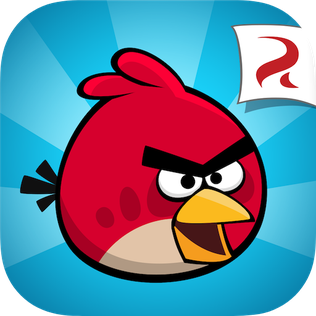 9. Rovio Mobile (Finland)
I couldn't do a list of Nordic game developers without mentioning Rovio, the team behind the 2009 casual gaming colossus Angry Birds. They've created their fair share of mediocre iPhone games, and Angry Birds itself has inspired dozens of rip-offs by other companies, but its place cannot be denied in the Nordic gaming pantheon. Perhaps it's the intriguing name, perhaps it's the story of "fat birds launched at pigs," but Angry Birds is one of Finland's most important exports.
 8. IO Interactive (Denmark)
 IO Interactive is most widely known for its Hitman franchise, started in 2000: one of the most creative takes on the stealth genre, where the player has the titular job and must disguise himself and stay below the radar to accomplish missions. IO is also famous for the controversial Kane & Lynch in 2007, but their best title is perhaps their most overlooked: 2003's Freedom Fighters, a game about a Soviet invasion of America. Side note: famed Danish game music composer Jesper Kyd had his mainstream breakthrough writing the soundtracks for IO's work.
 7. Nifflas (Sweden)
Nicklas Nygren, better known as "Nifflas," is different from the rest of the developers on this list. He's never released a commercial game. He's never had mainstream success. But he's created some of the most important independent games available on the internet. His series Knytt is about a character from a famous 1960 Swedish-Finnish novel, Vem ska trösta knyttet? (Who Will Comfort Knytt?). Nifflas also created Within a Deep Forest, a minimalist platformer set in a post-apocalyptic world.
 6. Playdead (Denmark)
 Playdead was started in 2006 by former IO Interactive employees so they could have a bit more artistic freedom to create their first game, last year's dark puzzle-platformer Limbo. The game was a stark, minimalist departure from the action-packed norm at IO, and a premium example for the classic "games as art" argument. The protagonist has no name, and players must piece together the narrative on their own. Playdead is currently working on their second title.
 5. Funcom (Norway)
 Norway lags behind its Nordic brethren when it comes to game design, but Funcom continues to carry the torch. They were put on the map with The Longest Journey (Norwegian: Den lengste reisen) in 1999. It was a swan song for the PC adventure genre, with an enigmatic, cerebral storyline and complex characters. Funcom then turned its focus to MMOs with Anarchy Online in 2001 and Age of Conan: Hyborian Adventures in 2008. They're currently working on a post-modern MMO called The Secret World, which could be a breath of fresh air in today's online RPG landscape.
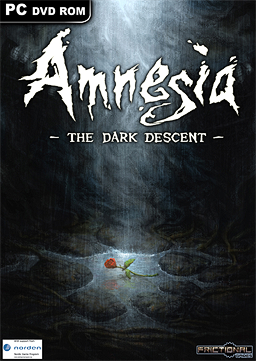 4. Frictional Games (Sweden)
Frictional Games specializes in thought-provoking psychological horror games. After creating the moderately successful Penumbra series in 2007, Frictional finally had a cult hit phenomenon last year with Amnesia: The Dark Descent. It's a survival horror game in the truest sense of the term--the player has no weapons. They must simply navigate a dark castle without going insane. The monsters you can see are not nearly as scary as the ones you can't see. Amnesia's popularity has led to hundreds of YouTube videos of people playing the game and freaking out.
 3. EA DICE (Sweden)
EA DICE is best known for two completely different experiences. The first is 2002's Battlefield 1942, considered by many to be a milestone for the online first-person shooter genre. It launched the whole Battlefield franchise, which is planning to go head-to-head against Infinity Ward's immensely popular Call of Duty series for online FPS domination this year with Battlefield 3. EA DICE's most ambitious title is the parkour masterpiece Mirror's Edge in 2008, with minimalist visuals and a revolutionary free-running control scheme. And the new Spider-Man trailer seems to have ripped Mirror's Edge off completely.
 2. Remedy Entertainment (Finland)
The Matrix may have created the "bullet time" action movie effect, but Remedy's 2001 crime classic Max Payne was the first video game to fully realize bullet time as a game mechanic. An homage to the films of John Woo with a film noir art style, Max Payne opened with a bang: you come home and get to see your wife and daughter murdered. Instead of traditional cutscenes, Max Payne used graphic novel-style panels with voice-overs for exposition.
Remedy then went on to create Alan Wake last year, a Twin Peaks-inspired adventure about a novelist stuck in a town where the shit hits the psychological fan.
 1. Mojang (Sweden)
Mojang has only created one game as a company, but it's perhaps the most influential and groundbreaking on this list: Minecraft. With a beta released in 2009, it's gone from cult hit to mainstream success story before the "finalized" version even becomes available this November.
Minecraft approaches the "games as art" argument in a similar way to The Sims: what is a game? Does a game need to have a goal or a way to "win" to be a game? In Minecraft, players must figure this all out for themselves. It's a cornucopia of user-generated content.